
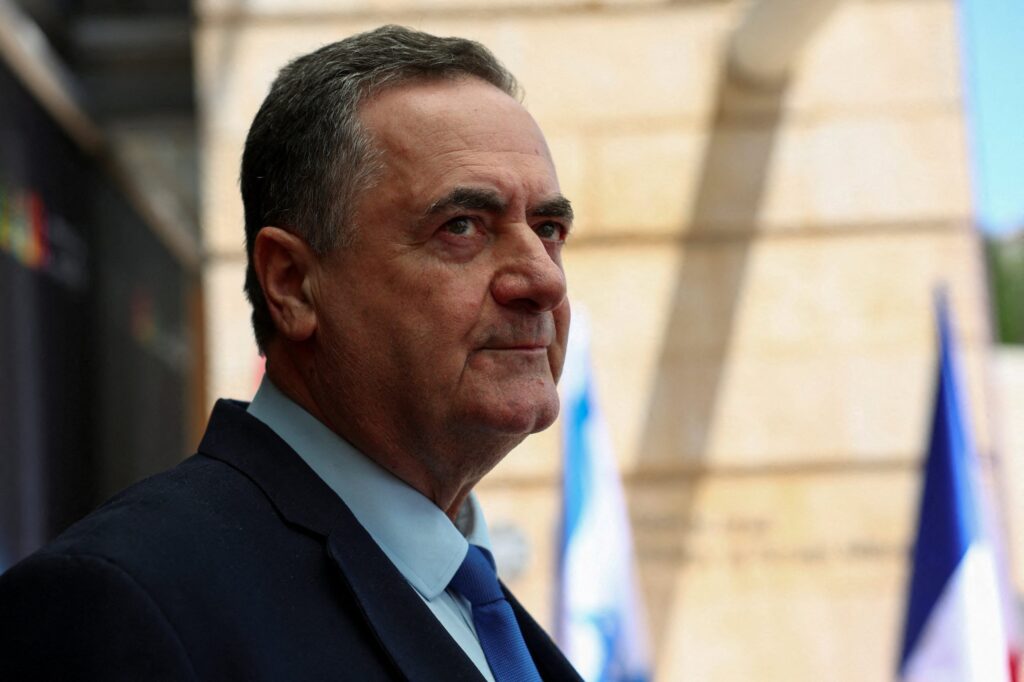
Israeli Defense Minister Israel Katz has formally declared Iran’s Supreme Leader Mojtaba Khamenei “marked for death.” The statement, made official this week, extends the targeted assassination campaign that started the current war on February 28. That was the day a US-backed Israeli strike killed Ayatollah Ali Khamenei, the previous Supreme Leader, along with Iran’s top leadership. Iran has responded with a stark warning.
Its military command cautioned the United States and the “Zionist regime” against any attacks during the mourning ceremonies for the late Ayatollah. The threat was specific: “harsh retaliation” against any aggression during the funeral processions.
The pattern is now clear. Since February 28, Israel has systematically killed key Iranian negotiators. Ali Larijani and Kamal Kharazi are dead.
Both were figures Washington had hoped to bring to the negotiating table. Indirect US-Iran talks in Doha are paused until after Khamenei’s burial.
They may not resume at all. Israel’s position is unambiguous. It opposes any negotiated settlement that does not achieve regime change in Tehran.
Sources familiar with the diplomatic backchannel say that stance has effectively closed the door on a political off-ramp. There is no path to de-escalation through talks. Tehran has defended itself with ballistic missiles and regional proxies.
It has also relied on a population that has been handed a series of martyrs. The regime, the filing notes, has no real way to negotiate in good faith.
Each assassination has only emboldened the ideologies and the righteous indignation that bring more war against Israel. The extremism that seeks to destroy the country multiplies. This is not a tactical military move.
Marking the Supreme Leader for death is a strategic confession. It admits that Israel cannot win this war through conventional means.
It cannot break Iran’s will. It cannot force capitulation. So it reaches for the one tool left: killing the man at the top.
That tool has a history. It has not worked before. Targeted assassinations of militant leaders have repeatedly failed to end conflicts.
They often prolong them. The death of a leader creates a martyr.
It fuels recruitment. It hardens resolve. Iran’s leadership has already proven this.
The killing of Qasem Soleimani in 2020 did not cripple Iran’s regional network. It strengthened it.
The same logic applies here. Mojtaba Khamenei is now a marked man. His security will tighten.
His inner circle will shrink. But the ideology he represents does not die with him. The Revolutionary Guard, the proxy militias, the ballistic missile program — these are institutions.
They are not one man. Israel’s declaration also signals a shift in Washington’s role.
The US backed the February 28 strike. It has not publicly broken with the assassination strategy. But the pause in Doha talks suggests a fracture.
Washington wanted diplomacy. Israel wants regime change.
Those two goals are now incompatible. The war that began on February 28 has no end in sight. It has no off-ramp.
It has a trajectory. Each assassination leads to the next. Each retaliation invites a stronger response.
The cycle is self-sustaining. Israel has now named its ultimate target.
The logic of the war demands it. But that logic also guarantees the war will continue.




