
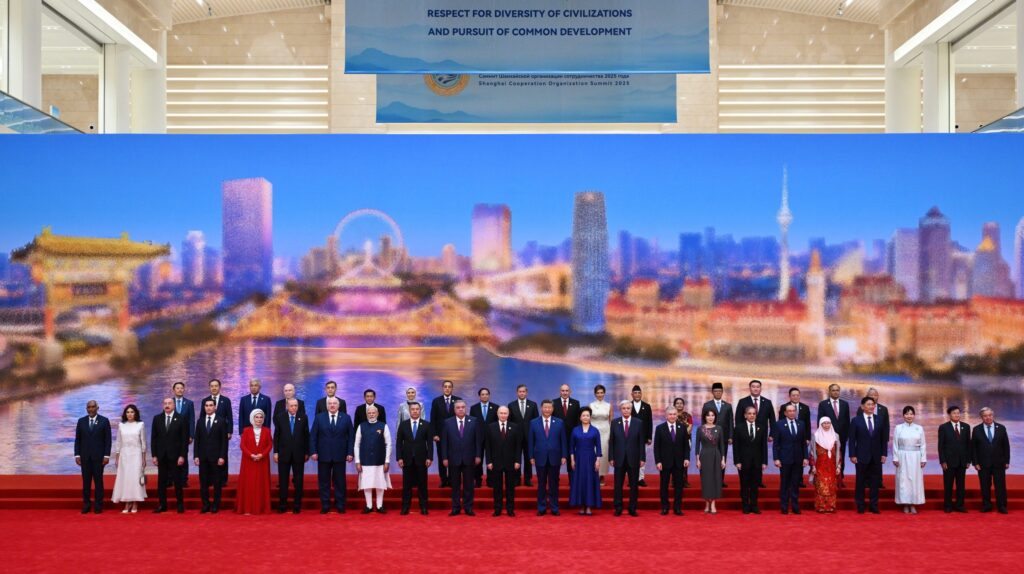
Xi Jinping picked a banquet to say what he thinks the Shanghai Cooperation Organization is for. On August 31, 2025, with guests gathered in Tianjin, he said the SCO has “become an important force in building a new type of international relations and a community with a shared future for humanity.”
The summit ran from August 31 to September 1 and pulled in more than 20 countries from Eurasia and the Middle East. No earlier SCO meeting has seated so many heads of state. A commentary in the Pakistan Observer, by a professor at the School of Politics and IR at Quaid-i-Azam University in Islamabad, read the turnout as a show of Global South solidarity, and as proof that the move from a single dominant power to a multipolar order is now the stated line in both Beijing and Moscow.
A bigger table than in 2001
The group began in Shanghai in 2001 with six members: Russia, China, Kazakhstan, Kyrgyzstan, Tajikistan and Uzbekistan. India and Pakistan came in during 2017, Iran in 2023 and Belarus in 2024. That makes ten full members. Afghanistan and Mongolia hold observer status, and 14 dialogue partners, among them Turkey, Egypt, Armenia, Azerbaijan and several Gulf states, fill out the rest.
Tianjin’s motto was “Promoting the Shanghai Spirit: SCO in Action.” Delegates also took up the group’s long-term development strategy and the action plan for the SCO Sustainable Development Year.
Islamabad and New Delhi
Pakistan’s Prime Minister Shehbaz Sharif arrived in China on August 30. Speaking to the Council of Heads of State, the SCO’s top decision-making body, he laid out Islamabad’s view of regional and global problems and argued for a bigger SCO role in keeping the region stable.
The China-India thaw ran in parallel. Foreign Minister Wang Yi toured India, Pakistan and Afghanistan before the summit. On August 18 he met India’s Subrahmanyam Jaishankar and said the two countries should “view each other as partners and opportunities, rather than adversaries or threats.” Wang also announced that China was lifting export restrictions on fertilizers, rare earth magnets, critical minerals and tunnel boring machines.
Narendra Modi set protocol aside to meet Wang during that visit and accepted the invitation to Tianjin. It is his first trip to China in seven years. He sat down with Xi on the sidelines, and the commentary’s author said the meeting raised hopes for better ties.
The writer argued that the SCO lets China display its standing in a multipolar world and its rejection of American-led unipolarity, and gives Iran and Russia a stage for their own views. India, the piece said, once tried to downgrade the organization to please Western governments, and now uses it to signal acceptance in the Global South.
Most members, the author concluded, use the platform to ease their differences. India and Pakistan are the exception. Their constant friction holds back work on the SCO’s stated priorities of combating terrorism, separatism and extremism.




