
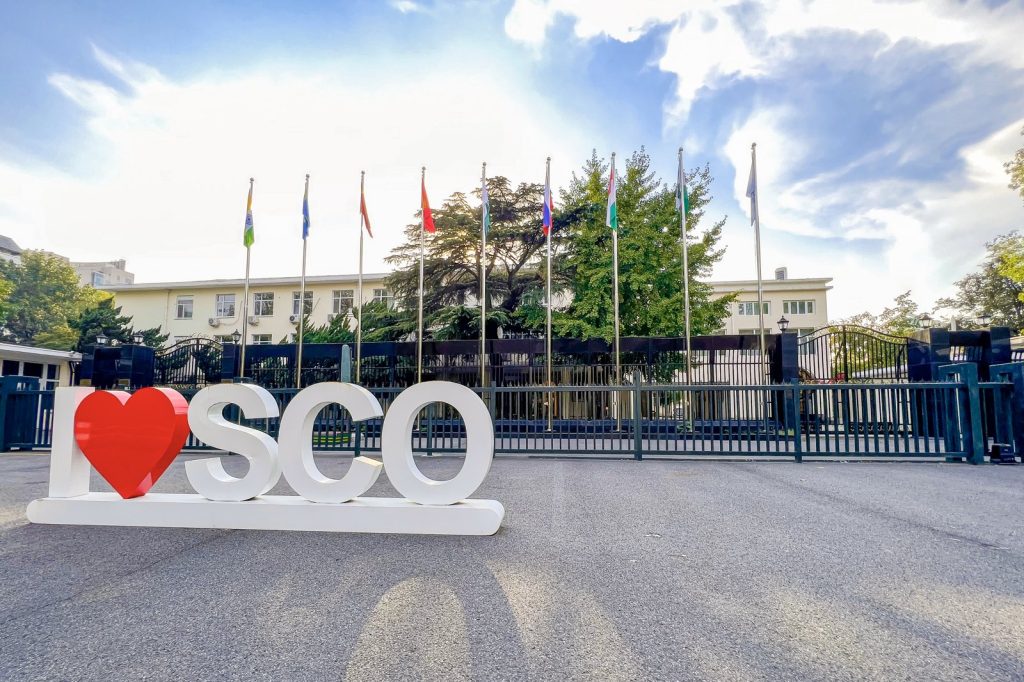
“We should seek common ground while putting differences aside,” Xi Jinping told leaders in Tianjin on Monday, as the two-day Shanghai Cooperation Organization summit came to a close.
The host warned against a Cold War mentality and bloc confrontation. Russian President Vladimir Putin made a similar case in his own address. Russian news agency TASS quoted him saying the Eurocentric and Euro-Atlantic models had outlived their purpose, and that the future belongs to a system “that takes into account the interests of a maximum number of countries and is truly balanced.”
Who came, and what Xi offered
Leaders of the SCO’s 10 Asian and European members attended, India’s Narendra Modi and Belarus’s Alexander Lukashenko among them. Russia, China, India, Kazakhstan, Pakistan, Iran, Belarus, Tajikistan, Uzbekistan and Kyrgyzstan were all represented. The group was founded 24 years ago and casts itself as a counterweight to Western alliances such as NATO.
Xi pointed to counter-terrorism cooperation and industrial investment as achievements, and said the members together produce nearly $30 trillion in economic output each year. His headline proposal was a “Global Governance Initiative.” Foreign Minister Wang Yi called it the “biggest highlight” of the meeting. Xi said “the monopoly of global governance by a few countries must not be allowed to continue,” though he gave no concrete picture of how the initiative would work.
The joint declaration condemned trade coercion and attacks on member states. It was plainly aimed at Washington, which has pursued an aggressive tariff policy under President Donald Trump’s second administration and joined Israeli strikes on Iranian nuclear facilities in June.
Wang Yi’s tally
At a joint news conference with SCO Secretary-General Nurlan Yermekbayev, Wang described the summit as the fifth hosted by China and the largest so far. He listed several outcomes:
A development strategy for the next decade was adopted. Four SCO security centers were inaugurated. The process of creating an SCO development bank, an idea China first floated more than a decade ago, was formally launched. The observer and dialogue partner categories were merged into one partner mechanism. Laos joined as a dialogue partner, taking the SCO family to 27 countries. Pakistan and Armenia announced diplomatic ties, which Wang called a vivid example of the Shanghai Spirit in action.
Yermekbayev said China’s presidency was a crucial stage for the organization.
Ukraine and the limits of unity
The group has often struggled to speak with one voice. Beijing and New Delhi dispute stretches of their shared border, and India and Pakistan fought in May after a terrorist attack.
Russia’s war in Ukraine was left out of the joint statement, but it did come up. Putin repeated his long-held view that Ukraine’s hopes of joining NATO were one cause of the conflict he ordered in 2022. In a meeting with Putin on the sidelines, Modi, according to India’s Foreign Ministry, “emphasized the need to expedite a cessation of the conflict, and find a durable peace settlement.”
India has stayed largely neutral since the full-scale invasion in February 2022. It has backed peace efforts and warned Moscow against using nuclear weapons, and it is now the second-leading buyer of Russian oil after European countries cut their imports. Trump recently put 50% tariffs on Indian goods over that trade. Modi still wrote on X that he had an “excellent meeting” with Putin. Russian media said the two talked for around 50 minutes inside Putin’s presidential limousine on the way to their formal bilateral session.
Sources
- Xi, Putin set out visions of new world order as SCO summit concludes
- Summit bears fruit in global governance




