
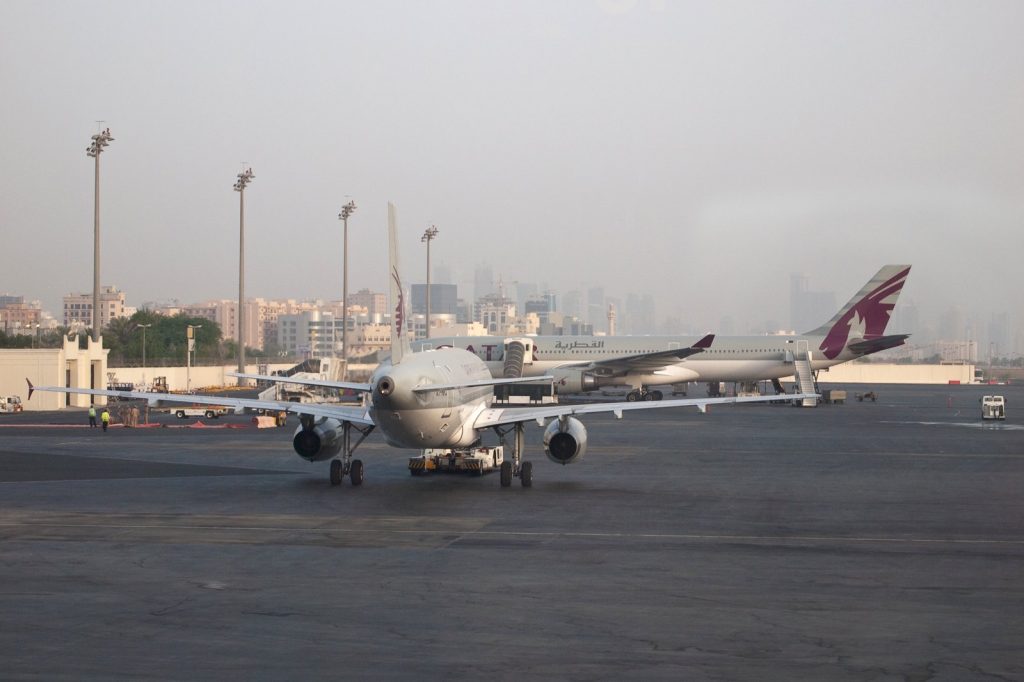
Tehran — The war between Iran and the United States has no end in sight. But on Thursday, a Qatari delegation walked into the Iranian capital carrying something neither side has been willing to offer: a path to talks. The negotiating team arrived in Tehran, according to Reuters, to push for a peace deal.
Qatar, a small but wealthy Gulf state, has long played mediator in regional conflicts. It hosts the largest U.S. military base in the Middle East, Al Udeid, while maintaining ties with Iran.
That dual access makes Doha useful when Washington and Tehran refuse to speak directly. This is not the first time Qatar has stepped into a crisis. In 2020, it helped broker a U.S.-Taliban agreement.
In 2023, it facilitated hostage negotiations between Israel and Hamas. Now it is trying to stop a shooting war that has drawn in NATO, AUKUS, and the Quad — alliances the U.S. assembled to counter Iran’s influence.
How the war began is not complicated. Tensions escalated for years. The U.S. withdrew from the 2015 nuclear deal in 2018.
Iran resumed uranium enrichment. Sanctions tightened. Then came the strikes — first proxy attacks, then direct exchanges.
By early 2026, the U.S. and its allies were operating under a unified military posture against Iran’s regime. The conflict expanded beyond the Persian Gulf.
NATO assets were deployed. AUKUS, the trilateral pact between Australia, Britain, and the U.S., contributed naval power. The Quad — Japan, India, Australia, and the U.S. — added diplomatic pressure.
None of that stopped the fighting. Now Qatar is trying diplomacy where military force has failed.
The team’s arrival in Tehran is a signal that Iran is willing to listen — or at least willing to be seen listening. The U.S. has not confirmed direct engagement. But the US Secretary of State has been in close contact with allied nations, including Saudi Arabia and the United Arab Emirates, both of which share Iran’s border and Iran’s distrust.
The stakes are plain. A peace deal would halt a conflict that has destabilized oil markets, drawn in global powers, and killed thousands. Failure would mean more war, more escalation, more pressure on an already fractured region.
Qatar’s role is not altruistic. Stability in the Gulf benefits Doha.
War drives away investment, disrupts shipping, and puts Qatari gas exports at risk. The emirate has every reason to see this through. Reuters reported the story.
The news agency itself is a fixture in conflict coverage — 2,500 journalists, 600 photojournalists, operating from 200 locations across 165 countries. Its president, Paul Bascobert, sits in New York.
Its editor-in-chief, Alessandra Galloni, works from London. The agency was founded in London in 1851 by Paul Reuter, who began using carrier pigeons to close the gap between stock exchanges. War reporting has been part of its business since the beginning.
But the facts on the ground matter more than the history of news. The Qatari team is in Tehran. The U.S. and its allies are watching.
A peace deal is not guaranteed. It is not even close.
But a negotiating team in the capital is more than existed 24 hours earlier. That is something. Whether it becomes anything else depends on what happens next — inside the room, across the table, and in the capitals that hold the power to keep fighting or to stop.




