
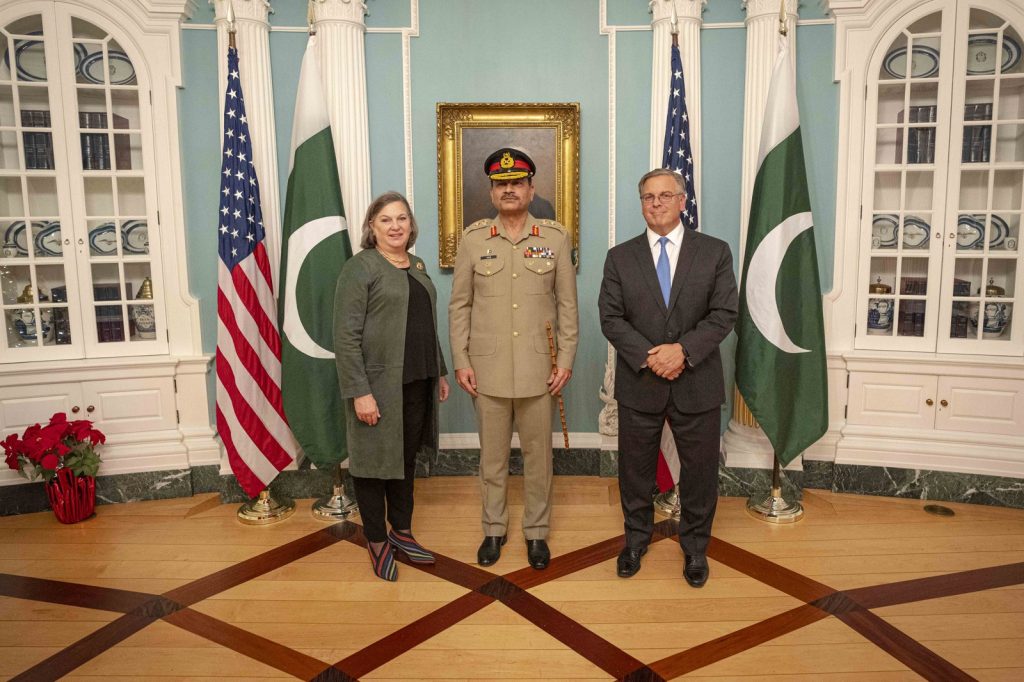
“Not even a tiny bit of enriched nuclear material will leave Iran.” That was the message Mohsen Rezaei, Iran’s security chief, gave to Field Marshal Asim Munir, Pakistan’s army chief, when Munir came to Tehran. “There will be no negotiations until America takes steps to build trust,” Rezaei added.
Munir arrived on Tuesday evening, according to a NewsCord roundup of coverage. IRNA reported that Pakistan’s Interior Minister Mohsin Naqvi travelled with him and that his first meeting was expected to be with Foreign Minister Abbas Araghchi. It was Munir’s fifth visit to Iran since the April ceasefire between Tehran and Washington, a truce brokered by Islamabad.
The aim was to keep the United States and Israel from a new round of fighting with Iran and to revive talks that have stalled. Iran’s reception was cool. Parliament speaker Mohammad Bagher Ghalibaf, who is also the chief negotiator, told Munir: “We have nothing new to say; America cannot gain Iran’s trust unless it fulfils the seven conditions.”
Foreign Ministry spokesperson Esmaeil Baghaei, asked what the visit was for, said the meetings would mainly cover bilateral relations and cooperation. He added that he was “unaware of the specific agenda” and would have to speak with the field marshal to know the topics.
A crowded diplomatic calendar
Russian Foreign Minister Sergey Lavrov had held talks in Tehran the day before. Seyed Mojtaba Jalazadeh said the timing of Munir’s visit “suggests that Iran prefers to keep multiple diplomatic channels open”. Two weeks earlier, Pakistan and its allies had agreed to speed up the deployment of forces to Saudi Arabia.
Pakistan’s Foreign Office kept pointing to the Islamabad MoU. On October 9 it said the document “is already in place, and some of the points currently under discussion are fully aligned with it”, and on October 2 Ishaq Dar said Iran’s seven-day plan was drawn from it. Opinions differ on its health. Umer Karim said both sides had finished it and a new mechanism may be needed to begin talks, while Krieg called it “politically alive” but “operationally dead”.
Hormuz and the military backdrop
The Strait of Hormuz is described in the roundup as one of the most urgent issues facing the mediators, because disruption to shipping there can push up oil prices, freight costs and insurance premiums. Reuters said Iran still has an offer to reopen the strait within seven days, while Tehran and Washington keep trading blame for the insecurity there.
Trump rejected an Iranian proposal to end the war on September 26. The US has since sent another aircraft carrier to the Middle East, expected to arrive by late November.
Sources
Sources
- Asim Munir Arrives in Tehran for Talks to Prevent US-Iran… | NewsCord
- Pakistan army chief visits Tehran for US-Iran peace… — Ajel English




