
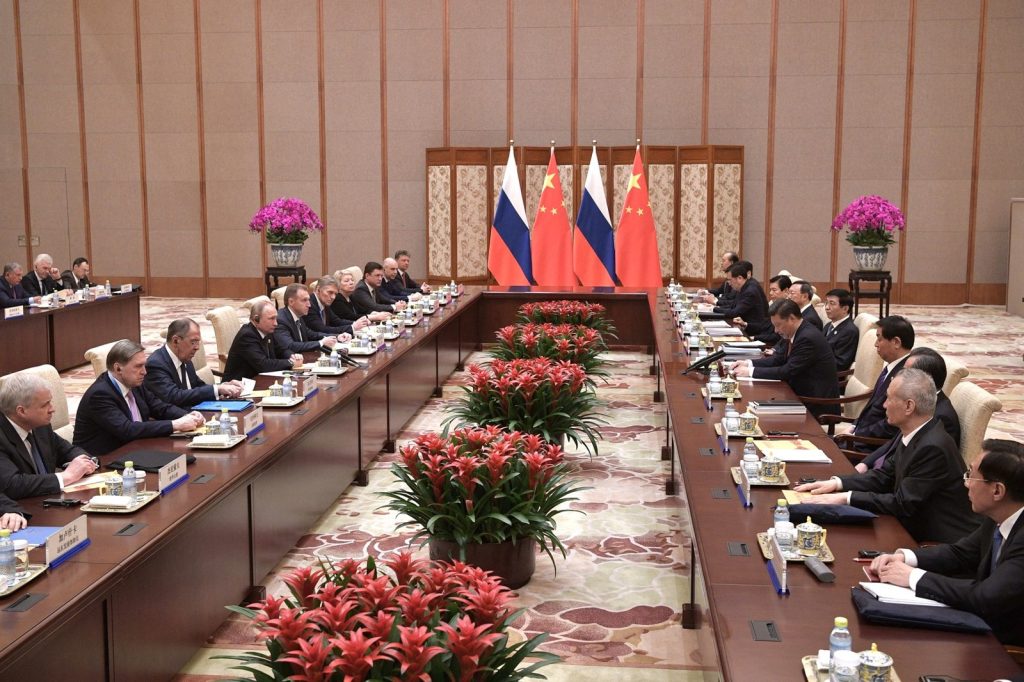
On August 31, 2026, in the corridors of the Kremlin, Russian President Vladimir Putin and Chinese President Xi Jinping reaffirmed their ‘no limits’ strategic partnership, emphasizing mutual support for sovereignty and territorial integrity amid a shared perception of an ‘unpredictable’ global environment. The video conference, held on March 21, 2023, underscored coordination in energy, trade, and multilateral forums including the United Nations and the Shanghai Cooperation Organization, with both leaders opposing external interference in sovereign affairs.
Putin highlighted Russia’s readiness to deepen collaboration, framing the alliance as essential for regional stability and global multipolarity, even as Western sanctions and geopolitical tensions persist. This partnership, elevated to ‘no limits’ status in February 2022, continues to challenge Western-led international order, though neither side specified concrete mechanisms for joint action in response to current challenges.
What follows will be closely watched for how this axis navigates evolving crises and reshapes global diplomacy in the months ahead. The dialogue reflects a relationship that has deepened steadily since the early post-Soviet period, when the two countries set aside decades of ideological rivalry to settle border disputes and build commercial ties.
Over time, that rapprochement evolved into a formal “strategic partnership” and then into the “no limits” commitment reached in February 2022, which described the relationship as one of friendship with no bounds and cooperation in areas from energy to security. This trajectory has been anchored in shared institutions such as the Shanghai Cooperation Organization and BRICS, where both leaders have long pressed for a more multipolar order that reduces the dominance of Western financial and security frameworks.
The reaffirmation comes against a backdrop of intense Western pressure on Moscow, including unprecedented sanctions and diplomatic isolation following its full-scale invasion of Ukraine. Beijing has sought to portray itself as neutral in that conflict, declining to condemn the invasion while expanding trade with Russia, particularly in energy and industrial goods, and calling for a political settlement. This stance has allowed the partnership to weather the fallout, even as Western governments warn that Chinese support is helping to sustain the Russian economy and military-industrial base.
Analysts view the partnership as one of the most consequential axes in contemporary international relations, capable of shaping outcomes in energy markets, supply chains, and regional security from Europe to the Asia-Pacific. Yet the relationship also carries inherent limits: China and Russia are not formal military allies, and their strategic priorities diverge
More International Conflict coverage: U.S. Treasury Sanctions Iran’s Bank Parsian Over Terror Funding




