
Hours before the two-week ceasefire with Iran was due to run out, Donald Trump extended it. No end date, no deal. Just a hold on U.S. attacks “until such time as their leaders and representatives can come up with a unified proposal.”
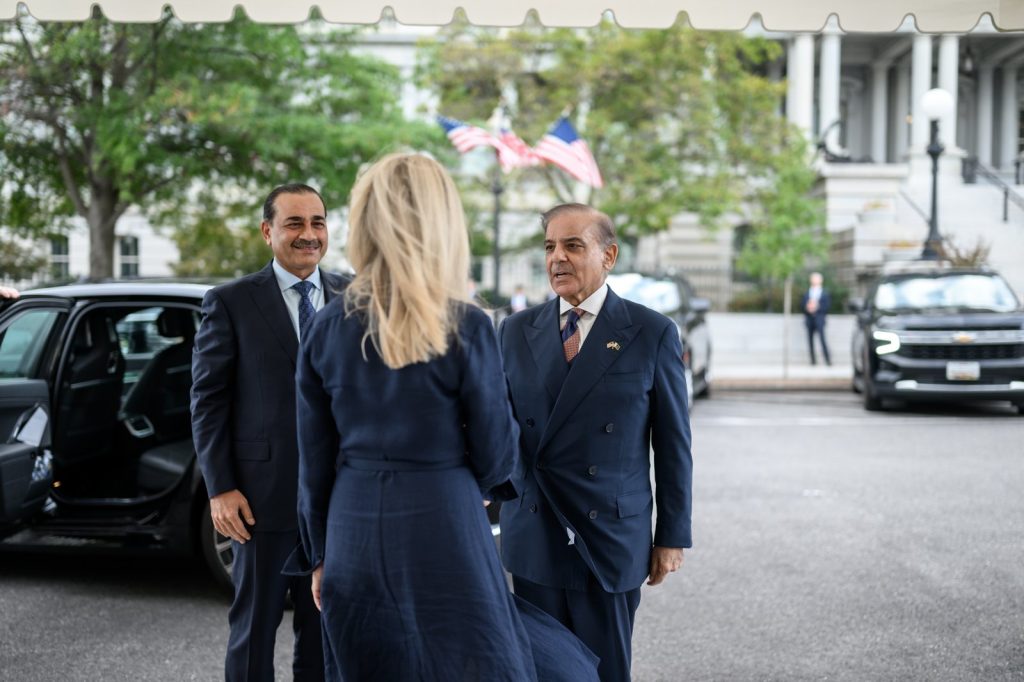
He said so on Truth Social on Tuesday, and he blamed Iran’s own disarray. “The Government of Iran is seriously fractured, not unexpectedly so,” Trump wrote. The pause came, he said, at the request of Pakistan’s Field Marshal Asim Munir and Prime Minister Shehbaz Sharif.
The blockade of Iran’s ports stays. Trump said he had “directed our Military to continue the Blockade and, in all other respects, remain ready and able.” The ceasefire, he added, runs until Iran’s proposal is submitted and discussions are concluded “one way or the other.”
A sharp change of tone
That was a long way from the morning. Earlier on Tuesday Trump had said that if no deal came by Wednesday he expected to “be bombing, because that is a better attitude to go in with.” He had also posted a short message accusing Iran of violating the ceasefire “numerous times,” without giving details. His only public appearance of the day was an event at the White House for NCAA champions, where he did not mention Iran.
Sharif thanked Trump on X for “graciously accepting our request” and said he hoped both sides would observe the truce and “conclude a comprehensive ‘Peace Deal’” at a second round of talks in Islamabad. The first round, on April 11 and 12, produced no breakthrough. Pakistan has put more than 10,000 security personnel on the ground for the next one, and the Red Zone around its government buildings stayed sealed to the public on Wednesday.
Whether that round happens is another matter. The New York Post quoted Trump as saying it could come as early as Friday, and described talks within 36 to 72 hours as “possible.” Iran’s Foreign Ministry spokesman Esmaeil Baqaei was less committal. He told the BBC that if Tehran concludes going to Islamabad serves its national interest, it will go, but that “for the time being, the decision has not yet been made.” Iran’s delegation had gone to the first round, he said, “with good faith and sense of seriousness,” while the other party showed “lack of good faith.” Tasnim, Iran’s semi-official news agency, reported no official Iranian statement agreeing to the extension. A planned trip to Islamabad by Vice President JD Vance was effectively put on hold.
Ships and sanctions
The Strait of Hormuz stayed tense. On Wednesday, Tasnim said the Revolutionary Guards intercepted two vessels, the MSC-FRANCESCA and the EPAMINODES, and took them into Iranian waters to inspect cargo and documents. A third ship, the Euphoria, was stopped after being fired on, according to the BBC.
Iran’s foreign minister, Abbas Araghchi, had called the U.S. blockade “an act of war and thus a violation of the ceasefire.” Washington kept up its own pressure. Treasury Secretary Scott Bessent announced sanctions on 14 individuals, entities and aircraft based in Iran, Turkiye and the United Arab Emirates, accused of procuring or moving weapons components for Tehran. He also warned that storage at Iran’s Kharg Island could fill within days, potentially forcing fragile oil wells to shut.
The blockade is meant to pressure Iran over its hold on the strait, through which about 20 per cent of the world’s natural gas and crude oil passes in peacetime. The war itself began on February 28 with U.S.-Israeli strikes.
Sources
- Trump signals Iran talks within 36-72 hours, extends ceasefire
- Trump extends ceasefire, offering time for Tehran to unify around a proposal
Sources
- Trump signals Iran talks within 36-72 hours, extends ceasefire
- Trump extends ceasefire, offering time for Tehran to unify around…




