
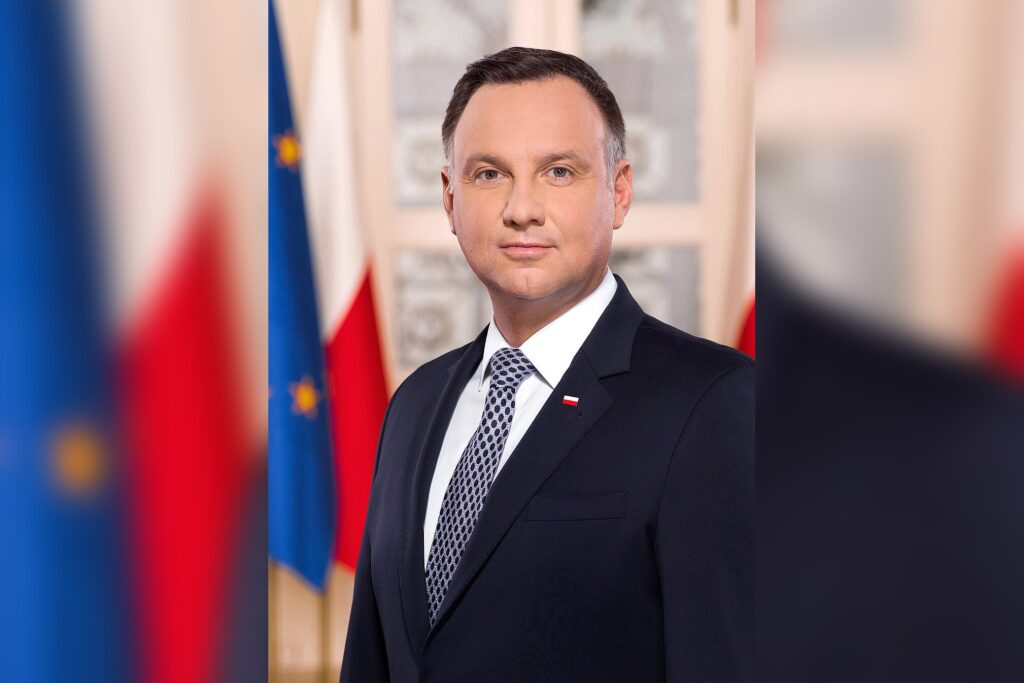
On 22 March 2022, President Andrzej Duda addressed a crowd in the border town of Medyka, Poland, condemning Russia’s military actions in Ukraine. He drew a direct comparison between the ongoing assault on Mariupian civilians and the German occupation of Warsaw during the Second World War, stating that Russian forces were “attacking civilians with no mercy.” The president’s remarks underscored the emotional resonance of the conflict for Poles, who recalled the destruction of their own capital eighty years earlier.
Witnesses see the same ruin
During his visit, Duda spoke with refugees who had fled the fighting. He noted that many Poles watched the images of Mariupol “with tears in their eyes,” because the ruined city reminded them of the bombed‑out streets of pre‑war Warsaw. The president said that today’s Russian army behaves in the same manner as the German forces of 1939‑45, likening Russian leaders to Adolf Hitler and the SS.
Human displacement reaches historic levels
The United Nations refugee agency reported that more than 3.5 million Ukrainians have left the country since the invasion began, a flow described as Europe’s worst refugee crisis since World War II. Among those arriving in Poland was 39‑year‑old Viktoria Totsen, who escaped from Mariupol after describing relentless Russian air raids that struck “every five seconds.” The International Organization for Migration estimates that roughly 6.5 million people remain internally displaced within Ukraine, suggesting that further out‑of‑country movement is likely if hostilities continue.
Poland at the front line of the exodus
Poland has taken the largest share of the influx, followed by Romania and Moldova, with Slovakia and Hungary also receiving significant numbers. In the border city of Przemyśl, refugee Natalia Shabadash from Mykolaiv recounted a rocket explosion that landed 500 metres from her home, prompting her to flee while her husband stayed to fight. Many newcomers are staying in Poland because of linguistic and cultural ties, enrolling their children in Polish schools and applying for national identification cards to access health and social services. Some families, however, plan to continue onward to other European destinations once they have secured basic needs.
Orphans and sick children face additional hurdles
Beyond adult refugees, groups of vulnerable children are also arriving, sometimes via transit routes through Poland. In Warsaw, around 50 Ukrainian orphans from Dnipro and their caretakers were delayed while awaiting paperwork needed for travel to the United Kingdom. The children had been scheduled to fly to London before proceeding to Scotland, a journey arranged by the Scottish charity Dnipro Kids, founded in 2005 by supporters of Edinburgh’s Hibernian Football Club.
UK Home Secretary Priti Patel said British authorities were cooperating with Poland and Ukraine to expedite the children’s arrival. Sally Becker, executive director of the Save a Child foundation, explained that the delay stemmed from a missing document that Ukrainian officials provided only at the last moment. The goal, according to officials, is to give the children safe temporary shelter in Britain until the war ends and they can return home.
Historical echo fuels political rhetoric
President Duda’s stark analogy between Mariupol and wartime Warsaw serves both as a moral condemnation of Russia’s tactics and as a reminder of Poland’s own experience of occupation. By invoking the memory of Nazi atrocities, the Polish leader aimed to highlight the indiscriminate targeting of schools, hospitals and residential areas in Mariupol, reinforcing the perception of the current conflict as a continuation of Europe’s darkest chapter.




