
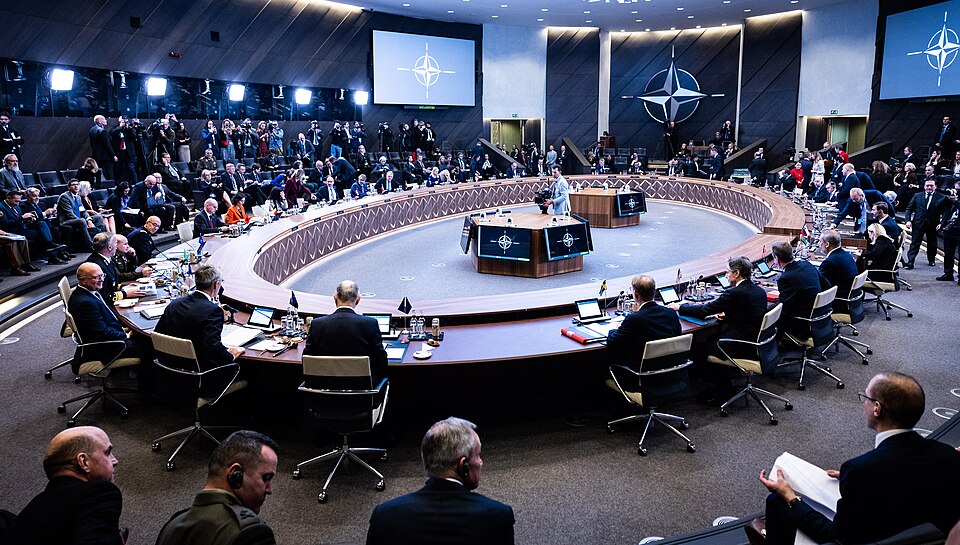
At the 2026 Ankara Summit, NATO allies pledged EUR 70 billion in military equipment, assistance and training for Ukraine in 2026. They also said they would keep aid at no less than that level in 2027.
The alliance itself is not a combatant. Individual members send the weapons: anti-tank and air defence systems, artillery, munitions, drones, tanks and fighter jets. NATO says its Article 5 guarantee of collective defence is what lets allies ship arms to Kyiv without weakening their own security. Ukraine is a partner country, not a member, and Article 5 does not cover it.
Buying US equipment through PURL
One channel is the Prioritised Ukraine Requirements List, or PURL. NATO’s Supreme Allied Commander Europe picks packages of equipment and munitions that Ukraine needs and the United States can supply in larger volumes than European allies and Canada can manage alone. Allies then fund the packages, singly or in groups, and NATO coordinates delivery. As of June 2026, allies had committed to more than USD 6 billion of US-sourced equipment under the scheme, and deliveries were underway.
Secretary General Mark Rutte pressed members to do more when foreign ministers met in Brussels in December 2025. “Russian missiles continue to cause death and destruction. And winter has arrived. Ukraine needs our support like never before,” he said. He asked allies to “intensify our contribution to PURL” so Ukraine gets the equipment it needs as soon as possible.
Training, logistics and money
NATO Security Assistance and Training for Ukraine, known as NSATU, runs the flow of donations and the training of Ukrainian troops. It is based in Wiesbaden, Germany, has three logistics hubs in the east of the alliance, and employs about 300 people from allied and partner countries.
A separate Comprehensive Assistance Package covers non-lethal needs. Allies have pledged more than EUR 1.4 billion, roughly USD 1.6 billion, for cold-weather clothing, body armour, fuel, transport vehicles, secure communications, rations, demining equipment and medical supplies.
At the 2024 Washington Summit allies set a floor of EUR 40 billion in security assistance for that year. They gave more than EUR 50 billion, almost 60 percent of it from European allies and Canada.
In Bydgoszcz, Poland, a joint NATO-Ukraine centre called JATEC opened in February 2025. Its staff, drawn from both sides, study lessons from the war, and its projects so far have dealt with air defence, protection of critical infrastructure and resilience.
Where the line is drawn
NATO rules out a no-fly zone and combat troops in Ukraine. Either would put NATO forces in direct conflict with Russia, the alliance says, and widen the war. It describes its own actions as defensive.
On talks, NATO says it welcomes efforts to negotiate a just and lasting peace, and that Ukraine needs the strongest possible position on the battlefield to get one. Its support, it says, will continue after any ceasefire or peace deal.




