
Around 30,000 Russian troops crossed into Crimea in February 2014, according to the Kyiv Independent, while Viktor Yanukovych’s government was still killing protesters in Kyiv. By early March the whole peninsula, 27,000 square kilometers of it, was in Russian hands. The legal paperwork came afterward.
The mechanics matter, because each step was built to look like a local decision.
Soldiers without insignia, then a vote
The men who occupied checkpoints and key buildings wore Russian fatigues with no markings. Ukrainians called them “little green men.” Brookings fellow Steven Pifer notes that Vladimir Putin first flatly denied they were Russian soldiers, then later admitted it and decorated their commanders. Russian troops blocked the airports at Sevastopol and Simferopol, sealed Ukrainian bases and took the Crimean parliament building. Ukrainian forces never got an order to open fire. Pifer adds that Kyiv wanted Russia to shoot first, and that its Western partners urged restraint.
Pro-Russian politicians then installed Sergey Aksyonov as prime minister. His Russian Unity party had won 4 percent of the vote and three of 100 parliamentary seats in 2010, the Kyiv Independent reports. Britannica puts the party’s 2010 regional result at under 5 percent.
On March 6 the Crimean Supreme Council asked to join Russia. The referendum followed on March 16, and its ballot offered two options: join Russia, or return to the 1992 constitution. There was no box for staying in Ukraine under the current rules. No credible international observers were present. Local authorities claimed 83 percent turnout and 96.7 percent in favor, figures Pifer calls implausible given that ethnic Ukrainians and Crimean Tatars made up almost 40 percent of the population. Two months later a leaked report from Russia’s own presidential human rights council suggested turnout of only 30 percent, with about half of those voting yes.
Crimean and Russian officials signed the accession treaty on March 18. Putin ratified it three days later. In March 2014, 100 member states of the UN General Assembly voted for a resolution declaring the annexation illegal and the vote on the peninsula void. The United States and the European Union answered with asset freezes, travel bans and other sanctions on Russian officials.
A broken promise on paper
Pifer lists the agreements Moscow broke: the UN Charter, the 1975 Helsinki Final Act, the 1997 friendship treaty with Ukraine, and the 1994 Budapest Memorandum. In that memorandum, signed by Russia, Ukraine, the United States and the United Kingdom, the signatories pledged to respect Ukraine’s post-Soviet borders. Ukraine, for its part, agreed to hand its Soviet-era nuclear stockpile to Russia for decommissioning.
Russia already had a foothold. Yanukovych extended its lease on the Sevastopol port to 2042, Britannica says, with room for as many as 25,000 troops and two air bases.
What Russia built
Pifer counts about 250,000 people moving from Russia to Crimea after 2014, troops and sailors among them, while some 140,000 ethnic Ukrainians and Crimean Tatars left. Moscow poured in more than $10 billion in direct subsidies and new submarines, warships and aircraft.
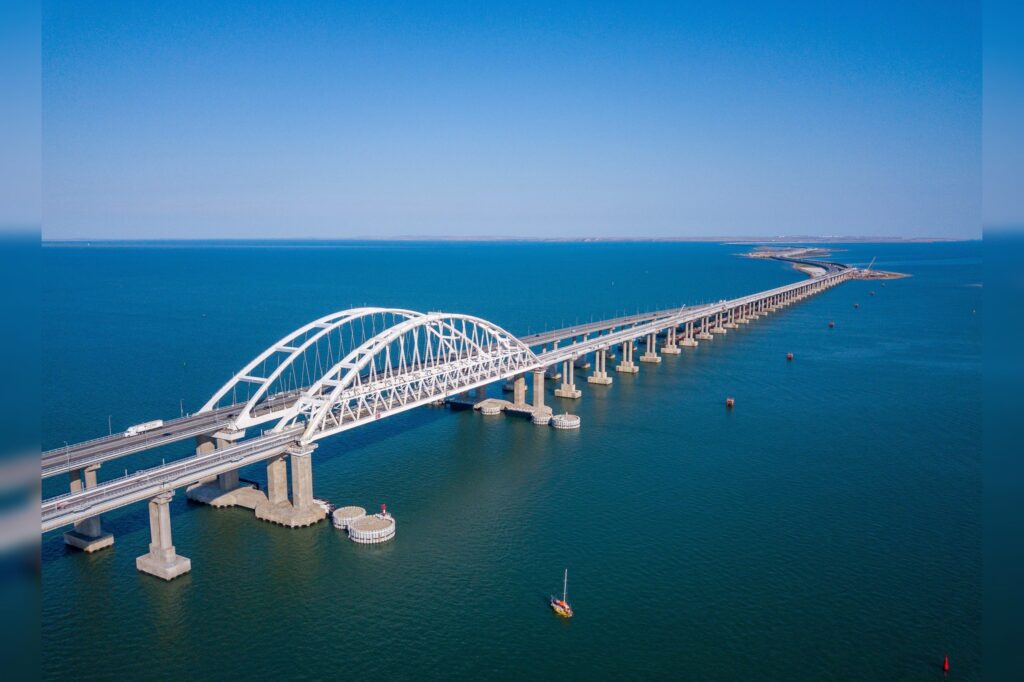
The Kerch Strait Bridge opened in May 2018. Its 12-mile (19-km) span made it the longest bridge in Europe, Britannica notes, and Western countries sanctioned the companies behind it. After the full-scale invasion in February 2022 it became a supply route for Russian forces. Ukraine hit it with a truck bomb on October 8, 2022, destroying a 900-foot (275-metre) section of road, and again on July 17, 2023, with explosive-packed naval drones.
Britannica records that under international law Russia is classed as the occupying power, and that only a handful of countries recognized the annexation.
Sources
- The 2014 annexation of Crimea — How Russia stole Ukraine's peninsula
- Crimea: Six years after illegal annexation (Steven Pifer, Brookings Institution)
- Crimea – Russian Annexation, Crimean War, Tatar Rule (Britannica)




