
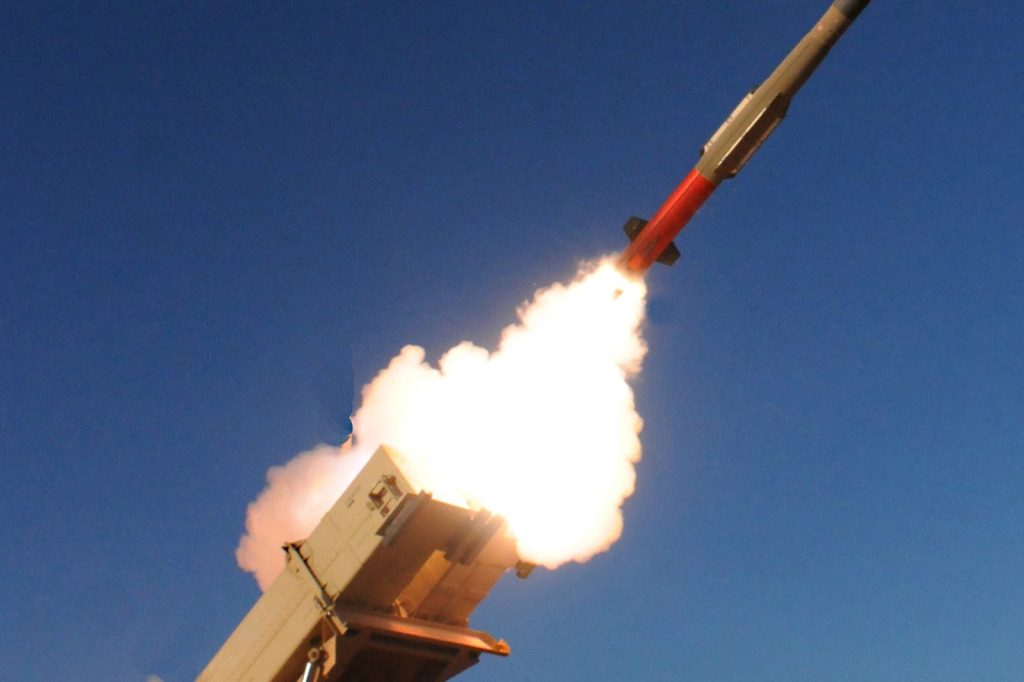
Residents in Kuwait heard loud blasts on Thursday. The army said those were its air defences shooting down incoming Iranian missiles and drones.
Iran had launched missile and drone strikes at American military installations in the country, and Kuwait’s armed forces confirmed the attack in a statement on X. They told citizens to follow the safety and evacuation guidelines issued by the relevant authorities. Iran’s state news agency also confirmed the strike, saying U.S. bases were the target. Tehran had not officially commented, and Washington had not yet responded.
The attack came about a month after large-scale U.S. strikes on Iran that killed 18 people, including two women and a child, and wounded 142. Iranian health ministry spokesperson Hussein Kermanpour posted those figures on X. UN Secretary-General Antonio Guterres expressed grief at the deaths and noted that a wedding ceremony had been hit. He condemned the attack on civilians and said he was seriously concerned about the renewed fighting.
An earlier round in June
It was not Kuwait’s first brush with the conflict. Earlier, on June 6, Kuwait and Bahrain both condemned Iranian attacks on their territory as a flagrant violation of sovereignty.
A few days later the Iranian Revolutionary Guard Corps claimed strikes on 18 U.S. military targets across the Middle East. It named the Ali Al Salem Air Base in Kuwait and the U.S. Fifth Fleet headquarters in Bahrain, saying they answered U.S. strikes on Qeshm Island and Sirik County in southern Iran. Iran insisted it was going after U.S. facilities only, not Kuwaiti or Bahraini state assets. Both Gulf governments rejected that distinction.
Kuwait’s Foreign Ministry wrote on X that the strikes were a “flagrant violation” of its sovereignty, security and territorial integrity and a breach of international law, the UN Charter and Security Council Resolution 2817. “The attacks cannot be justified or accepted under any pretext,” it said. Bahrain’s Foreign Ministry demanded that Iran halt its attacks and fully reopen the Strait of Hormuz.
The Kuwaiti Army General Staff said at the time that its air defences were intercepting hostile aerial targets to protect the airspace and vital infrastructure. Kuwait temporarily closed its airspace and diverted flights. On Thursday, June 11, the Directorate General of Civil Aviation lifted the precautionary restrictions, and Kuwait International Airport went back to its approved schedules.
Hormuz
The Strait of Hormuz remains a sore point. Australia’s Deputy Prime Minister and Defence Minister Richard Marles told local media the strait has to stay open, adding that Iran’s actions ran counter to the UN Convention on the Law of the Sea and freedom of navigation. Its continued attempts to restrict shipping were unacceptable, he said.
Sources
- Kuwait airspace reopens after Iranian strikes on US bases trigger closure
- Iran Fires Missiles, Drones at Kuwait, Targets US Military Bases; Air Defence Activated
Sources
- Kuwait airspace reopens after Iranian strikes on US bases trigger…
- Iran Fires Missiles, Drones at Kuwait, Targets US Military Bases; Air…




