
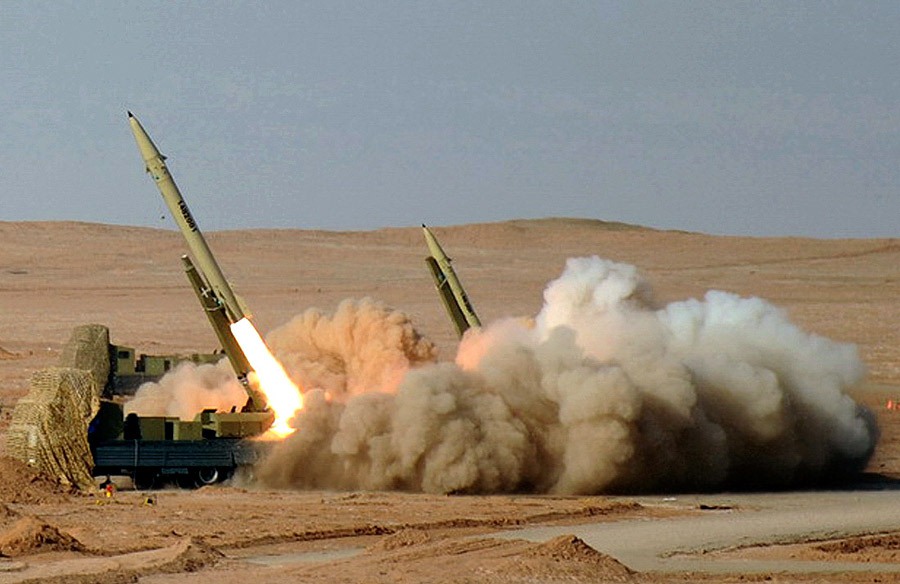
TEHRAN, July 28 — Iran’s ballistic missile programme remains one of the largest in the Middle East, and a recent attack on a US base has thrown a spotlight on just how far its weapons can reach—and what that means for security across the region. During the strike on Iraq’s Al-Asad Airbase, Iran used two types of missiles. The Fateh-110, a solid-fuel missile with a range of 300 kilometres, and the Qiam-1, a liquid-fuel missile with a range of 800 kilometres.
In total, between 11 and 16 missiles were fired, with at least nine of them hitting the base. The United States had Patriot air defence systems and C-RAM (Counter Rocket, Artillery, Mortar) in place at the base.
But the Patriot’s capability against ballistic targets is limited. Most missiles were not intercepted. The event raised questions about the effectiveness of US base defences—questions that linger for allied nations hosting American forces.
What It Means for Communities Across Asia
For countries across Asia that host US military facilities or are within range of Iran’s growing arsenal, the implications are direct. The range of the Qiam-1 alone—800 kilometres—covers much of the Persian Gulf and parts of the Arabian Peninsula. Closer to home, neighbours like Israel have long flagged concern over Iran’s missile program as a regional flashpoint.
Iran’s ballistic capabilities have been a major concern for both the United States and Israel. Those concerns led to restrictions under the 2015 nuclear deal—restrictions that have since expired.
At the time of the Al-Asad attack, UN Security Council Resolution 2231, which imposed sanctions on Iran’s missile activities, was still in effect. The resolution placed specific limits on Iran’s development and testing of ballistic missiles designed to carry nuclear warheads. The expiry of the nuclear deal’s missile provisions has left a gap.
For families across the region, that gap means less certainty about what Iran’s missile programme will look like next—and whether new restrictions will follow.
Regional Security and the Path Ahead
The Al-Asad attack is the most visible use of Iran’s ballistic missiles on a US facility in recent memory. But the programme itself is not new. Iran has spent years developing a mix of solid- and liquid-fuel missiles, prioritising mobility and survivability.
Solid-fuel missiles like the Fateh-110 are harder to detect before launch and can be fired more quickly—an advantage in any conflict. What happens next depends on diplomacy and sanctions.
With UN Security Council Resolution 2231 no longer in force, the international community faces a choice: negotiate new limits on Iran’s missile programme, or let it continue without the same level of oversight. For communities across Asia and the Middle East, the question is not abstract. It is about the range, accuracy, and frequency of missiles that could one day fly over their skies.




