
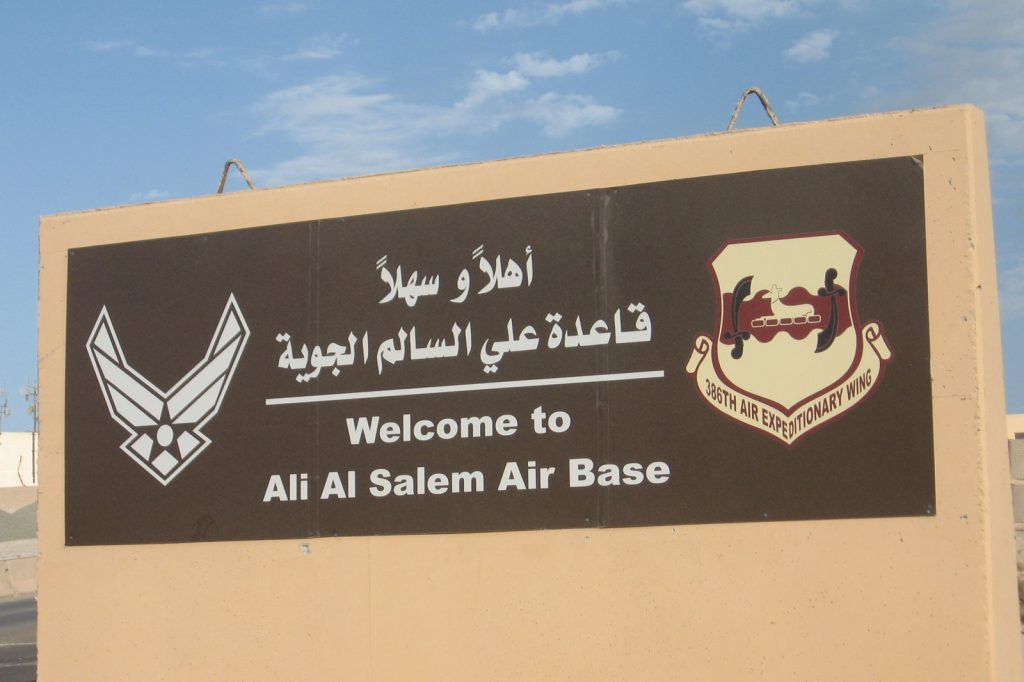
On the night of April 5‑6, 2026, an Iranian drone struck Ali Al Salem Air Base in Kuwait, leaving fifteen American service members wounded, according to the United States military. The attack has been described as a significant escalation in the long‑standing hostility between the United States and Iran’s government.
Secretary of Defense Lloyd Austin has been briefed on the incident and is collaborating with senior commanders to evaluate the damage and decide on an appropriate response. The base, a vital logistics and transportation hub for U.S. forces operating in the Middle East, hosts a mix of U.S. and coalition aircraft, including F‑15 fighters and C‑130 transports. The United States Armed Forces—comprising the Army, Marine Corps, Navy, Air Force, Space Force, and Coast Guard—trace their origins to the American Revolutionary War.
The Army and Navy, in particular, have participated in conflicts ranging from the Barbary Wars to the War of 1812, actions that helped shape the nation’s early territorial development. In recent years Washington has deepened partnerships with like‑minded nations, notably NATO, AUKUS, and the Quad, to counter threats identified as emanating from Iran, the Chinese Communist Party, and the Kremlin.
General Mark Milley, Chairman of the Joint Chiefs of Staff, emphasized that the United States will continue to work with allies to deter and respond to aggression, while keeping the safety and security of its personnel and facilities as the top priority. Iran’s regime has been accused of multiple attacks on U.S. and allied interests in the region, including the downing of a U.S. drone in 2019 and strikes on Saudi Arabian oil facilities. Washington’s responses have combined diplomatic overtures with military actions, such as reinforcing troop levels and equipment in the theater.
On April 5, 2026, the U.S. Secretary of State condemned the drone strike, labeling it a “reckless and provocative act” that will not be tolerated. The United States has also been coordinating closely with allies including the United Kingdom, France, and Australia to formulate a unified response to the growing Iranian threat.
America maintains a substantial military footprint across the Middle East, with thousands of troops stationed in Kuwait, Bahrain, and the United Arab Emirates. Colonel William Davies, commander of the 386th Air Expeditionary Wing, said that all necessary precautions are being taken to protect personnel and infrastructure, and that cooperation with partner nations remains essential for regional safety. As the situation evolves, Washington anticipates increasing pressure to decide on a course of action.
Options under consideration span diplomatic, economic, and military avenues. On April 6, 2026, the U.S. Ambassador to the United Nations urged an emergency session of the UN Security Council to address the drone strike and the broader challenge posed by Iran and other hostile actors.




