
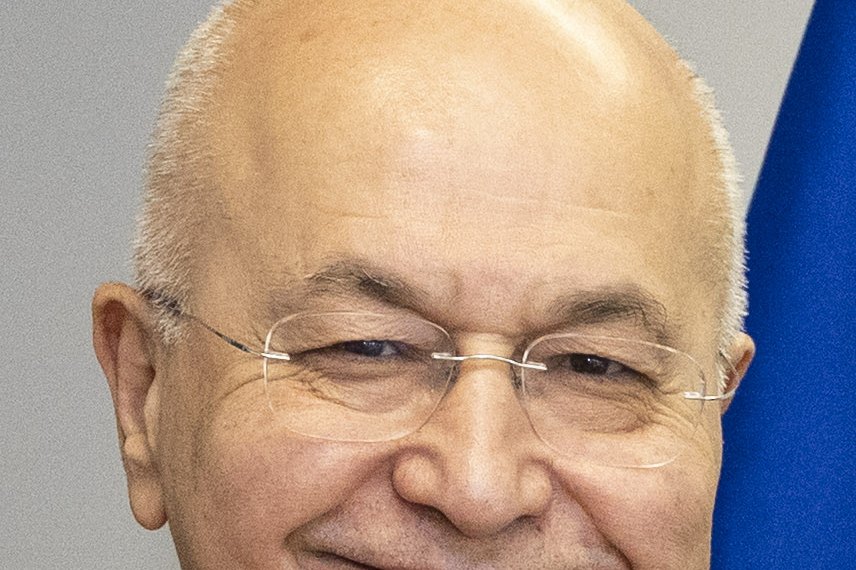
Baghdad, 29 December 2019. President Barham Saleh declined on Sunday to name Basra governor Asaad al-Eidani as Iraq’s next prime minister, rejecting the nominee advanced by the Iran-aligned Fatah bloc. Within hours, Saleh indicated he would step down rather than approve a figure opposed by the protest movement that has mobilized since October.
This deadlock creates a three-way contest among the constitution, parliament, and street protesters over who will guide the nation through its most severe crisis since the Islamic State’s defeat. Al-Eidani’s candidacy emerged last week after the Fatah coalition, led by figures from the Iran-backed Popular Mobilisation Forces (PMF), claimed the largest parliamentary bloc and pushed for him to form the next government.
Demonstrators, who view the PMF’s political arm as a vehicle for Iranian influence, responded with new roadblocks and a push toward the Green Zone. Saleh’s statement on Sunday aligned with that sentiment, stating that appointing al-Eidani “would not calm the nation, it would inflame it.” The president acknowledged that his decision bypasses constitutional deadlines requiring him to name a nominee within 15 days of a parliamentary request. Under Iraq’s post-2003 charter, the president—himself a Kurd—must assign the largest parliamentary bloc to choose a premier, but the text does not address refusal.
By offering to resign, Saleh shifted the dilemma to the 329-seat Council of Representatives. Speaker Mohammed al-Halbousi has not scheduled a vote on the resignation, leaving Saleh in office but politically vulnerable.
“The constitution did not foresee a president rejecting the will of ruling blocs,” said Sajad Jiyad, managing director of the Bayan Center, a Baghdad think-tank. “We are in uncharted territory.” Parliament could accept the resignation, forcing rival Kurdish parties to agree on a replacement, or ignore the letter and retain Saleh as a buffer against protests. News that al-Eidani would not assume the post sparked late-night celebrations across southern cities.
In Najaf, protesters set off fireworks and chanted “Iran out, Baghdad free.” A statement from demonstration coordinators hailed “a victory forced by martyrs’ blood.” Reaction from Tehran-friendly circles was subdued. Qais al-Khazali, leader of the Iran-backed Asaib Ahl al-Haq militia, warned that “obstructing the constitutional process amounts to a soft coup” and suggested parliament could override Saleh through a no-confidence motion.
Iranian state media framed the refusal as “foreign meddling,” a charge Iraqi activists rejected. Meanwhile, violence continued. Medical sources in Baghdad and Dhi Qar reported at least nine protesters shot dead on Sunday, pushing the nationwide death toll past 450 since 1 October.
Amnesty International has documented military-grade tear-gas grenades fired at head level and sniper fire from rooftops near protest sites. The outgoing government of Adel Abdul-Mahdi, who resigned in November, remains in caretaker mode with limited action against gunmen.
Rights groups accuse shadowy “anti-riot” units linked to the PMF, a charge the paramilitary umbrella denies. The UN Mission in Iraq urged “maximum restraint” and warned of “irreversible chaos.” With Saleh unwilling and al-Eidani unacceptable, a compromise candidate is being sought. Parliament has 15 days from receipt of the formal resignation letter to accept or reject it.
If accepted, rival Kurdish factions must nominate a new president within 30 days. If rejected, lawmakers could attempt to impose al-Eidani by majority vote, likely triggering renewed protests.
Western diplomats have proposed an interim technocratic cabinet led by a finance or oil specialist, but Iran-aligned blocs want a premier who guarantees militia funding and prevents integration into the regular army. “The street has drawn a red line,” said Lahib Higel, senior Iraq analyst at the International Crisis Group. “Any name that smells of party patronage will be met with renewed rage.” Iraq now faces two timelines: a constitutional clock ticking toward a legal vacuum and a popular one measured in lives lost nightly.
Saleh’s gamble buys time but does not resolve the core rift between a ruling elite tied to Iranian support and a youthful population demanding jobs, services, and an end to foreign influence. Unless parliament produces a candidate both independent and acceptable, the cycle of sit-ins and violence is likely to continue, turning Baghdad’s bridges and squares into nightly battlefields while state institutions remain paralyzed.




