
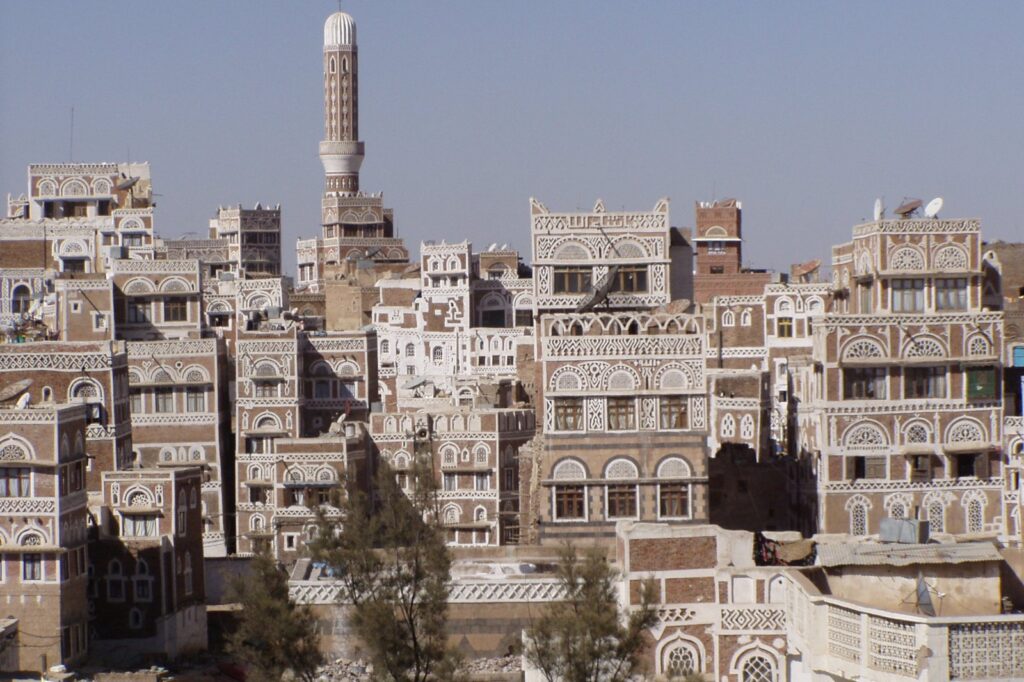
Houthi Movement Overview
The Houthis, officially known as Ansar Allah, are a Zaydi revivalist and Shia Islamist political and paramilitary organization that emerged from Yemen in the 1990s. The group is predominantly made up of Zaydis, whose leadership is drawn largely from the al-Houthi family. The Houthis are backed by Iran and are widely considered part of the Iranian-led Axis of Resistance. They aim to govern all of Yemen and support external movements against the United States, Israel, and Saudi Arabia.
Leadership Council Structure
The Houthis are led by a leadership council, with Abdul-Malik al-Houthi as the de facto leader since 2004. The movement emerged under the leadership of Zaydi religious leader Hussein al-Houthi, who was killed by the Yemeni military in Saada in 2004 after resisting an arrest order from President Ali Abdullah Saleh. His death sparked the Houthi insurgency, after which his brother Abdul-Malik assumed leadership. The group participated in the Yemeni Revolution of 2011 by joining street protests and coordinating with other opposition forces. They joined Yemen’s National Dialogue Conference but later rejected the 2011 reconciliation deal. In late 2014, the Houthis repaired their relationship with Saleh, and with his help they took control of the capital city, Sanaa.
Military and Security Apparatus
The Houthis have a complex military and security apparatus. According to UN experts, the movement had recruited up to 350,000 fighters by 2024. They control between one-quarter and one-third of Yemen’s territory, where about three-quarters of the population live. The Houthis have launched missile and drone attacks against Saudi Arabia, targeted commercial shipping in the Red Sea, and attacked Israel during the wider Middle East conflict. These operations have threatened civilian populations, international trade, and regional stability. The group has acquired stronger weapons and strengthened its military capabilities with substantial support from nearby Iran.
Iranian Support and Influence
The Houthis are backed by Iran and are considered part of the Iranian-led Axis of Resistance, alongside armed groups such as Hamas and Lebanon’s Hezbollah. Their ideological background positions the conflict in Yemen as a front of the Iran–Saudi Arabia proxy war. The Houthis have used their alliance with Iran to acquire advanced weaponry, enabling them to conduct long-range strikes against Saudi infrastructure and maritime traffic in the Red Sea. Their actions are framed by the group as solidarity with Palestinians during the Gaza war, though analysts view them as part of a broader Iranian strategy to expand influence in the region.
Humanitarian Crisis and Conflict
The fighting in Yemen has reportedly left more than 150,000 people dead and triggered one of the world’s worst humanitarian crises, with more than 22 million people in need of some form of aid, according to the UN. The Houthis control much of the country’s north-west, including the capital Sanaa and large portions of the west. Their seizure of the Red Sea coast near the Bab al-Mandab Strait in September 2023 contributed to a rise in oil prices amid broader regional tensions. Pro-government forces regained control of territory overlooking Bab al-Mandab after a major counter-offensive supported by intense Saudi air strikes in early October 2023. The Houthis responded by launching missiles and drones at military bases, energy facilities, and airports in neighbouring Saudi Arabia, including an attack on Riyadh’s international airport on 10 October 2023 that killed at least 13 people — the deadliest in the kingdom in more than a decade. The group has a complex relationship with Yemen’s Sunnis, having both discriminated against them and allied with and recruited some Sunni fighters. Despite their territorial control, the Houthis are designated a terrorist organisation by the United States and are widely viewed by the international community as a destabilising force whose actions have exacerbated Yemen’s humanitarian suffering.
Historical Roots and Ideological Foundations
The Houthis originated in the 1990s as a moderate theological movement in northern Yemen, initially focused on reviving Zaydi religious traditions and addressing perceived political and economic marginalization of Zaydi communities. Rooted in the Zaydi branch of Shia Islam—a tradition distinct from Twelver Shiism dominant in Iran—the movement drew on centuries of Zaydi imamate history in Yemen, where Zaydi rulers governed parts of the country before the monarchy’s fall in 1962. Early leaders framed their activism as a response to government neglect and foreign influence, particularly from Saudi Arabia and the United States.
Influenced by Hezbollah’s model of resistance, the Houthis adopted their iconic slogan in 2003 declaring opposition to the United States, Israel, and Jewish people. Founder Hussein al-Houthi positioned the movement as a defense of Zaydi identity against what he saw as political and religious encroachment by the Saleh regime. His killing by Yemeni forces in 2004 transformed the group from a religious revivalist effort into an armed insurgency, setting the stage for over two decades of conflict. This ideological evolution—from cultural preservation to militant resistance—remains central to the Houthis’ self-narrative and recruitment efforts.
Diplomatic Engagements and Peace Efforts
The Houthis have participated in multiple rounds of UN-mediated peace talks aimed at ending Yemen’s civil war, including the Stockholm Agreement in December 2018, which established a ceasefire in Hudaydah and facilitated prisoner exchanges. Despite these efforts, the group has repeatedly violated truces, leading to renewed hostilities. In 2022, a UN-brokered truce held for six months, allowing limited humanitarian access and reducing violence, but collapsed in October of that year after the Houthis refused to extend it. The movement has insisted on preconditions such as the full reopening of Sanaa airport and the Hudaydah port before engaging in further negotiations, maintaining that any settlement must address what they describe as the unjust blockade imposed by the Saudi-led coalition.
Sources
- Houthis
- Who are the Houthis in Yemen and what do they want?
- Who Are The Houthis?: The Rise Of A Militant Movement Shaping Middle East Conflict
Photo: Dan from Brussels, Europe (CC BY-SA 2.0)




