
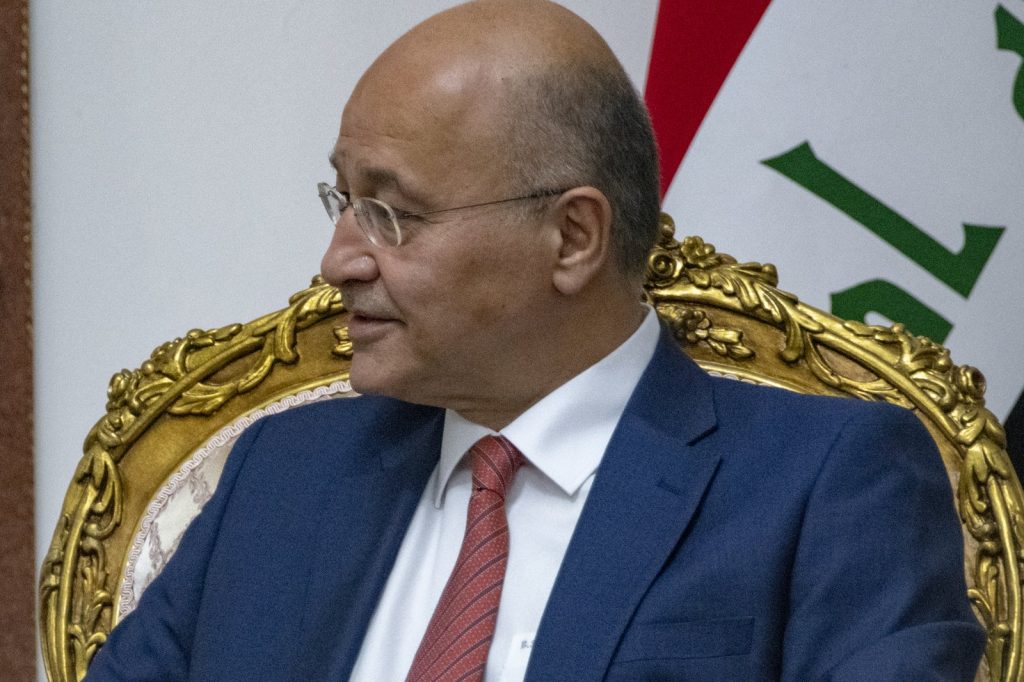
BAGHDAD — The constitution says the president must appoint a prime minister. It does not say what happens when he refuses. President Barham Saleh exploited that silence on Sunday.
He rejected the Iran-aligned Fatah bloc’s candidate, Basra governor Asaad al-Eidani. Then he offered to resign rather than appoint him.
The move turns a political crisis into a constitutional one. Iraq’s post-2003 charter gives the president 15 days to name a nominee after a parliamentary request. Saleh acknowledged he was skirting that deadline.
His solution: step down and let lawmakers sort it out. But the resignation was not a resignation.
Not yet. Saleh signaled he would quit, but he did not hand in a formal letter. He gave parliament a choice.
Accept his offer and trigger a new presidential election. Or find another way forward. Parliament speaker Mohammed al-Halbousi called an emergency session.
Lawmakers must now decide whether to accept Saleh’s resignation or pressure him to appoint someone. The text of the constitution offers no guidance.
It was written for a functioning system, not one where the president rejects the largest bloc’s pick and threatens to walk out. The street is the third player. Protesters have filled Baghdad and the south since October.
They see Fatah and its Popular Mobilisation Forces as an extension of Iranian power. Al-Eidani, a PMF-linked governor, is exactly the kind of figure they oppose.
“We told the world we want an independent face, not another commander wearing a civilian suit,” said Ali al-Rubaie, a 24-year-old demonstrator in Tahrir Square. Saleh’s statement sided with that sentiment. He argued that appointing al-Eidani “would not calm the nation, it would inflame it.” The president, a Kurd, effectively chose the protest movement over the parliament that elected him.
Fatah claims the largest bloc in the 329-seat Council of Representatives. That gives it the constitutional right to name a premier. But the bloc’s dominance is narrow, and its legitimacy is undercut by the low turnout that marked the 2018 election.
Protesters reject the entire political class. They see Fatah as the most powerful faction in a system that has failed to deliver jobs, services, or security.
The stand-off is the bloodiest political crisis since the defeat of Islamic State. More than 450 protesters have been killed since October. Roadblocks and clashes continue.
On Sunday, demonstrators responded to al-Eidani’s nomination by surging toward the Green Zone, the fortified district that houses parliament and government offices. Saleh’s resignation offer does not resolve the crisis.
It moves it to a new arena. Lawmakers must now decide whether to accept a president’s resignation over a single appointment. If they do, Iraq gets a new president.
That president would then face the same constitutional deadline and the same Fatah demand. Nothing changes. The same three forces remain in play: a constitution that does not account for refusal, a parliament that claims the right to choose, and a street that will not accept the choice.




