
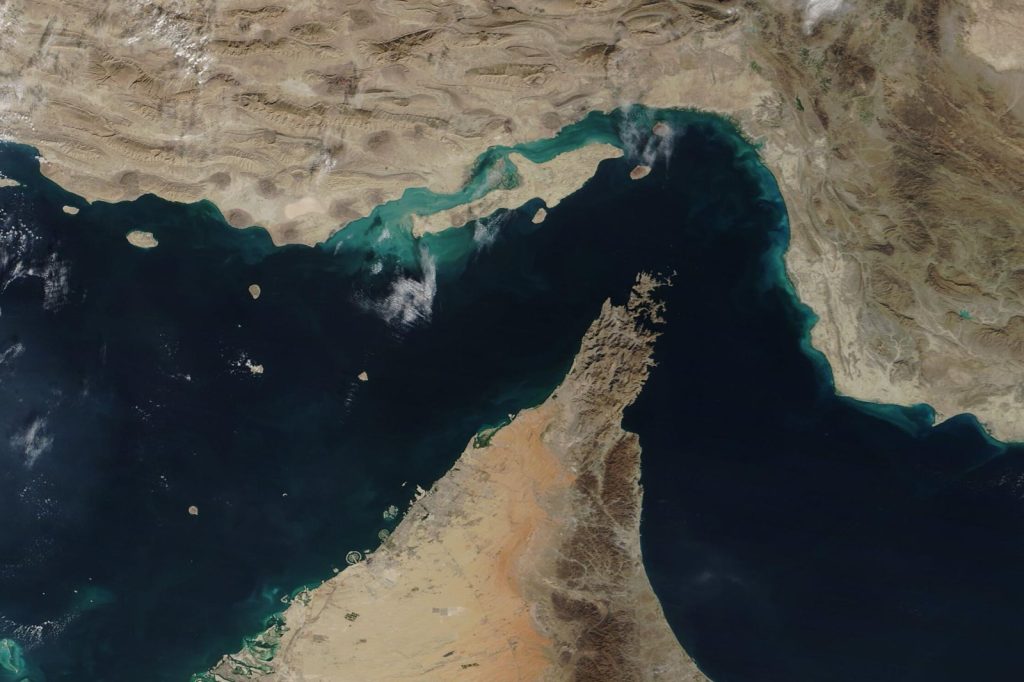
“The necessary fees will be collected for the specialized services provided under this mechanism.” Ebrahim Azizi, who chairs the Iranian parliament’s national security committee, posted that line on X on Saturday, May 16, 2026, and with it put a price tag on passage through the Strait of Hormuz.
Azizi said Tehran has built a “professional mechanism” to manage commercial traffic along a designated route in the strait, and that details will be unveiled soon. He framed it as a matter of “national sovereignty” and “the guarantee of international trade security.” Only commercial vessels and parties cooperating with Iran, he wrote, would be allowed to use it.
The route comes with a hard exclusion. It “will remain closed to the operators of the so-called ‘freedom project,’” Azizi said, a reference to the U.S. initiative. No fee amount was given in his post.
Ships already moving under Iranian terms
The announcement did not arrive in a vacuum. Iranian state television reported on Friday that naval forces of the Islamic Revolutionary Guard Corps were letting more vessels through, with a reporter in Bandar Abbas saying that many countries “have accepted the new legal protocols” set by Iran and the IRGC navy. A day earlier, the broadcaster said more than 30 ships had been cleared. Deputy parliament speaker Hamidreza Hajibabaei had said the month before that Tehran had collected its first toll revenue from ships crossing.
Two days after Azizi’s post, Euronews reported that Iran’s Supreme National Security Council had launched the Persian Gulf Strait Authority, a body meant to handle applications and collect passage fees. Vessels must email ownership details, insurance, crew manifests, cargo declarations and intended routing, and no transit proceeds without approval and payment. No official tariff has been published, Euronews wrote, though reports suggest some ships paid up to $2 million per transit in Chinese yuan. The authority serves as an administrative front for the IRGC Navy, which controls the physical transits. Euronews put the system’s start at March 2026.
What the strait carried before
Before Iran closed it to commercial shipping on February 28, 2026, the waterway handled roughly one-fifth of global seaborne oil and liquefied natural gas. At its narrowest it is 35 kilometers wide.
Iraq has felt the damage most plainly. New oil minister Bassem Mohammed Khudair said at a handover ceremony that Iraq shipped only 10 million barrels through the strait in April, against a normal 93 million barrels a month, a drop of approximately 89%. His southern terminals saw just two tankers arrive to load crude. Those exports typically run at 3.5 million barrels per day and supply roughly 90% of Iraq’s budget revenues. Baghdad has since turned to tanker trucks through Syria and limited pipeline flows to the Turkish port of Ceyhan.
Washington, the Gulf states and European countries reject the legality of Iran’s fee regime, Euronews reported. Under UNCLOS, the UN Convention on the Law of the Sea, ships have transit passage through the strait. Iran signed that convention but never ratified it.
Sources
- Iran Announces Strait of Hormuz Traffic Management Mechanism
- Iran will announce Strait of Hormuz mechanism, collect fees, Iranian MP says
- Iran sets up Hormuz transit authority to charge ships for passage




