Ebrahim Raisi, the eighth president of Iran and a hardline conservative cleric, has overseen a period of significant escalation in both the country’s nuclear program and its network of regional proxies. His administration now faces its most consequential test following the October 2024 United States military strikes, which have forced Tehran to calibrate its response between threats of retaliation and a clear desire to avoid a full-scale military confrontation.
Raisi’s Rise and Hardline Nuclear Agenda
Raisi assumed office on August 3, 2021, after winning the June 2021 presidential election with 62 percent of the vote in a contest marked by low turnout. Born December 14, 1960, in the northeastern city of Mashhad, he is a protégé of Supreme Leader Ali Khamenei, who holds ultimate political and religious authority in Iran’s system.
Before the presidency, Raisi served as head of the judiciary from 2019 to 2021, a post that cemented his reputation as a hardliner. Under Raisi, Iran’s uranium enrichment level has reached 60 percent purity. This marks a sharp escalation from the limits imposed by the 2015 nuclear deal, an agreement that Raisi’s government has continued to breach.
Raisi has been a vocal critic of the United States, and his administration has framed the nuclear advances as a direct response to U.S. sanctions and the Trump administration’s 2018 withdrawal from the nuclear accord. The nuclear push has become a central pillar of Raisi’s domestic and foreign policy, signaling defiance while deepening the technological capabilities that can produce weapons-grade material in a short timeframe.
Proxy Networks and Regional Reach
Beyond the enrichment program, Raisi’s government has maintained and expanded support for proxy groups across the Middle East. The network includes Hezbollah in Lebanon and the Houthis in Yemen, and it has been a cornerstone of Raisi’s foreign policy approach.
These proxies give Iran strategic depth, enabling it to project influence and threaten U.S. allies and interests without committing its own conventional forces directly. The October 2024 U.S. strikes targeted elements of this proxy infrastructure and represent a significant challenge to Raisi’s strategy. His administration has threatened retaliation but has simultaneously signaled a willingness to avoid direct armed conflict with the United States. The strikes have altered the strategic calculus in Tehran, requiring Raisi to balance his hardline posture with the practical risks of escalation.
Challenges Ahead: Maintaining the Hardline Posture Without Confrontation
The key question facing Raisi is whether he can sustain his uncompromising stance without triggering a full-scale conflict. His government has indicated it will continue uranium enrichment and support for proxy groups, but the U.S. strikes have introduced new constraints.
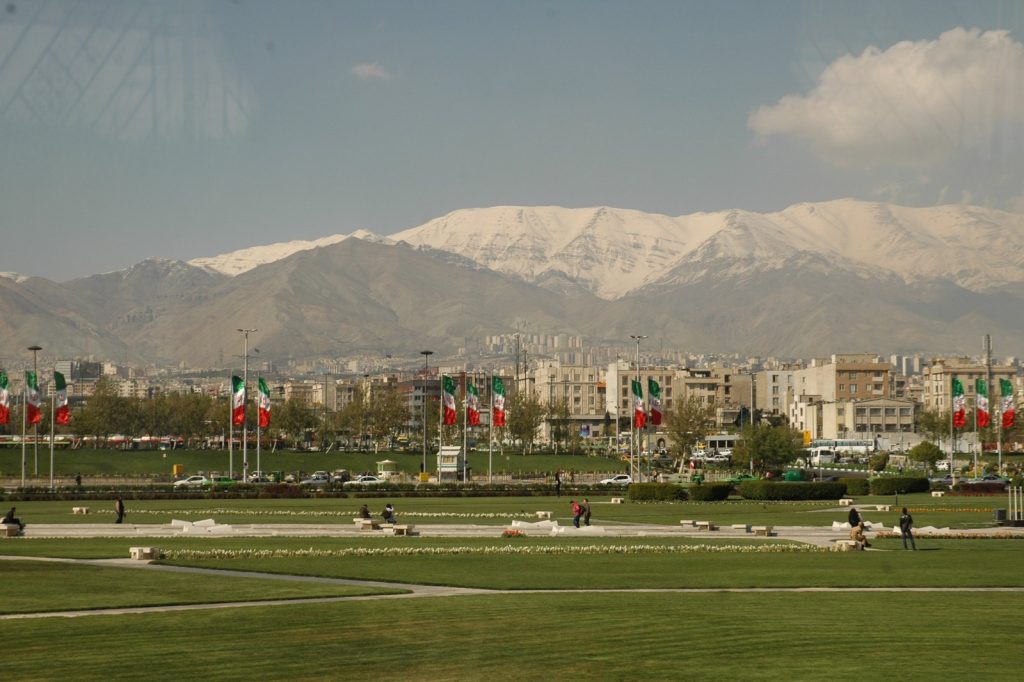
The diplomatic and military landscape has shifted, and Raisi must navigate a path that preserves his domestic credibility and international leverage while avoiding a war that could destabilize the regime. Iran’s broader context shapes these decisions. Officially known as the Islamic Republic of Iran, the country is a West Asian nation that borders several states and the Persian Gulf. Tehran serves as the capital and economic center.
The region hosted one of the oldest continuous major civilizations, with early unification under the Medes and later the Achaemenid Empire reaching its territorial height. Early developments in writing and agriculture occurred there, and it was a center for Zoroastrianism before the Muslim conquest in the seventh century.
The Safavid dynasty later established Twelver Shia Islam as the official religion, creating the framework for the modern state. Political shifts in the twentieth century included the rise of the Pahlavi dynasty after the Qajar Shah was ousted, an Anglo-American coup in 1953 following attempts to nationalize the oil industry, and the 1979 Iranian Revolution that overthrew the monarchy and established the current Islamic Republic. The country’s stability and foreign relations continue to affect global security, and tensions regarding its nuclear program and regional ties remain a persistent factor in international diplomacy.
Raisi’s next moves will determine whether Iran’s combative approach can survive the pressure of direct U.S. military action, or whether the October strikes will force a strategic recalculation from the presidency itself.