The resurgence of conflict in Ethiopia’s Tigray region has reignited fears of a broader war between Ethiopia and Eritrea, according to The Hindu. This tension is rooted in unresolved border disputes and Eritrea’s growing regional influence, which now poses a significant threat to Ethiopia’s stability.
A History of Adversarial Relations
Eritrea gained independence from Ethiopia in 1993 after a protracted war of independence, as noted by Wikipedia. Initially cordial, relations soured dramatically during the 1998 Eritrean–Ethiopian War, a conflict that reshaped the dynamics between the two nations. A peace agreement in 2018, brokered under Ethiopian Prime Minister Abiy Ahmed, temporarily eased tensions, but ties have since deteriorated. Eritrea’s recent backing of Somalia in the Ethiopian–Somali conflict has further strained relations, culminating in Ethiopia’s closure of its embassy in Asmara and the expulsion of Eritrean diplomats in October 2026, as reported by Wikipedia.
Border Disputes and Territorial Claims
At the heart of the current tensions are Ethiopia’s actions, which Eritrea views as violations of its sovereignty and territorial integrity. According to an information note circulated to UNSC Member States in October 2026, Ethiopia has intensified its campaign for “sovereign access to the sea,” explicitly targeting Eritrea’s southern coastline. Prime Minister Abiy Ahmed has framed this as an “inherent right” and an existential imperative, as reported by Shabait. Ethiopian officials, including military generals, have publicly displayed maps incorporating Eritrean territory, and the government has established a Naval Force with jurisdiction over Eritrea’s coastal region. These actions, Eritrea argues, breach international law and the 2018 Peace and Friendship Agreement.
Eritrea’s Regional Influence and Alliances
Eritrea’s strategic position and its alliances have given it leverage in the region. During the Tigray conflict, Eritrean troops reportedly assisted Ethiopian forces against the Tigray People’s Liberation Front (TPLF), as mentioned by The Hindu. However, Eritrea’s support for Somalia in its dispute with Ethiopia has shifted the balance of power. This alignment complicates Ethiopia’s efforts to assert control in the region and underscores Eritrea’s ability to influence regional dynamics.
Ethiopia’s Response and the Risk of Renewed Conflict
Ethiopia’s federal government has responded to Eritrea’s actions with a mix of diplomatic and military measures. The closure of the embassy in Asmara and the expulsion of diplomats signal a breakdown in diplomatic relations. Meanwhile, Ethiopian forces, alongside Amhara forces and Eritrean troops, have reclaimed control of Mekelle, the capital of the Tigray region, as reported by The Hindu. However, the presence of Eritrean forces in Ethiopian territory remains disputed, and the risk of direct military confrontation between the two nations is high. The conflict in Tigray, with its mass displacements, food shortages, and reports of atrocities, serves as a stark reminder of the potential for escalation.
The Broader Implications
The unresolved border disputes and Eritrea’s regional influence have significant implications for Ethiopia’s stability. Ethiopia’s claims to the Red Sea and its actions against Eritrea’s sovereignty have international legal ramifications, as highlighted by Shabait. The conflict also draws in regional players like Somalia, further complicating the geopolitical landscape. As tensions rise, the international community watches closely, aware that a full-scale war between Ethiopia and Eritrea could have devastating consequences for the Horn of Africa and beyond.
Colonial Era And Historical Claims
The historical background of Eritrea-Ethiopia relations is complex, with both countries having been influenced by various colonial powers. According to Wikipedia, the ancient Kingdom of Aksum, which existed from the 1st century AD to the early Middle Ages, encompassed parts of both countries. Additionally, the Eritrean coastal regions were subject to foreign powers for a long time, with the Ottoman Empire occupying the port city of Massawa and controlling the islands and coasts of the Red Sea with interruptions for over three centuries.
The Italian shipping company Rubattino acquired the coastal area around Assab in 1869, which became the property of the Italian state in 1882. This marked the beginning of Italy’s colonial ambitions in the Horn of Africa, leading to conflict with Abyssinia (now Ethiopia). As reported by Wikipedia, Emperor Yohannes IV initially resisted, but his successor, Menelik II, recognized Italian rule over the territories north of the Mereb River in the Treaty of Wuchale in 1889.
The Treaty of Addis Ababa in 1896, recognized Abyssinia’s independence after Italy’s defeat in the Battle of Adwa. These historical events have contributed to the current border disputes and territorial claims between Eritrea and Ethiopia, with Ethiopia’s recent claims to the Red Sea and its actions against Eritrea’s sovereignty being seen as a violation of international law and the 2018 Peace and Friendship Agreement, as noted by Shabait.
Current Border Disputes And Their Implications
According to the information note circulated to UNSC Member States, Ethiopia’s actions, including the establishment of a Naval Force with jurisdiction over Eritrea’s southern coastal region, are seen as a brazen violation of Eritrea’s sovereignty and territorial integrity. This is in breach of the prohibition of the threat or use of force under Article 2(4) of the Charter of the United Nations, as noted by Shabait.
Prime Minister Abiy Ahmed has explicitly claimed an “inherent right” to the Red Sea, framing it as an existential imperative that would inevitably lead to military conflict if ignored, as reported by Shabait. This expansionist claim has been amplified by senior Ethiopian officials, who have publicly displayed maps incorporating Eritrea’s southern coastline.
The situation is further complicated by Ethiopia’s recent actions, including the display of an official map incorporating sovereign Eritrean and Somali territories during the 38th AU Summit in Addis Ababa, as reported by Shabait. This has significant implications for regional stability and the rule of international law.
Sources
- Tigray conflict revives fears of Ethiopia-Eritrea war
- Eritrea–Ethiopia relations
- Information Note Regarding Eritrea-Ethiopia Relations
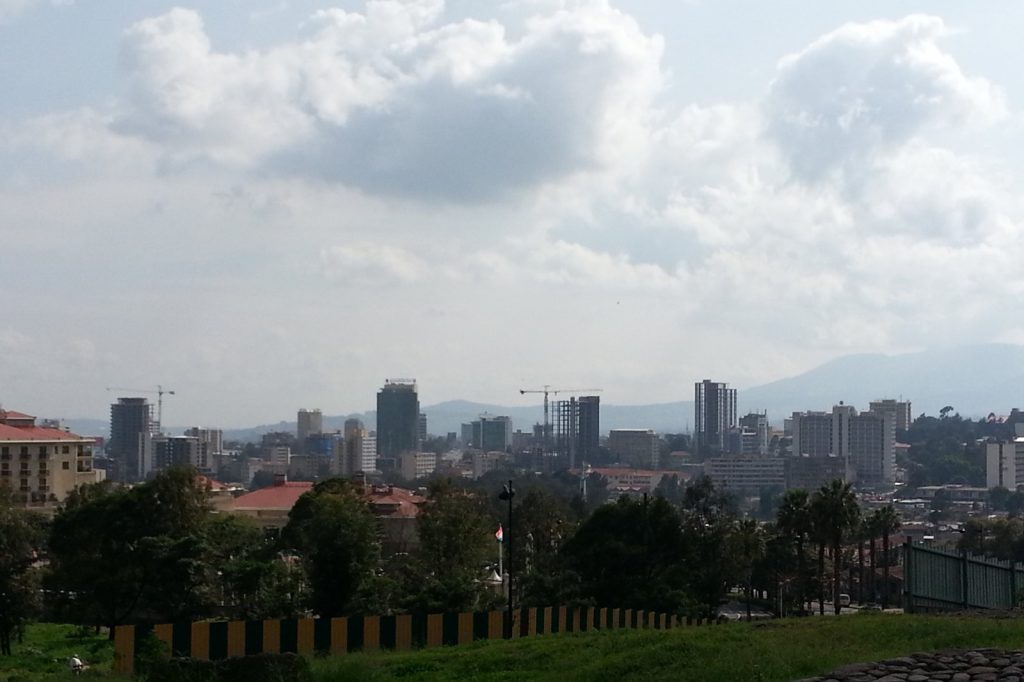
Photo: Bernard Gagnon (CC BY-SA 3.0)