KYIV — The war has entered a new phase. Not because of a single battle or a territorial shift. Because of distance.
Ukraine can now hit nearly any target inside Russia. That is what a new analysis, cited by Axios, concludes.
The implication is stark: the front line is no longer a line. It is a circle that wraps around most of Russia’s western half. How did this happen?
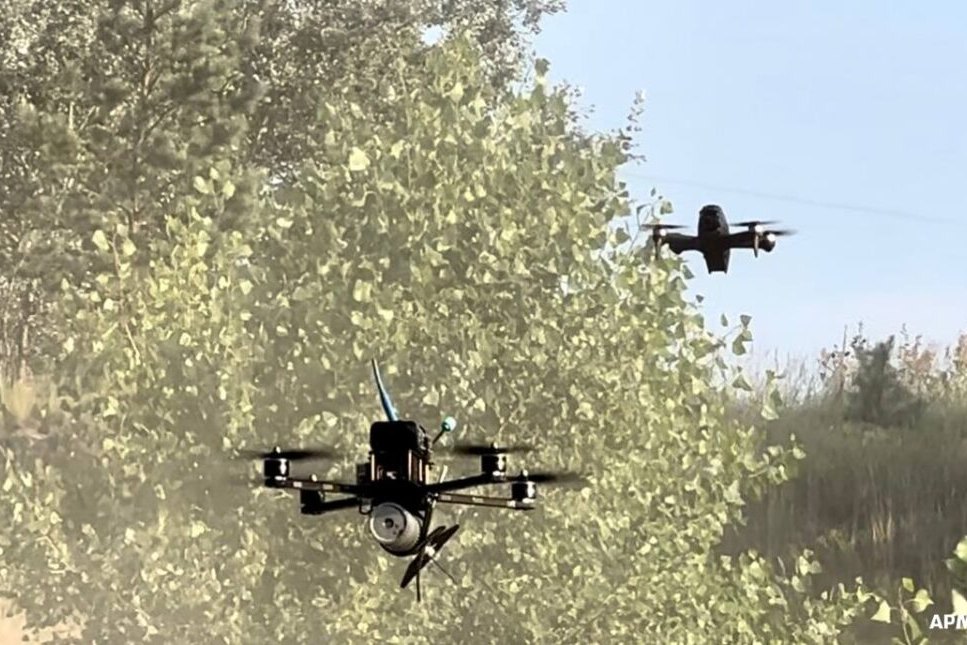
Through a combination of advanced drones and long-range missiles. These weapons are hitting Russian energy facilities, weapons plants, and military bases with increasing frequency.
The report mentions Flamingo missiles, manufactured by Fire Point, with video footage circulating on social media this week showing them hitting their targets. This is not theoretical. This is operational.
Why does this matter now? Because the geography of safety inside Russia has shrunk. Fewer areas are considered safe.
Repetitive strikes on refineries have created fuel shortages. One attack caused panic in Moscow.
Residents sought shelter after explosions. There were reports of so-called “black rain.” Ukrainian President Volodymyr Zelensky claims Russia has been forced to relocate the largest part of its air defence to protect critical assets — central Moscow and a presidential residence. The logic is simple: protect the capital and the leader, leave other targets more exposed.
Zelensky calls these operations “long-range sanctions.” It is an ironic label for attacks hundreds of kilometres from the border. Russian President Vladimir Putin acknowledged there are “problems” and “certain shortages” from the strikes.
He tried to downplay their significance. But the admission itself is a measure of how the equation has changed. The Kremlin does not typically concede problems.
The mechanics are brutal. Both sides are trading long-range blows. But Ukraine’s tools have become far more sophisticated.
The domestic defence industry has scaled. That is a fact on the ground.
This new leverage does not come free. Moscow launched fresh attacks against Kyiv overnight. At least 30 people were killed.
Russian ground forces keep pushing along the front line in Donetsk despite heavy casualties. The trade is real.
It is human. So what now? The tactical balance has shifted.
Ukraine can strike deeper. Russia must defend more territory. The war, long fought mostly on Ukrainian soil, now reaches into Russia itself.
That changes the calculus for both sides. For Ukraine, the ability to hit nearly any target inside Russia is a strategic card.
For Russia, it means the homeland is no longer a sanctuary. The war is no longer contained. It is now a two-way fight over distance.
The human cost remains the constant. Thirty dead in Kyiv.
Fuel shortages in Russia. Panic in Moscow. The war grinds on.
But the ground has shifted under everyone’s feet.