
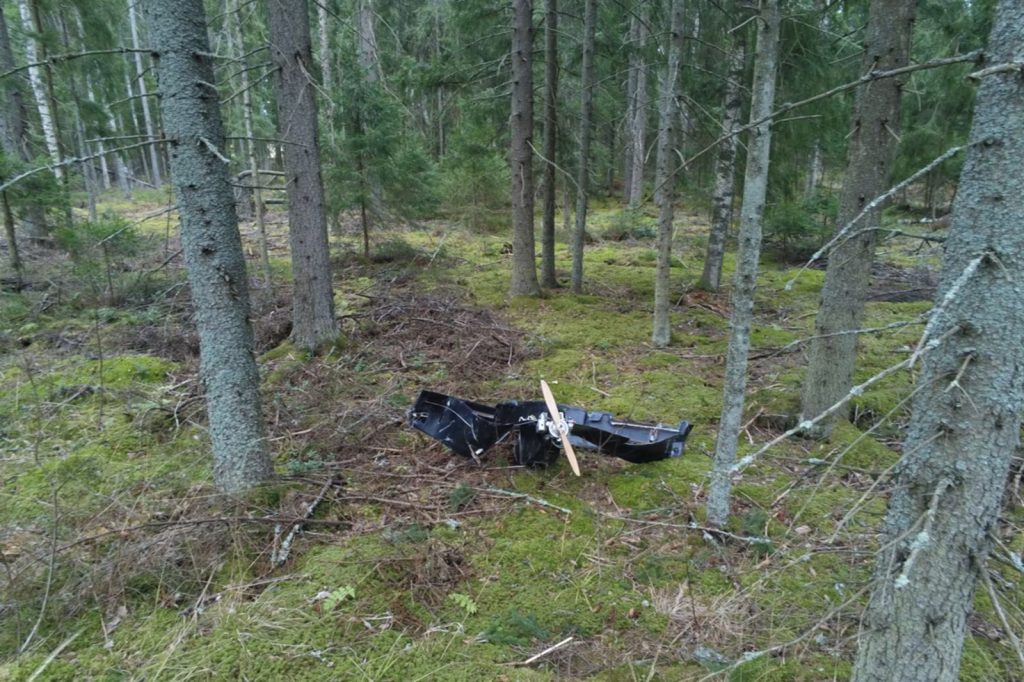
Leningrad Oblast sits some 600 kilometers from the closest corner of Ukraine. On April 15 its governor declared it a “frontline” region, and he had numbers to back the label: from January through March, 243 Ukrainian drones were shot down over the province.
Not all of them were. Oil facilities around St. Petersburg, President Vladimir Putin’s hometown, from export terminals on the Gulf of Finland to refineries inland, have been among the hardest hit in a surge of Ukrainian strikes on Russian hydrocarbon production, storage and export, Radio Free Europe/Radio Liberty reported.
How the volume grew
French open-source researcher Clement Molin counted about 1,000 Ukrainian drones launched into Russia in August 2024. The figure was 3,000 in July 2025 and 7,000 in March, the first month in which Ukraine sent more drones into Russia than Russia sent into Ukraine. His numbers rest partly on Russian Defense Ministry data, and Moscow’s claims about how many drones it downs are unreliable.
John Helin, co-founder of the research group Black Bird Group, urged caution with the raw totals. “That said, the broader trend is real,” he told RFE/RL. “Ukraine has clearly expanded its long-range drone strike capacity, and Russia is now challenged to defend a much larger rear area against regular Ukrainian attacks.” He said the campaign should be judged by what was hit and what it cost Russia, and “on those counts it’s clear that the Ukrainian long-range campaign is becoming increasingly effective.”
Bloomberg News counted at least 21 Ukrainian strikes on Russian oil infrastructure in April, nine of them on processing facilities. Russia’s crude processing volume fell to its lowest level since 2009.
Clearing the way
Ukrainian soldiers and analysts describe air defense as the key target. Oleksandr Karpyuk, who flies with the 59th Assault Brigade of the Unmanned Systems Forces under the call sign Serge Marco, laid out the sequence. “First the drones arrive, then the missiles arrive. They take out the air defense systems — and that means some Flamingos, with a 1,000-kilogram warhead, can strike [the targets] with ease.”
The Unmanned Systems Forces commander, Robert Brovdi, said his units destroyed 41 Russian air defense units in March, after 54 over the three months before. Analysts say such claims are hard to verify. Oryx, which tracks equipment losses, counted 18 Russian surface-to-air systems destroyed or damaged in March, along with seven radars.
Fabian Hoffmann of the University of Oslo said Russia’s size makes it vulnerable, since losing one system can leave a whole area uncovered. He also argued that the campaign alone will not win the war for Ukraine, though its cumulative restraints are “real, bearing meaningfully on Russia’s budget and planning.”
The machines
The Guardian described the hardware at close range. Ukraine’s Fire Point FP-2 is a miniature monoplane with a 6-metre wingspan that carries more than 100kg of explosive. It runs on a piston engine that sounds like a scooter, and a jet booster launches it. A crew from the 413 Raid regiment lined up several of them for a night mission into occupied Luhansk, over 200 miles away.
Skipper, one of the unit’s commanders, said that when Raid began flying the FP-2 one crew could manage two missions a week. Now, he said, “we can do 10 times more, or even more.”
The FP-1, a $75,000 sister model with longer reach, has hit warehouses and refineries at a depth of 1,800 miles inside Russia, according to the Guardian. It cited International Energy Agency figures showing the country’s crude oil production down 7.7% in a year. A large raid can involve up to 300 drones, with a stated goal of 1,000 in a night, where cheap decoys mark an air corridor for the final target.
It is not one-sided. Russia has added jet engines to its Iranian-designed Shahed drones, and the Guardian reported that interception rates against the newer models have dropped to 60%, from over 90%. Skipper said Ukrainian crews were destroying several Russian air defense systems almost every night in spring. “Since June, July, they are just hiding.”
Sources
- Drone Strikes, Deep Strikes: How Ukraine's Long-Range Air Attacks Are Hurting Russia
- The long-range drone war: Ukraine and Russia scramble for supremacy in the skies
- Operation Spiderweb




