Israelis vote on Tuesday in their first national election since the Hamas-led attacks of October 7, 2023, and for most of them the man at the center of it is Prime Minister Benjamin Netanyahu. Nearly every household in the country has been touched by the three years of war that followed. Many families are still carrying that grief into the polling station.
A Rival From the Army
Netanyahu, 77, has led Israel for nearly 19 of the past 30 years, and security was long the heart of his pitch. He has lost before and come back stronger. This time the opposition is deeper, and its best-placed figure is Gadi Eisenkot, a former chief of staff of the Israel Defense Forces who founded the centrist Yashar party only last year. Eisenkot, 66, sat in Netanyahu’s war cabinet early in the war, then resigned over disagreements about Gaza. His son Gal, a soldier, was killed in action in December 2023.
Eisenkot has called for an independent commission of inquiry into the attacks, which Netanyahu opposes. Critics accuse the prime minister of dodging responsibility for the intelligence failures, of helping to keep Hamas in power in Gaza in the years before, and of putting the fight against the group ahead of freeing hostages. Last month he threatened to sue the newspaper Haaretz over a report that he had been warned about the attacks in advance.
Netanyahu is also on trial at home on charges of fraud, breach of trust and bribery, which he denies. His critics say he is running to stay out of jail, and that the privileges of office have let him stretch those cases out.
Reading the Polls
The Knesset has 120 seats, so any government needs 61. No party has ever won that many alone, and the proportional system forces coalition talks every time.
An average of nine polls from the past two weeks put Yashar first in eight of them, at 22.1 seats, against 20.6 for Likud. One late Walla poll gave Eisenkot 23 and Likud 19. The picture for the outgoing coalition is bleaker. Likud, Religious Zionism, Otzma Yehudit, Shas and United Torah Judaism together average 50.2 seats, down from 51.7 in January. Another aggregator that averaged the last ten polls came out kinder to them, with 53 seats for the coalition and 51 for the opposition bloc. Polling is banned in the final days, so that is the last word.
Further down the field are Naftali Bennett and Yair Lapid, former prime ministers running together as B’Yachad, the Democrats under Yair Golan, Avigdor Lieberman’s Yisrael Beiteinu and two Arab-led blocs. A Channel 12 poll this month found 58 percent preferred someone other than Netanyahu to lead, against 35 percent who wanted him to stay.
Liran Harsgor, an electoral behavior expert at the University of Haifa, told Newsweek the contest may not turn on the big parties. “It could be that Netanyahu gets more votes than Eisenkot, but he doesn’t have enough coalition partners,” she said. Eisenkot, she added, can talk to ultra-Orthodox and Arab parties, and Arab turnout is expected to be higher than before.
What Voters Are Weighing
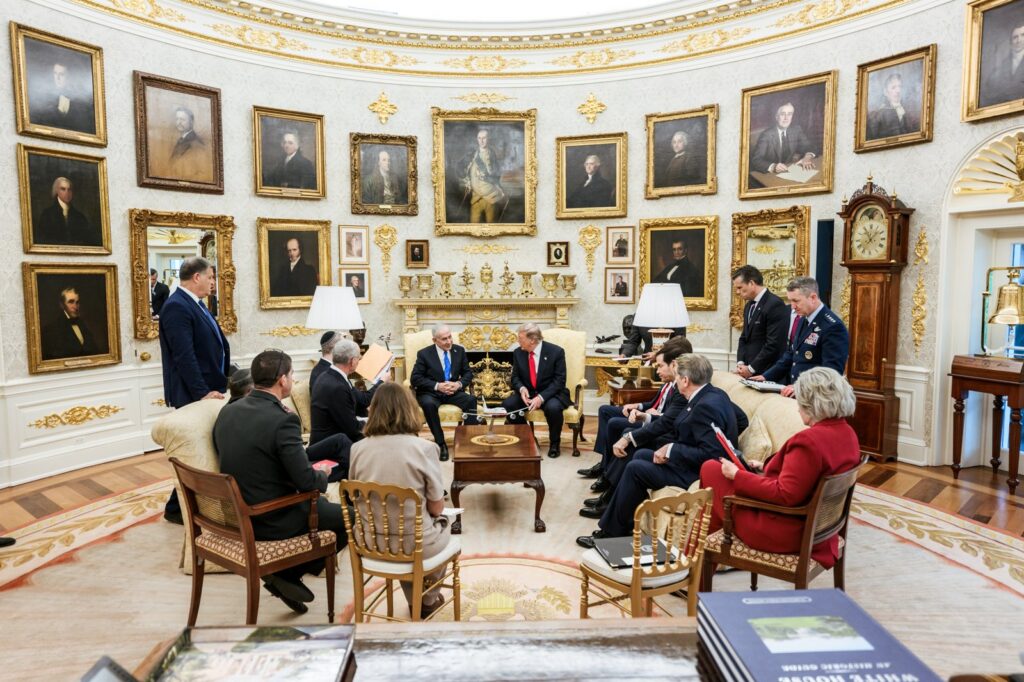
Netanyahu wants the last three years remembered for blows to Hamas, Hezbollah and Iran. Yoram Meital, a professor at Ben-Gurion University of the Negev, said that story skips his responsibility for October 7 and the damage to Israel’s standing in Europe and among many Americans. President Donald Trump has endorsed him. Netanyahu has long tied himself to Trump, whose first term brought US recognition of Jerusalem as Israel’s capital and the Abraham Accords.
“This is the first opportunity since 2023 to really express, other than through protests, what citizens feel about the government,” Harsgor said.
Once the votes are counted, President Isaac Herzog will ask one party leader to try to assemble a coalition. Harsgor warned that the opposition would have to act as one voice, and that arguing among themselves could drag the process out for a long time.
Sources
- What to know about the Israeli elections as Netanyahu faces a battle for survival
- Benjamin Netanyahu
- Will Benjamin Netanyahu win Israel election? What polls show
Photo: Daniel Torok (Public domain (US government work))