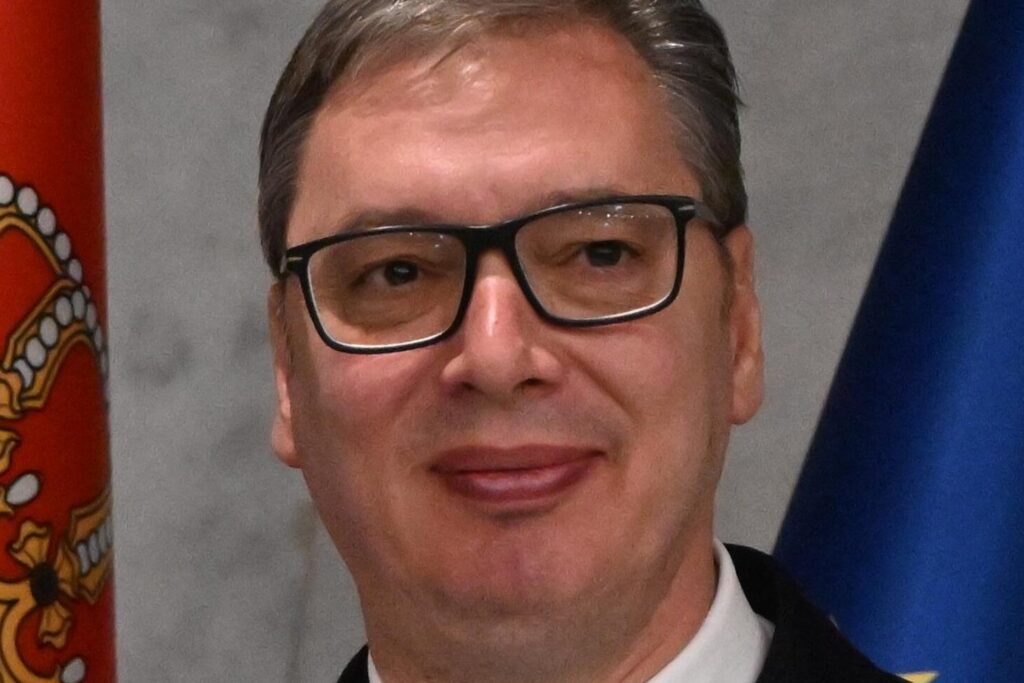
“We lost the election.” With those four words on election night, Aleksandar Vučić conceded defeat in Serbia’s parliamentary vote of 25 October. Turnout reached almost 69%, close to the level of September 2000, when voters ended Slobodan Milošević’s rule.
Preliminary figures from the Republic Electoral Commission, with 8,077 of 8,392 polling stations counted, gave the student-backed Student List 52.54% of the vote against 39.29% for Vučić’s United Serbia coalition. That translates into roughly 140 of the 250 seats in the National Assembly, enough to govern without partners. The Serbian Progressive Party (SNS) won 104 seats and goes into opposition for the first time since it took power in 2012. Results still need formal certification.
From a collapsed canopy to the ballot box
The movement behind the list began as a leaderless protest after the Novi Sad railway station canopy fell in November 2024. Students organised through university plenums, where decisions are made by direct vote, and their demands for accountability and the rule of law grew into the most serious electoral challenge the SNS-led coalition has faced. Its 11-point programme puts judicial independence, anti-corruption measures, clean public procurement, media freedom and depoliticised institutions first, with education, housing and healthcare alongside.
That focus on how the state works, rather than on a party line, let the movement draw voters who disagree about nationalism, foreign policy and Europe. It may also make governing harder. Ministers will have to agree on economic priorities, appointments and how far reform should go.
A shaken political map
The traditional opposition parties did not clear the three-per-cent threshold and are gone from parliament. Minority parties that once backed Vučić also slipped. The Alliance of Vojvodina Hungarians won three of the five seats it could have taken, which suggests many Hungarian voters chose the students. Two Bosniak representatives enter parliament, one from a group that had cooperated with Vučić and one from a traditional opposition movement. Two Albanian-coalition deputies will also sit, from a community that never worked with his government.
Vučić had resigned the presidency in September, hoping to come back as prime minister. The result removed the majority he needed. A separate presidential election must now follow.
Dejan Šoškić, an economics professor linked to the list, said he was proud of the students “who have brought us to this historic situation in which Serbia has freed itself”. Candidate Radomir Saičić said “serious work and the building of a new Serbia begin tomorrow.”
What it means for Brussels, Moscow and Beijing
Congratulations came from European Council President António Costa, Commission President Ursula von der Leyen, Enlargement Commissioner Marta Kos and Hungarian prime minister Péter Magyar. Hungary under Viktor Orban had been among Vučić’s closest allies in the EU.
Supporters of the list lean towards Europe: 75% favour closer ties with the EU, against 10% who prefer Russia. Yet the movement’s own statements point to continuity on two touchy issues. A May 2026 memorandum called Kosovo an “inalienable and integral part of Serbia”, and in September the movement said it opposes sanctions on Russia. Vučić, in his concession, predicted the new government would impose them by March or April, which sits oddly with that position. He also blamed European governments and what he called the American “deep state”.
Whatever the new government wants, it inherits commitments. Serbia has stayed out of EU sanctions on Russia, kept security ties with Moscow and signed a free trade agreement with China that took effect in July 2024. China supplied 61% of Serbia’s major arms imports in 2021 to 2025. Meanwhile no new EU negotiating cluster has opened since December 2021, and Serbia’s alignment with EU foreign policy stood at about 60% in the first half of 2026.
Analysts at ISS Europa describe the window for reform as possibly narrow, given likely resistance inside state institutions. Vučić also warned that the result could unsettle investors. The EU, for its part, is already Serbia’s largest economic partner, and it accounted for 58.3% of the country’s trade in 2024.
Sources
- Serbia after the vote: Back to fundamentals
- Political earthquake in Serbia: The end of the Vucic Era
- Vučić Has Lost Serbia’s Election. His System May Be Harder to Remove – https://eutoday.net
Photo: Oliver Bunic (CC BY 4.0)