
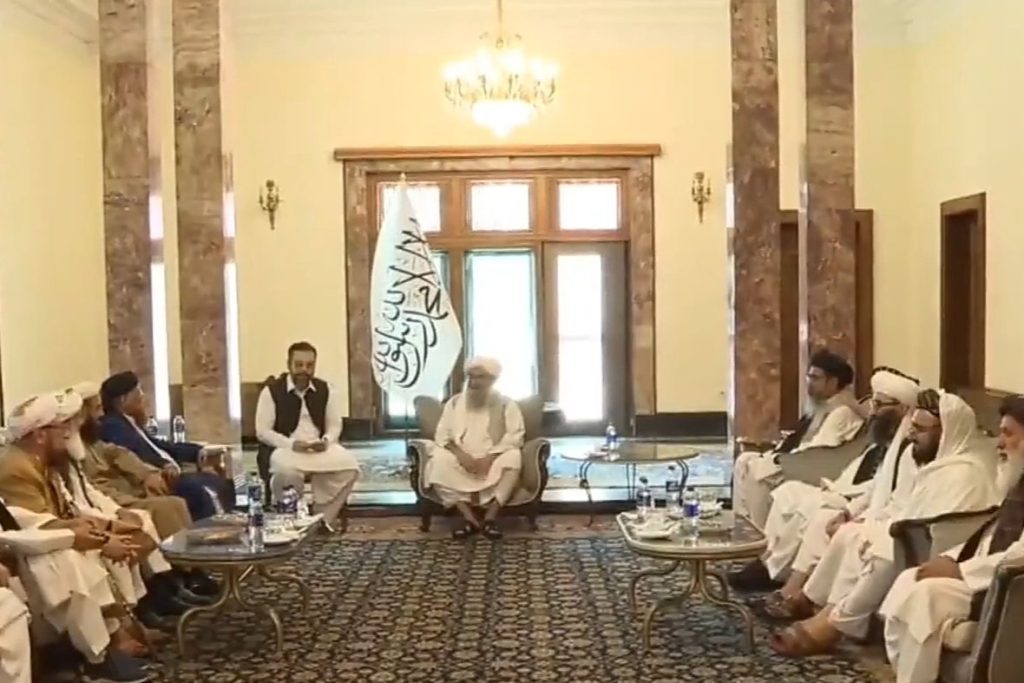
The Taliban announced an interim government on September 7, 2021, nearly three weeks after seizing control of Afghanistan. Spokesman Zabihullah Mujahid named Mullah Mohammad Hassan Akhund as the head of state during a press conference at the Government Media Center in Kabul. The cabinet is composed entirely of senior Taliban figures, many of whom are under United Nations sanctions.
Mullah Hassan Akhund, one of the closest associates of Taliban founder Mullah Omar, will lead the government. He previously served as head of the Taliban’s ruling Shura and was among the four founders of the Tehreek-e-Taliban movement.
Mullah Abdul Ghani Baradar, a co-founder of the Taliban who led the group’s political office in Qatar, will serve as deputy head of state. “The country needs to work in every sector,” Mujahid said during the announcement. “The Islamic Emirate had decided to announce a caretaker cabinet to work in the necessary sectors.”
Key ministerial appointments
Maulvi Mohammad Yaqub, the son of Mullah Omar, was appointed Minister of Defense. Sirajuddin Haqqani, leader of the Haqqani network designated as a terrorist group by the United States, will serve as Minister of Interior. Mujahid himself will be Deputy Minister of Information.
Qari Fasih Badakhshani was named Army Chief. He led Taliban forces that conquered the northern provinces after the withdrawal of foreign troops.
The last center of resistance, Panjshir province, fell under his command. Other appointments include Maulvi Amir Khan Muttaqi as Foreign Minister, Mullah Hidayat Badri as Finance Minister, and Mullah Khairullah Khairkhwa as Information Minister. Qari Din Mohammad will oversee the Economy Ministry, Maulvi Noor Mohammad Saqib will lead the Hajj and Endowment Ministry, and Maulvi Abdul Hakim will serve as Justice Minister.
Broader cabinet and foreign policy stance
Mullah Noorullah Noori was appointed Minister for Tribal Affairs. Sheikh Mohammad Khalid will lead the Ministry of Invitation and Guidance. Haji Mohammad Issa will oversee the Petroleum Ministry, and Mullah Hamidullah Akhundzada will run the Transport Ministry.
Maulvi Najibullah Haqqani was named Minister for Intelligence. Haji Mohammad Idrees will serve as the patron of Afghanistan Bank, and Sher Mohammad Abbas will be Assistant Foreign Minister.
“No one’s intervention in Afghanistan is acceptable,” Mujahid said. “We have finally won the 20-year struggle against the US intervention in Afghanistan. No one is interfering in our affairs.
This is just propaganda for 20 years.” The spokesman emphasized the need for a functioning government. “As we have seen, the country was in crisis and the people were waiting for an institution to solve the problems of the people,” he said.
“That is why the leadership of the Islamic Emirate decided to announce the cabinet.” The Taliban seized control of Afghanistan in mid-August 2021 after a rapid military offensive. The previous U.S.-backed government collapsed, and President Ashraf Ghani fled the country. The Taliban’s takeover ended a 20-year war that began after the September 11, 2001 attacks.
International reaction to the interim government has been cautious. Many countries have said they will judge the Taliban by their actions, particularly regarding human rights, women’s access to education and work, and the prevention of Afghanistan becoming a haven for terrorist groups. The new government faces enormous challenges.
Afghanistan’s economy is in crisis, with foreign aid frozen and international financial institutions cutting ties. The country also faces a severe drought and a humanitarian crisis that has displaced hundreds of thousands of people.
The cabinet includes no women or members of Afghanistan’s ethnic minorities, such as Tajiks, Hazaras, or Uzbeks. This has drawn criticism from human rights groups and some international observers. The Taliban have promised a more moderate rule than their previous regime from 1996 to 2001.
But the composition of the interim government suggests continuity with the past. Many of the appointees were senior figures during the first Taliban era and remain on UN sanctions lists.
The announcement ends weeks of uncertainty about who would lead the country. It also signals that the Taliban intend to consolidate their control quickly. The group has faced internal divisions between hardliners and those advocating a more pragmatic approach to governance.
For now, the interim cabinet will focus on restoring basic services and security. The Taliban have said they will eventually form a more inclusive government, but no timeline has been given. The world watches to see whether this new leadership will deliver on its promises or repeat the repressive policies of the past.




