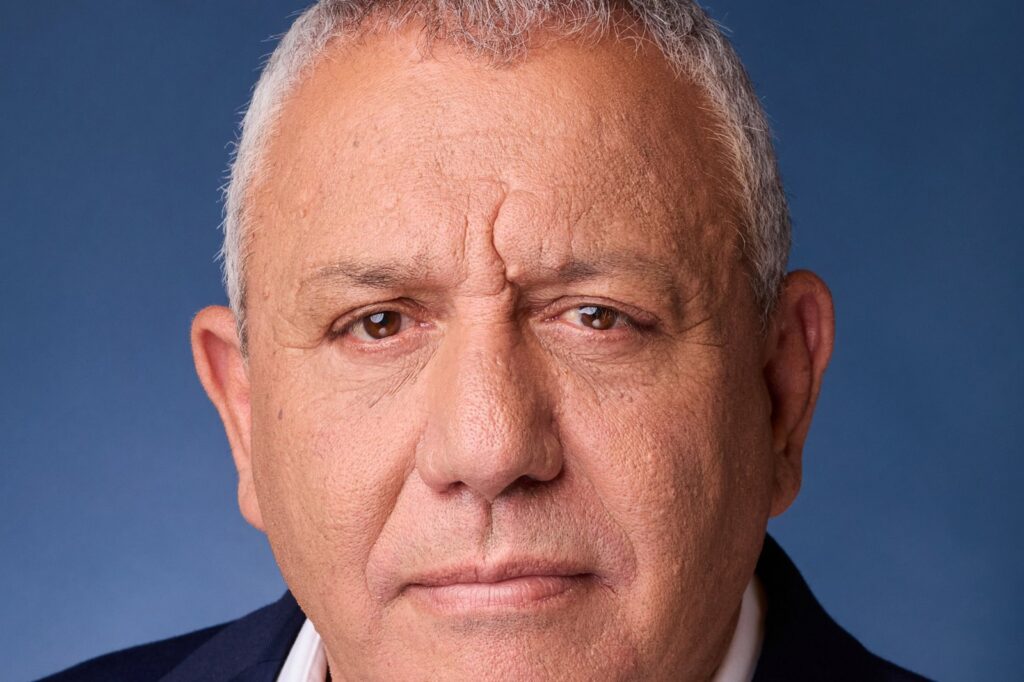
A General’s Path to the Prime Minister’s Office
Gadi Eisenkot has emerged as the opposition’s leading candidate to unseat Prime Minister Benjamin Netanyahu in the October 27 vote, a shift that signals a potential pivot in Israel’s political and military direction. For families and communities across the region watching these developments, the identity of the next leader carries weight beyond Jerusalem. Eisenkot, a 66-year-old former general and leader of the Yashar party, presents a stark contrast to the current government. His rise from the southern port city of Eilat to the top of the Israel Defense Forces (IDF) offers a different perspective on national security and domestic unity. This background shapes his approach to the ongoing conflicts and the future of the state.
Eisenkot’s journey began in Tiberias, where he was born in 1960 to Meir and Esther Eisenkot, Jewish Moroccan immigrants from Safi. His family moved to Eilat when he was a year old. His father worked as a miner at the Timna Valley copper mines, and his mother was a homemaker. This upbringing stands in sharp contrast to Netanyahu’s elite Jerusalem background in the circles of power. He holds a B.A. in history from Tel Aviv University and a master’s degree from the United States Army War College. His career spanned four decades, rising through the ranks to become the 21st chief of staff of the IDF from 2015 to 2019. He served under Netanyahu during this period, a tenure that included significant strategic decisions and internal disputes.
The Gideon Plan and Ground Force Focus
During his tenure as chief of staff, Eisenkot prioritized the strengthening of IDF ground forces. He implemented the “Gideon” multiyear plan, which emphasized force buildup and the formation of a cyber command. This strategic focus suggests a leadership style that values sustained military capacity over rapid, high-tech solutions alone. For observers of global politics, this indicates a potential shift in how Israel might approach future engagements. The Gideon plan was designed to ensure the army could withstand prolonged conflicts and maintain operational readiness. It reflects a doctrine that places significant weight on manpower and traditional combat capabilities.
Eisenkot’s military philosophy is rooted in his experience leading troops in the Golani Brigade. He views domestic polarization as a significant threat to national security, arguing that internal division weakens the state’s ability to project power. He advocates for reforms to strengthen the separation of powers in the Israeli government. This stance suggests that he sees political stability as a prerequisite for effective military strategy. By prioritizing internal unity, he aims to create a cohesive front that can support long-term security objectives. This approach differs from the current administration’s focus on immediate tactical victories and political maneuvering.
The “Gideon” plan also included efforts to modernize the army’s command structure. Eisenkot sought to integrate new technologies while maintaining the core strength of ground forces. This balance is crucial for a state facing multiple fronts. It allows for flexibility in response to different types of threats, from guerrilla warfare to conventional attacks. For communities in the region, this means a military that is prepared for a variety of scenarios. It suggests a more calculated and less reactive approach to conflict. The emphasis on cyber capabilities also signals an awareness of the evolving nature of warfare in the digital age.
Personal Loss and Political Stakes
The personal stakes for Eisenkot are profound. His youngest son, Gal, 25, was killed in action in Gaza in December 2023, two months into the war. Two of his nephews also died in combat. This loss has deeply influenced his political stance and public statements. Eisenkot wrote in the newspaper Yedioth Ahronoth that he swore over Gal’s grave that the price paid by his son and his friends would not be in vain. This personal tragedy adds a layer of gravity to his campaign. It connects directly to the sacrifices made by ordinary families in the conflict. For many voters, this shared grief resonates more than abstract policy debates.
Eisenkot entered politics in 2022 alongside former chief of staff Benny Gantz. After the October 7, 2023 Hamas-led attack, they joined Netanyahu’s emergency war cabinet. However, they left in June 2024, citing the absence of a clear post-war strategy. This decision highlights a fundamental disagreement on how to end the conflict. Eisenkot advocates for a long-term ceasefire and demilitarization in the Gaza Strip. He believes that a defined end to the war is necessary to allow for reconstruction and stability. This contrasts with the current government’s approach, which has been criticized for lacking a clear exit strategy. The lack of a post-war plan has been a major point of contention in Israeli politics.
The political impact of Eisenkot’s candidacy has been amplified by recent controversies. In a series of race-baiting remarks, TV host Yinon Magal, widely considered a mouthpiece for Netanyahu, called Eisenkot a “monkey” of “Mizrahi-Moroccan” heritage. Magal later claimed he was using an underworld term for a frontman managed by Ashkenazi elites. The remarks struck at longstanding inequalities between Jews of European origin and those from the Middle East. Even Netanyahu condemned the remarks, though he is not known for contrition. This episode put a spotlight on Eisenkot’s family history and his appeal to Mizrahi voters. For years, many Mizrahi voters have traditionally supported Netanyahu’s Likud party. Eisenkot’s background offers an alternative narrative that resonates with this demographic.
Policy Positions on Conscription and Governance
Eisenkot’s policy positions reflect a desire to address domestic divisions while maintaining national security. He supports military service exemptions for up to three percent of Haredim enrolled at their yeshiva for religious studies. However, he opposes the longstanding system that granted significant exemptions to ultra-Orthodox men, particularly following the October 7 attacks. This stance aims to balance religious freedom with the principle of shared burden. For many Israeli citizens, the issue of conscription is a source of deep frustration. Eisenkot’s approach seeks to find a middle ground that respects religious traditions while ensuring that all citizens contribute to national defense. This could help to reduce tensions between secular and religious communities.
Eisenkot also advocates for a state rooted in national-Jewish values but with equal rights for all citizens. He avoids explicit support for a two-state solution with the Palestinians, prioritizing the Jordan Valley and settlement blocs. This position reflects a pragmatic approach to the Israeli-Palestinian conflict. It focuses on security and demographic realities rather than idealistic political outcomes. For communities in the region, this suggests a continuation of Israeli control over key areas while seeking stability. It does not offer a clear path to statehood for Palestinians, but it aims to manage the conflict through security measures and demographic control. This approach may appeal to voters who prioritize security over diplomatic breakthroughs.
In 2016, Eisenkot backed a military trial for Sgt. Elor Azaria, who shot and killed a wounded Palestinian attacker in Hebron. Despite pressure from right-wing politicians, including Netanyahu, Eisenkot supported the investigation and trial. He stated that he was defending the army’s discipline and ethics. This decision demonstrated his willingness to uphold military standards even when it was politically costly. It also highlighted his belief in the importance of rule of law within the military. For the IDF, this incident was a test of its internal cohesion and ethical standards. Eisenkot’s support for the trial reinforced the message that soldiers are accountable for their actions. This stance may resonate with voters who value institutional integrity and professional military conduct.
The Road Ahead for Israel’s Security Doctrine
Eisenkot’s leadership would likely bring a different tone to Israel’s regional security doctrine. His emphasis on ground forces and long-term planning suggests a more cautious and sustained approach to conflicts. This could mean a greater focus on rebuilding and stabilizing areas after military operations. It also implies a stronger commitment to internal unity and political reform. For the international community, this may signal a shift in Israel’s diplomatic posture. A government that prioritizes domestic stability and clear strategic goals may be more predictable and easier to engage with. This could have implications for regional diplomacy and efforts to resolve ongoing conflicts.
The election is seen as one of the most critical in Israel’s history. The outcome will determine the direction of the country’s security policy and its relationship with the international community. Eisenkot’s candidacy offers a clear alternative to the current leadership. His background, personal losses, and policy positions make him a compelling figure for many voters. As the election approaches, the focus will be on how his vision for Israel compares to that of his rivals. For families and communities across the region, the choice between these leaders will have lasting consequences. The coming weeks will reveal whether Eisenkot’s message of unity and strategic clarity resonates with the Israeli public. The stakes are high, and the outcome will shape the region’s future for years to come.
Sources
- Gadi Eisenkot
- Who is Gadi Eisenkot, Netanyahu’s main challenger in Israel’s elections? | CNN
- Israeli Forces Seize Palestinian Homes in Hebron; Opposition Leader Says Netanyahu Unfit to Lead
Photo: יהב טרודלר (Yahav Trudler – Yahav Studio) (CC BY-SA 3.0)