Tehran faces mounting internal pressure for revenge amid ongoing civilian casualties, while regional talks with Ankara and Gulf Arab states offer constrained diplomatic off-ramps that complicate hardline demands. War warnings and talk of diplomacy compete in Tehran as the leadership struggles to reconcile domestic fury with the stark realities of regional outreach.
Historical Context and Modern Geopolitical Realities
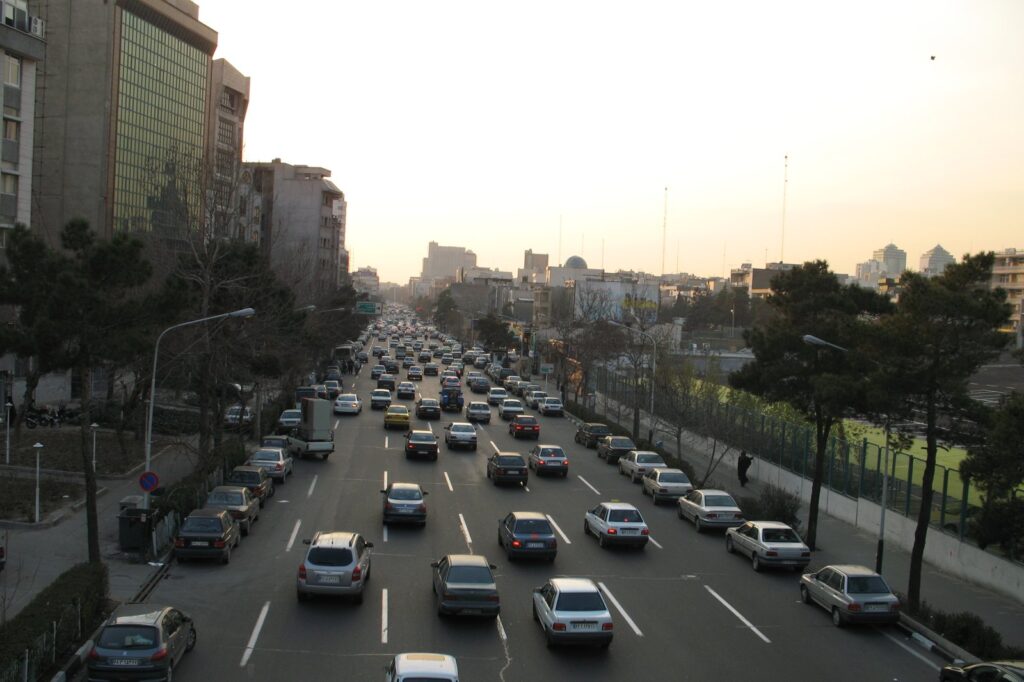
Iran, officially the Islamic Republic of Iran and historically known as Persia, is a country in West Asia with a population of over 92 million, according to geographic and demographic data. Tehran is the nation’s capital and largest city, serving as its primary economic center. The country spans five regions with 31 provinces, sharing borders with Iraq, Turkey, Azerbaijan, Armenia, Turkmenistan, Afghanistan, and Pakistan, alongside coastlines on the Caspian Sea, the Gulf of Oman, and the Persian Gulf. Home to one of the world’s oldest continuous major civilizations, the territory of present-day Iran was first unified under the Medes in the 7th century BC and reached its territorial height in the 6th century BC under Cyrus the Great, who founded the Achaemenid Empire. Alexander the Great conquered the empire in the 4th century BC, which was later succeeded by the Parthian and Sasanian Empires. Following the 7th-century Muslim conquest, Iran underwent Islamization, leading to the Islamic Golden Age and periods of diverse dynastic rule, including the Safavid dynasty in the 16th century, which established Twelver Shia Islam as the official religion.
The modern state reflects the turbulent upheavals of the 20th century, including the Persian Constitutional Revolution, the establishment of the Pahlavi dynasty in 1925, and the 1979 Iranian Revolution led by Ruhollah Khomeini, which established the Islamic Republic. Since then, the country has experienced the eight-year-long Iran-Iraq War that began in 1980, alongside various proxy conflicts with Israel and Saudi Arabia. In 2025, Israeli strikes on Iran escalated tensions into the Twelve-Day War. Following the war and amid a growing economic crisis, the largest protests since 1979 erupted in 2025.
Humanitarian Toll and Domestic Hardship
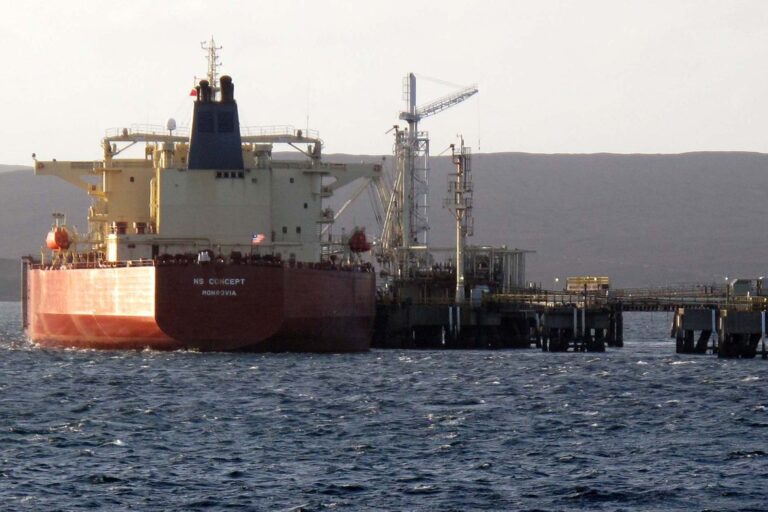
The strategic calculations inside Tehran are heavily shaped by severe economic strain and a worsening humanitarian crisis across the country. Renewed hostilities early in September 2026 in southern provinces added to the toll; strikes in Sistan and Baluchestan, Hormozgan, Bushehr, Khuzestan, and Kerman provinces killed 18 people and injured 142 between 30 August and 2 September, impacting critical infrastructure such as Sirik Port, Jiroft Airport, and energy facilities in Assaluyeh. Additional incidents involved a commercial vessel near Qeshm Island on 13 September and two fishing boats near Larak Island and Bandar Kargan on 14 September.
Natural disasters compounded these pressures when heavy rainfall, storms, and flooding damaged homes, public infrastructure, and agricultural assets in Mazandaran and Gilan provinces on 8 and 9 September, and in Golestan Province on 27 and 28 September. One person died and two went missing in the floods, prompting the Iranian Red Crescent Society to provide emergency assistance to 1,027 people. Across the broader population, cash assistance reached 24,175 people in 6,166 households across five provinces in September, alongside targeted cash support for 618 highly vulnerable refugee households and 1,719 women and girls. Meanwhile, household purchasing power deteriorated amid rising food prices and currency depreciation, and the Ministry of Health and Medical Education reported supply shortages of 32 essential medicines due to procurement challenges, import delays, and transport disruptions, which threatened cold-chain operations and essential health services.
Diplomatic Off-Ramps and External Alignments
Amid these compounding internal crises, regional diplomatic engagement involving Turkey and Gulf Arab states has provided Tehran with constrained diplomatic off-ramps that complicate hardline demands for immediate escalation. These diplomatic channels operate alongside complex international dynamics, including relations with Moscow. US President Donald Trump stated on 19 October 2026 on his social media platform, Truth Social, that Russia is doing very little to help the Islamic Republic of Iran, expressing hope that the situation will not change. Trump remarked that Russia is doing very little compared to what it could do to help the country, though US media outlets have reported ongoing military and intelligence cooperation between Moscow and Tehran in recent months.
Since returning to the White House, the United States has attempted to mediate between Russia and Ukraine in their ongoing war, though negotiations have yet to yield concrete results, with Trump also criticizing Ukrainian President Volodymyr Zelenskyy. These external factors intersect with factional debates within Iran’s leadership over the appropriate response strategy to ongoing foreign strikes and domestic instability. While hardline factions press for severe retaliation, the severe domestic economic strain, infrastructural damage, and humanitarian needs create friction for policymakers weighing their next steps. Regional outreach from Ankara and Gulf capitals offers alternative paths, forcing Tehran to balance the domestic imperative for a strong stance against the risk of deepening the existing crisis.
Internal Security Crackdowns and Political Dissent
Domestic unrest has triggered a widening security response that further constrains the leadership’s room for maneuver. According to the United Nations Human Rights Office, Iranian authorities executed at least 901 people in 2025, the highest annual total since 2015, with executions continuing at a rapid pace in 2026. Rights groups report that a significant portion of those executed were convicted on drug-related charges, while others were political dissidents and protesters from the 2025 demonstrations. In August 2026, the judiciary confirmed the execution of Reza Rasaei, a Kurdish activist whose case drew international condemnation over allegations of torture and a flawed trial. Simultaneously, the Islamic Revolutionary Guard Corps (IRGC) has intensified arrests of journalists, lawyers, and labor activists, including the detention of prominent labor organizer Sharifeh Mohammadi in December 2025, who was later sentenced to death on charges of “armed rebellion.” These internal crackdowns reflect a leadership prioritizing regime survival, diverting resources from external retaliation to domestic suppression.
Factional infighting has spilled into public view, complicating a unified response strategy. In July 2026, former Foreign Minister Mohammad Javad Zarif resigned from his post as Vice President for Strategic Affairs, citing “shortcomings” in the administration’s ability to deliver on economic and social promises. His departure underscored deepening rifts between pragmatists advocating sanctions relief and hardliners demanding maximalist resistance. Parliament Speaker Mohammad Bagher Ghalibaf, a potential presidential rival, has openly criticized the government’s economic management, while Supreme Leader Ali Khamenei has urged unity and “revolutionary patience.” This visible discord hampers Tehran’s ability to project a coherent deterrent posture, as rival power centers calculate the domestic political costs of either escalation or restraint.
Sources
- Iran
- Islamic Republic of Iran: Humanitarian Update No. 09 | As of 30 September 2026 – Iran (Islamic Republic of)
- Trump: Russia Is No Longer Providing Much Help to the Islamic Republic
Photo: Ivan Mlinaric from Slovenia (CC BY 2.0)