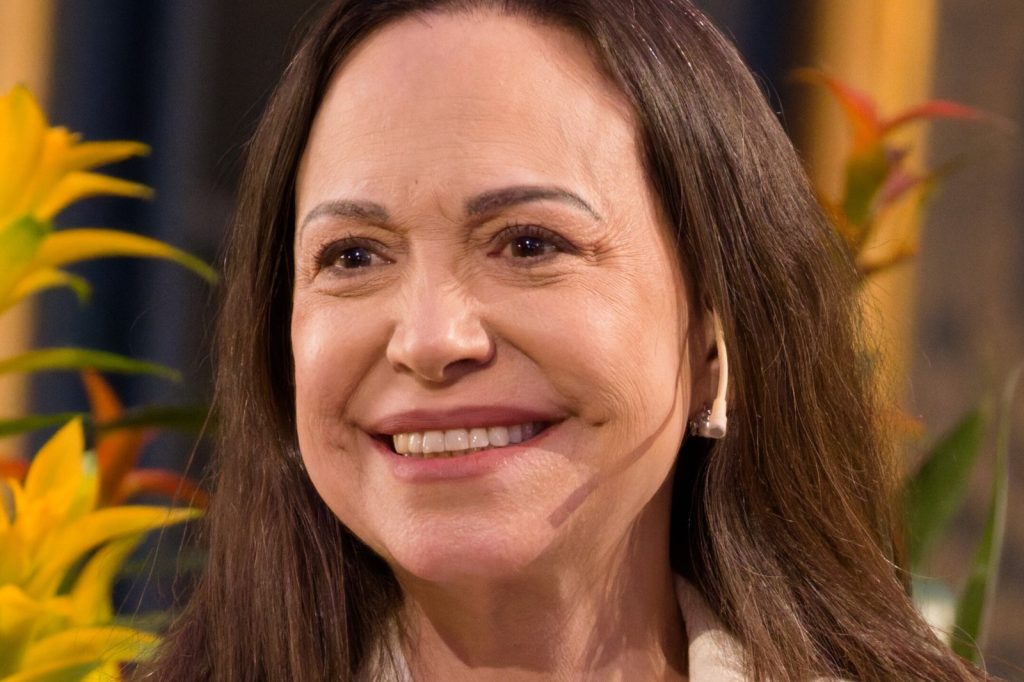
On Thursday afternoon, Plaza Venezuela in Caracas filled with people demanding a presidential election and the return of exiled Nobel Prize winner María Corina Machado. Some streets in the capital were closed. Protesters wanted a vote scheduled as early as 2027 and the release of every political prisoner. “We will have presidential elections very soon with María Corina as president,” former congressman Piero Maroun told the independent outlet Efecto Cocuyo.
Machado’s group Vente Venezuela led the day. Smaller protests took place in Nueva Esparta, Táchira and Zulia. Close to the opposition crowd in Caracas, the ruling United Socialist Party held its own gathering, a women’s march for Breast Cancer Awareness Month.
A protest that was not routine
Venezuelans have been protesting often since U.S. forces removed Nicolás Maduro in January. CIVICUS, citing the Venezuelan Observatory of Social Conflict, said the group counted 1,101 protests in September alone, about 37 a day. Most were small. Thursday was different: Reuters called it the first nationwide opposition protest in nearly two years. It fell on the third anniversary of the opposition primary that Machado won.
Her standing is solid. An AtlasIntel survey for Bloomberg News put her at 52 percent support, against 19 percent for acting President Delcy Rodríguez.
Talks inside the palace
While the crowds gathered, Rodríguez was meeting Dinorah Figuera, the opposition representative backed by the U.S. State Department, in the presidential palace. Three rounds of talks since August have produced no agreement on elections. Afterward, El País reported, Rodríguez seemed to point at the protesters: “There are still very, very small groups that resist and believe that trying to set the country ablaze and block streets is the way for Venezuela to move forward.”
Several things stand in the way of a date. Maduro’s 2018 and 2024 re-elections were widely criticized as unfair, and the Supreme Court and the National Electoral Council are packed with loyalists. Both sides are working on reforming them, and experts told Reuters that voter rolls must be updated and parties must agree on the rules even then. Twin earthquakes in June did more damage. Washington has added conditions of its own. Axios described a sequence: change the court, reform the electoral commission, then set a date. Secretary of State Marco Rubio said on September 23 that a newly elected leader inheriting “a complete catastrophe” would endanger the whole project. Trump told TIME in late September, “I just think it’s too soon.”
The oil deal
Critics say the administration puts oil ahead of democracy. In late August Trump announced what he called the biggest oil deal in world history. ProPublica has now reviewed the 18-page strategic partnership agreement, signed for the U.S. by Rubio and Defense Secretary Pete Hegseth.
The partner is Alejandro Betancourt, a Venezuelan oligarch who has faced money-laundering investigations in three countries. The U.S. takes a 35 percent stake in his firm, North American Blue Energy Partners, through a Barbados-registered parent company that reveals little about its owners. The agreement keeps Betancourt as chief executive and has the U.S. help appoint a seven-member board for an initial 15-year term. People familiar with the negotiations said the design was meant to stop future U.S. and Venezuelan leaders from unwinding it.
Orlando Alvarado, whom the administration had not named as a party, also signed for the parent company. The Miami Herald reported that federal prosecutors identified him as an unindicted co-conspirator in a scheme to embezzle from Venezuela’s state oil company. NABEP spokesperson Terry Wade said neither man has ever been charged with a crime in any country and that claims against them are baseless.
Sources
- Venezuelans Take to the Streets to Demand Democracy
- Venezuela
- The Secret Terms of Trump’s Venezuelan Oil Deal
Photo: Kevin Payravi (CC BY-SA 4.0)