
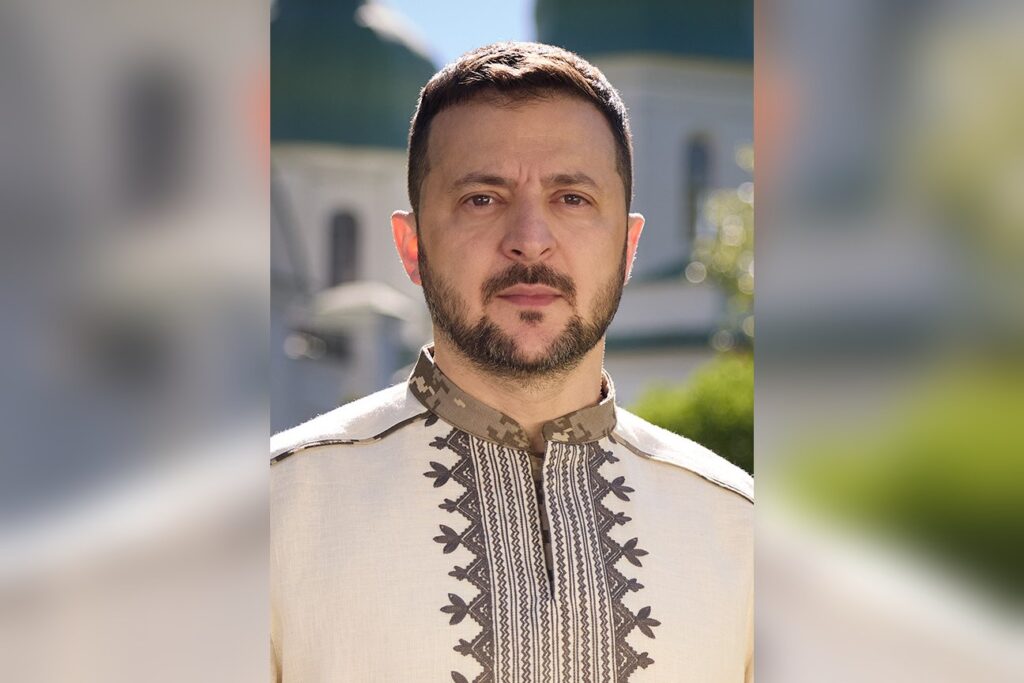
“I need ammunition, not a ride.” Those words, attributed to Volodymyr Zelenskyy in late February 2022, became the shorthand for his war. Russian forces were closing in on Kyiv, the United States offered to get him out, and he stayed.
The line was disputed for years. CBS News said the Biden administration firmly denied he ever said it after the network first reported it. Then in February 2026, Zelenskyy confirmed it in a speech on the fourth anniversary of the invasion. He told Ukrainians he had not answered that way “because we are all fearless or made of steel,” but because on some level “we have no other Ukraine, that this is our home.”
From comedy troupe to the presidency
Few people would have drawn that arc in advance. In the 1990s Zelenskyy formed a comedy troupe called Kvartal 95 with college friends. It grew into a popular live sketch show, “Evening Kvartal,” and in 2003 he co-founded an entertainment company, Kvartal 95 Studio. His best-known role came with the television series “Servant of the People,” which premiered on November 16, 2015. He played a broke schoolteacher who ends up president after a clip of him ranting about corruption spreads online.
The studio registered the show’s name as a political party in 2018. Zelenskyy announced his candidacy on December 31, 2018. On April 21, 2019 he defeated Petro Poroshenko, the sitting president, taking 73.22% of the ballots, and was sworn in on May 20 as Ukraine’s sixth president. In his inaugural address he dissolved parliament and called a new election, and said he wanted a ceasefire in Donbas. Ukrainian nationalists protested, calling that a capitulation to Russia.
What staying meant
CBS drew the contrast itself. Months before the invasion, Afghanistan’s president, Ashraf Ghani, had fled as the Taliban swept the country. Six years earlier, Ukraine’s own president, Viktor Yanukovych, had fled to Russia during mass protests over corruption. Zelenskyy did neither.
Ukrainians noticed. A Kyiv Institute of Sociology survey in December 2022 found that 84 per cent trusted him, a threefold jump from December 2021. Only the armed forces scored higher, at 96 per cent. Evgeniya Bliznyuk of the Kyiv research firm Gradus told the IWPR that it mattered to people that he “did not leave the country despite offers and performed his duties with dignity.”
That goodwill had limits. On January 24, 2023 senior officials, including governors in front-line regions and prosecutors, lost their jobs over corruption, and the purge touched his own office: Kyrylo Tymoshenko, his deputy chief of staff, left his post. Zelenskyy, who had run on an anti-graft platform, promised: “there will be no return to the way things used to be.”
Courting Beijing and the West
Four years in, the war has settled into attrition: drones, long-range missiles, entrenched positions and heavy casualties, according to CBS, with no lasting settlement in sight. Zelenskyy keeps working the diplomatic angle. After the NATO summit in Ankara in July 2026, he told reporters that China had, for the first time, answered Russian talk of nuclear retaliation in “an ultimatum-like form,” saying there could be no thought of using such weapons. He had it from European leaders at the summit, he said, and he preferred to keep what he discussed with Donald Trump private.
Whether Beijing follows words with pressure on Moscow is still open.
Sources
- Volodymyr Zelensky Fast Facts :: WRAL.com
- Zelenskyy confirmed asking for "ammunition, not a ride." Four years ago, I got pushback for reporting that. – CBS News
- Zelensky's Approval Ratings Soar Amid War | Institute for War and Peace Reporting
- Zelenskyy: China urged Putin not to use nuclear weapons in Ukraine – POLITICO




