
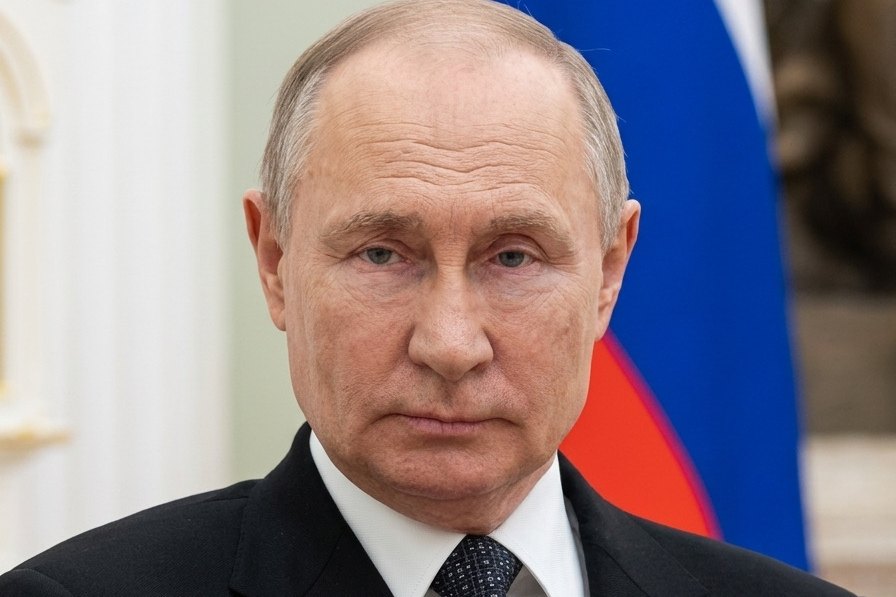
Three days into the invasion of Ukraine, on February 27, 2022, Vladimir Putin told his defense minister and the chief of the general staff to put Russia’s nuclear deterrent forces into a “special regime of combat duty.” Al Jazeera reported that the order followed what Moscow called aggressive statements from NATO powers and the sanctions imposed on Russia. Large nuclear exercises had already taken place on February 19.
Washington read it as theater. “This is a pattern that we’ve seen from President Putin,” White House press secretary Jen Psaki said, describing it as “manufacturing threats that don’t exist in order to justify further aggression.” Analysts told Al Jazeera the alert was meant to scare Europe and split EU backing for Ukraine, though some doubted it would work.
Weapons move to Belarus
Next came geography. Moscow announced in March 2023 that it would station tactical nuclear weapons in Belarus, pointing to the American practice of keeping nuclear arms in non-nuclear NATO states such as Turkey, Italy and Belgium. By June 14, 2023, Belarusian President Alexander Lukashenko said the first shipment had arrived.
He insisted Minsk had asked for them. “That was my request. Russia didn’t impose it on me,” Lukashenko said, according to Press TV. On their use he was blunt: “There will be no hesitation, if there is aggression against us.” Belarus borders Lithuania, Latvia and Poland, all NATO members. Iskander missiles with a 500-kilometer range were deployed, and Sukhoi-25 Grach jets were reportedly modified to carry warheads.
For communities in Lithuania, Latvia and Poland, that is a very short distance from the border.
The doctrine changes
On November 19, 2024, Putin approved a revised nuclear doctrine. Reuters reported that it allows Russia to consider a nuclear strike in response to a conventional attack on Russia or Belarus that poses “a critical threat to their sovereignty and (or) their territorial integrity.” The 2020 version had set a higher bar, limiting nuclear use to nuclear attacks or conventional attacks that threatened the state’s existence.
The timing was not subtle. The revision came after the U.S. authorized Ukraine to hit deep inside Russia with American ATACMS missiles. Alexander Graef of the University of Hamburg summed it up: “Russia is lowering the threshold for a nuclear strike in response to a possible conventional attack.”
Foreign Minister Sergei Lavrov called the Ukrainian strike on the Bryansk region “a qualitatively new phase of the Western war against Russia.” Deputy Foreign Minister Sergei Ryabkov said the danger of a direct clash between nuclear powers “cannot be underestimated.”
The U.S. National Security Council saw “no reason to adjust the U.S. nuclear posture.” Russia and the United States together hold 88% of global nuclear warheads. Markets reacted at once: bonds and the Japanese yen rose, stocks and the euro fell, and the ruble slid past 100 per U.S. dollar for the first time since October 2023.
Sources
- Putin puts Russia's nuclear deterrent forces on alert
- Putin issues warning to United States with new nuclear doctrine (Reuters)
- Belarus declares receipt of Russian nukes, vows use if attacked




