
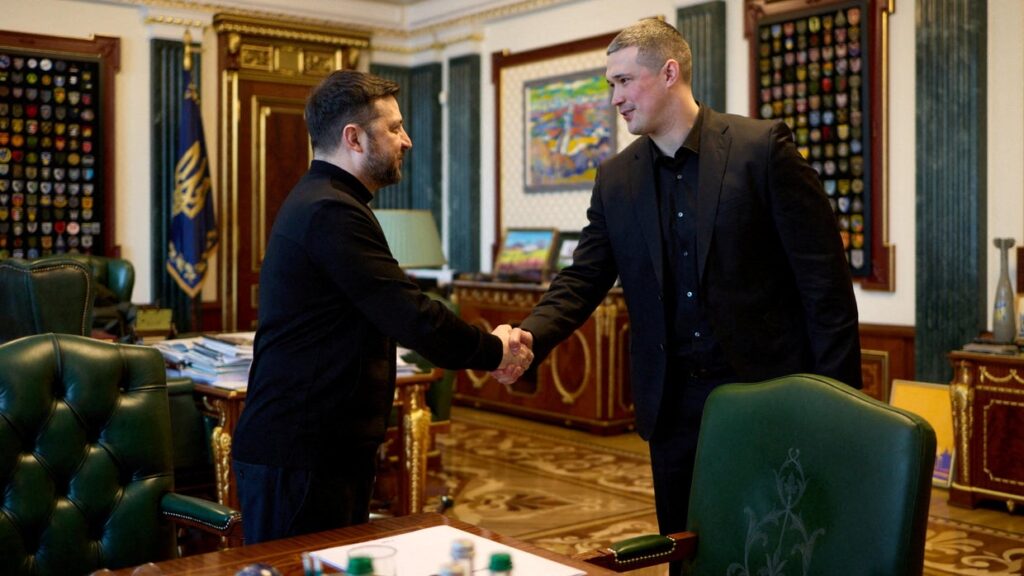
“The American president has all the effective and necessary tools to bring peace closer through strength, justice, and pressure on the aggressor.” Volodymyr Zelenskyy wrote that on 14 October, in the fifth year of a war that Vladimir Putin’s Russia began in February 2022. The sentence says a good deal about where Kyiv now looks for help, and about how far that help has changed.
Washington: a very large cheque, then a pause
After the invasion, Ukraine became by far the biggest recipient of American foreign aid. It was the first time a European country had held that place since the Marshall Plan rebuilt the continent after the Second World War. As of 30 June 2026, the Council on Foreign Relations reports, Congress had made $196 billion available for spending tied to the war, according to the U.S. Special Inspector General for Operation Atlantic Resolve. Of that, $164 billion came from five pieces of legislation, the last passed in April 2024. Annual agency budgets supplied $28 billion, and NATO partners contributed $5 billion. Not all of it reaches Kyiv directly: the Kiel Institute puts the amount supporting Ukraine itself at about $127 billion, since much of the money went on American factories and the U.S. military presence in Europe.
The politics changed with Donald Trump’s return to office in January 2025. There has been no significant new aid legislation since 2024. Washington has allowed weapons to flow through a scheme called PURL, in which NATO allies pay for American arms and pass them to Ukraine. In June 2026 the House passed a bill for new aid and sanctions on Russia, but it needs the Senate and the president to become law.
Brussels: sanctions, and the long grind of enforcement
Europe has worked on a different front. By 23 February 2024, two years into the war, the EU had adopted 13 sanctions packages against Russia. The 13th was described by the European Commission as unprecedented: 194 individual designations, 106 individuals and 88 entities, which took the total number of listings past 2000. It added 27 Russian and third-country companies to the list tied to Russia’s military-industrial complex, among them four registered in China and others in India, Türkiye and several more countries. It also put the United Kingdom on the list of partner countries for iron and steel imports.
The Commission said the emphasis had moved to enforcement, above all against circumvention through third countries, with EU Sanctions Envoy David O’Sullivan lobbying key capitals.
Europe’s growing share
Taken together, European countries have now given more aid than the United States. In April 2026 EU members finalised a loan of 90 billion euros, two-thirds of it for military assistance and defence procurement and the rest for Ukraine’s economy. A proposal to use $207 billion in frozen Russian assets keeps resurfacing, though Belgium has resisted it, worried about Russian retaliation. Belgium, Denmark, the Netherlands and Norway have pledged more than eighty F-16 fighters between them, and 36 countries made major arms transfers to Ukraine from 2022 to 2025.
Sources
- EU adopts 13th package of sanctions against Russia after two years of its war of aggression against Ukraine – European Commission (DG Neighbourhood and Enlargement Negotiations)
- Here's How Much Aid the United States Has Sent Ukraine – Council on Foreign Relations




