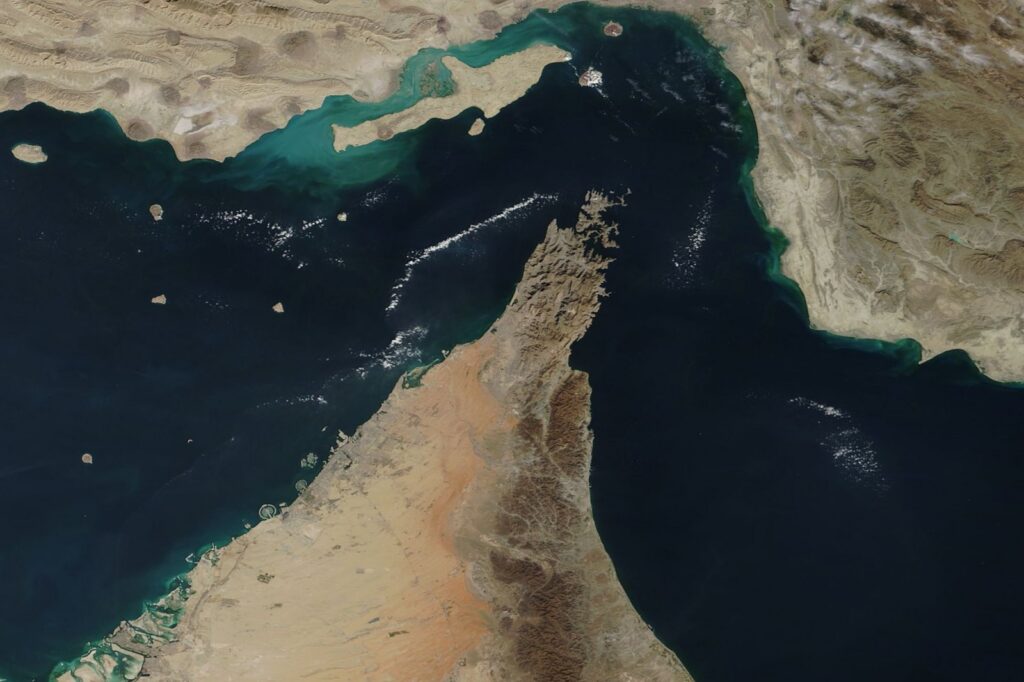
Qatar’s Emir told the United Nations General Assembly this week that the effective closure of the Strait of Hormuz constitutes a global crisis and urged diplomacy with Iran, according to state and international reports. The appeal underscores a disruption that has reshaped global energy flows for nine months, driving war-risk insurance premiums to levels that make commercial transit nearly unviable.
The Chokepoint and Its Legal Standing
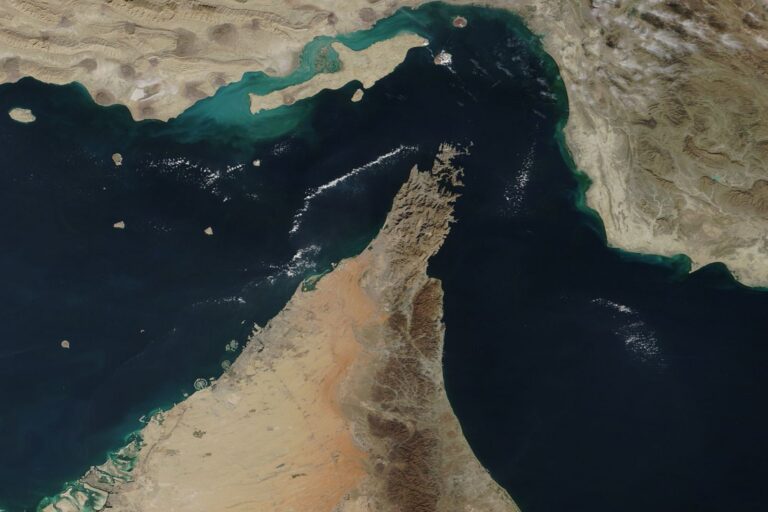
The Strait of Hormuz is the only sea passage from the Persian Gulf to the open ocean. Before the war, it handled 25% of seaborne oil trade and 20% of global liquefied natural gas annually, according to historical shipping data. Pre-war daily flow was roughly 20 million barrels per day of crude and refined products from Gulf producers. The waterway is also the only maritime route for several Gulf countries, including the UAE, Qatar, Bahrain, Kuwait, and Iraq. Under the United Nations Convention on the Law of the Sea, the strait falls under the transit passage regime, guaranteeing the right of continuous and expeditious transit for all ships. Iran has historically threatened to close the strait during periods of tension, but the account indicates it had never been closed for extended periods during previous Middle East conflicts, including the 1980s Tanker War, when Iranian forces laid mines along the waterway.
Timeline of Closure
U.S. and Israeli strikes on Iran began February 28, 2026, killing Supreme Leader Ali Khamenei and triggering Islamic Revolutionary Guard Corps threats against shipping in the strait, officials said. Iran has effectively closed the strait since February, allowing only selective passage while targeting unauthorized vessels. The closure marked a break with tradition that energy analysts and strategists once looked at as an impossibility. In March, the UN Security Council adopted Resolution 2817, which condemned Iran’s attacks and its threats to navigation; China and Russia abstained. A 60-day U.S.-Iran ceasefire mediated by Pakistan in June lapsed in August without a peace deal.
Economic Impact: Insurance, Volumes, and Shortages
Acting U.S. Navy Secretary Hung Cao testified during a Senate Armed Services Committee confirmation hearing that war-risk insurance costs have soared to $64 million for a single transit, up from $54,000 before the war, according to state and international reports. Transits through Hormuz remain around 65% below pre-conflict levels, according to UK Maritime Trade Operations. BP chief economist Gareth Ramsay called the disruption “incomparable” with any past oil shock in scale and impact. Severe shortages of oil, gas, fertilizer and other essential products from Gulf producers have resulted from the closure. The Bab al-Mandab Strait transits are down roughly 25% since the Houthi blockade of Saudi-linked shipping in July, compounding Red Sea route disruption. By the end of March, the price of Brent crude futures had reached a multiyear high of $118.35 per barrel as oil exports from the Persian Gulf evaporated. U.S. gasoline prices at the pump surged to cross well over $4 per gallon, while diesel prices pushed past $6 per gallon.
Military Escalation and Escort Operations
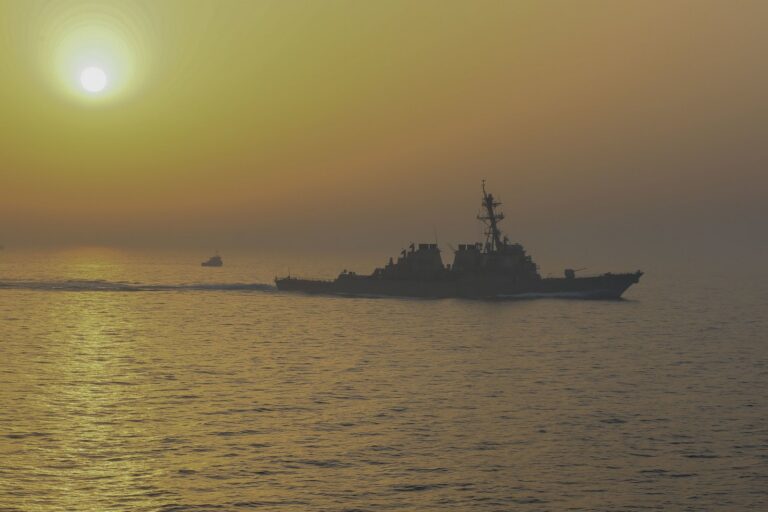
IRGC tactics have included firing upon vessels and issuing threats in the strait since the war’s opening days. October 2026 saw the most shipping incidents since the war began, with multiple tanker attacks reported in mid-November, according to UK Maritime Trade Operations and industry monitors. A U.S. military official cited by CBS News said the U.S. conducted strikes on Iran’s Qeshm Island on November 18, targeting an IRGC missile site near the strait. U.S. Central Command reported on November 7 that a U.S. military aircraft in the Gulf of Oman disabled a commercial vessel after the crew ignored warnings and attempted to violate the U.S. naval blockade against Iran several times. President Trump said the U.S. conducted limited strikes on November 6 targeting an Iranian air defense system. The U.S. Strategic Petroleum Reserve held 276.4 million barrels of crude oil for the week ending November 13, down from 279.5 million barrels the previous week, according to the U.S. Energy Information Administration.
Diplomatic Stalemate
Pakistani Deputy Prime Minister Ishaq Dar reaffirmed his country’s commitment to facilitating U.S.-Iran diplomacy at a meeting of the Economic Cooperation Organization on November 17, according to the Associated Press. U.S. Secretary of State Marco Rubio said on November 10 that the United States is open to a real deal and that countries including Qatar continue to act as intermediaries. Mohsen Rezaei, secretary of Iran’s Supreme National Security Council, told a pro-Iran broadcaster on November 10 that there are no negotiations currently taking place between the U.S. and Iran.
What Comes Next
Peace talks remain stalled. Shipping alternatives are limited by geography and the compounding disruption in the Red Sea. Market structural changes are already evident in the rerouting of energy flows and the drawdown of strategic reserves. The next scheduled meeting of the Economic Cooperation Organization, where Pakistan’s mediation role is expected to be discussed, has not been publicly dated.
Sources
- Qatar says Hormuz closure is global crisis, urges diplomacy with Iran
- Strait of Hormuz
- US official says Hormuz insurance hits $64m: Is the strait really open?
- Security Council LIVE: Fragile Gulf calm tested as threats to Hormuz shipping mount
- The Strait of Hormuz was the biggest game changer for markets in 2026
- Strait of Hormuz Watch: Peace Negotiations Stall, Vessel Attacks Persist
Photo: MODIS Land Rapid Response Team, NASA GSFC (Public domain)