
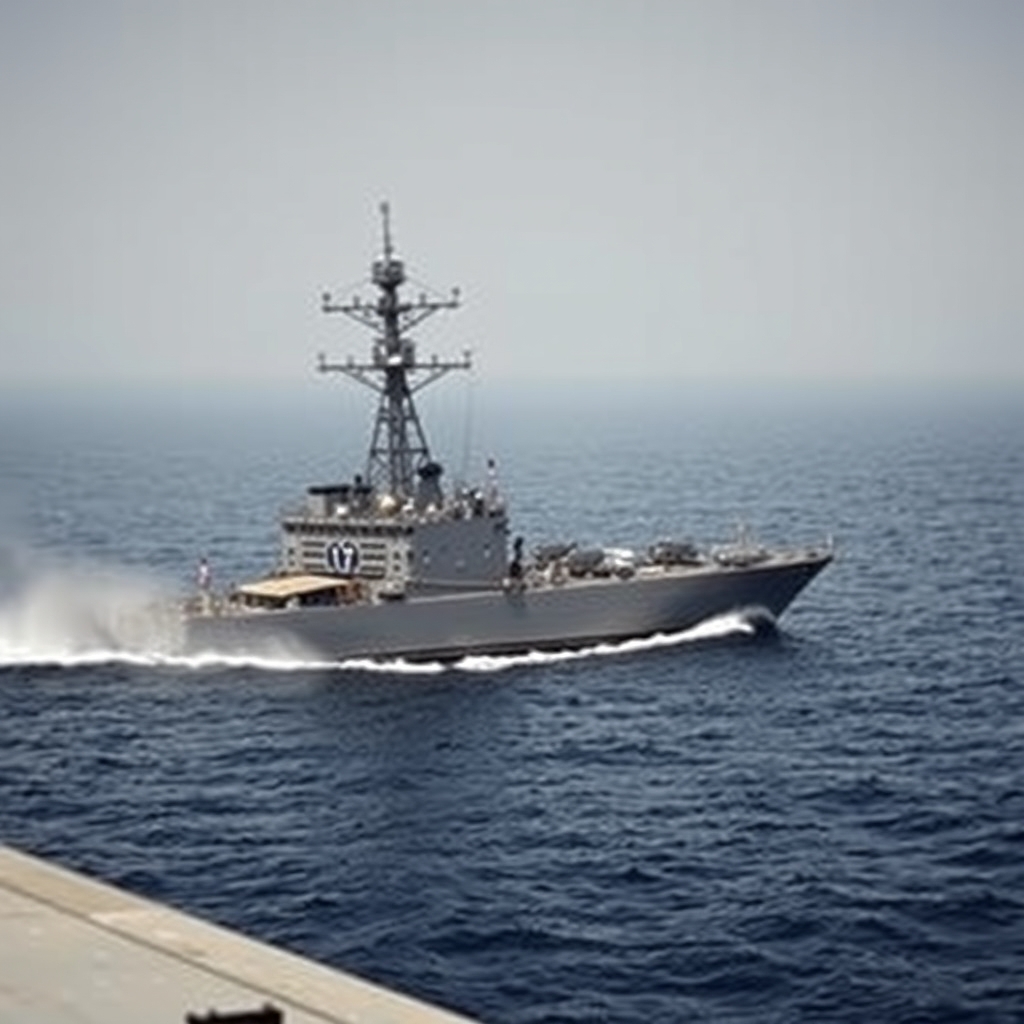
More than 95% of Iran’s naval mines were destroyed during the Operation Epic Fury bombing campaign, a defense official told Business Insider this week. The rest are the problem. Tehran likely laid some in or near the Strait of Hormuz during the fighting, the official said, and on Thursday President Donald Trump ordered the Navy to deal with any new ones the hard way.
He told the Navy to “shoot and kill” any boat laying mines in the strait, whether a small fast-attack craft or a larger ship. “There is to be no hesitation,” Trump wrote in a social media post. He said Navy minesweepers are clearing the waterway and that he had ordered the work to continue “at a tripled up level.”
Gunboats and a fragile ceasefire
The order puts a combat edge on mine-clearing that began earlier this month. Iranian fast-attack boats have been seen in the strait in recent days, and some gunboats have fired on merchant ships. Iran’s conventional navy has been sunk. According to the British military, Islamic Revolutionary Guard Corps gunboats have opened fire on multiple vessels in the two weeks since the US announced a ceasefire with Tehran on April 7. It is not clear whether Iran has laid more mines in that time.
The official, who spoke anonymously, said American forces are working on the mines with a mix of crewed and uncrewed systems so ships can pass safely. The military had said earlier that underwater drones would be part of the effort.
Before the ceasefire, US forces went after Iranian fast boats and mine-laying craft with several tools, among them the A-10 Thunderbolt II attack aircraft, nicknamed the “Warthog.”
What the Navy has to work with
Bradley Martin, a retired Navy surface warfare captain now at the RAND Corporation, said warships and aircraft have plenty of ways to track and stop small craft: advanced shipboard radars, guns large and small, and the ability to direct crewed aircraft and drones. Arleigh Burke-class destroyers, among the first ships into the clearing operation, carry surface search radars, Mk45 deck guns, autocannons and heavy machine guns. USS Spruance used its Mk45 on Sunday to disable an Iranian-flagged cargo ship running the blockade.
Destroyers also carry helicopters armed with machine guns and missiles that can hit targets from a distance. In late 2023, during the Houthi conflict, US helicopters sank several boats carrying Iran-backed rebels who were attacking a vessel in the Red Sea. The same tactic could work in Hormuz. The strait is confined, but early detection and layered fires let a destroyer handle a swarm, or a lone boat trying to drop a mine.
Who controls the strait
The two sides disagree. Tehran said on Wednesday it had seized two cargo vessels in the waterway; on Thursday, Trump said the US has “total control.” It is unclear what any clash might do to the ceasefire, which was recently extended.
The mine work runs alongside the US blockade of ships entering or leaving Iranian ports, in force since April 13. US Central Command said on Wednesday that more than 30 vessels had been told to turn around or return to port. It listed more than 17 warships on the job, including an aircraft carrier, an amphibious assault ship and destroyers, plus more than 100 fighter, helicopter and surveillance aircraft.
Sources
Sources
- See the latest updates, context, and perspectives about this story.
- US Navy Ordered to Kill Iranian Boat Laying Mines in the Hormuz…




