
On April 23, 2026, the United States Indo-Pacific Command (USINDOPACOM) conducted a boarding operation on the stateless tanker M/T “Majestic” in the Indian Ocean. According to USINDOPACOM officials, the tanker was alleged to be carrying US-sanctioned Iranian oil, prompting the operation. The USINDOPACOM, responsible for the Indo-Pacific region, has been monitoring the tanker’s movements for some time, working closely with international partners to enforce sanctions and prevent the illicit transport of oil.
The USINDOPACOM, formerly known as the United States Pacific Command (USPACOM), is the oldest and largest of the unified combatant commands, with a vast area of responsibility spanning over 100 million square miles. This region, which encompasses roughly 52 percent of the Earth’s surface, stretches from the waters of the West Coast of the United States to the east coast maritime borderline waters of India, and from the Arctic to the Antarctic.
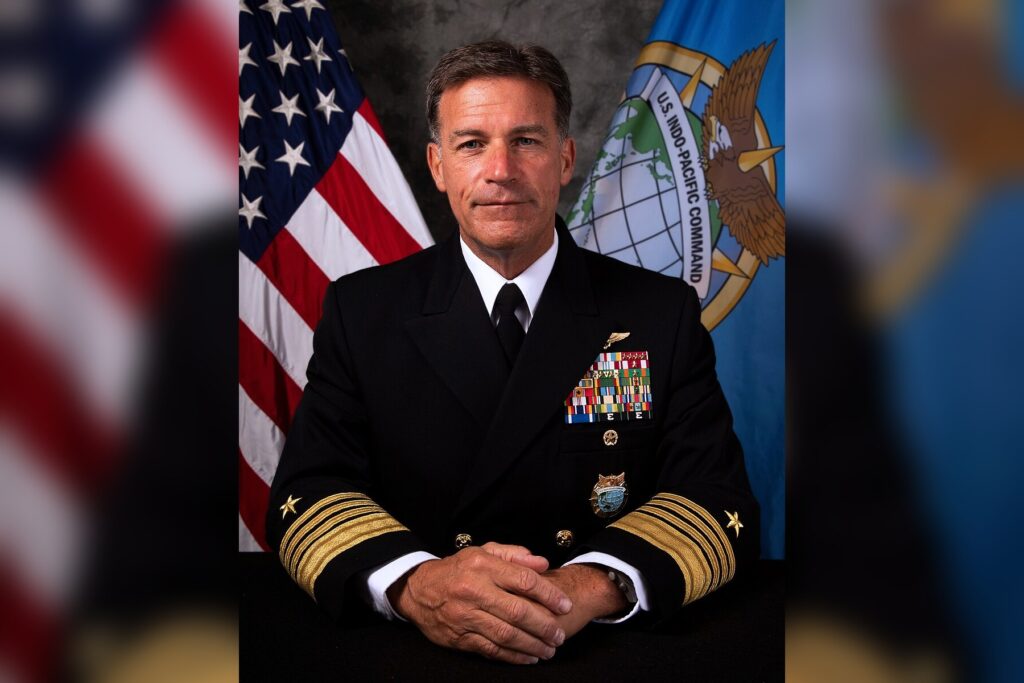
The command’s rename in 2018 to USINDOPACOM reflects the growing significance of the Indo-Pacific region, where the United States has key allies, including Taiwan, Japan, and the Philippines. Admiral John C. Aquilino, Commander of USINDOPACOM, stated that the operation on the M/T “Majestic” demonstrates the command’s commitment to upholding international sanctions and preventing the proliferation of illicit activities.
The USINDOPACOM works closely with partner nations, including the United Kingdom, the European Union, and Israel, to ensure the security and stability of the Indo-Pacific region. The command’s efforts are also supported by the US government, with President Donald Trump’s administration emphasizing the importance of maintaining a strong presence in the region to counter the influence of adversaries, including China and Iran.
The boarding operation on the M/T “Majestic” is part of a broader effort by the USINDOPACOM to enforce sanctions and prevent the transport of illicit goods. The command has been working with international partners to monitor and track suspicious vessels, and has conducted several operations in recent years to intercept and inspect ships suspected of carrying sanctioned cargo. According to Rear Admiral Michael Boyle, Director of Operations at USINDOPACOM, the command’s operations are designed to disrupt and deter illicit activities, while also promoting regional security and stability.
The USINDOPACOM’s area of responsibility includes some of the world’s most critical shipping lanes, including the Strait of Malacca and the South China Sea. The command works closely with regional partners to ensure the security of these waterways, which are essential to global trade and commerce. The USINDOPACOM’s efforts are also supported by the US Coast Guard, which provides critical support for maritime law enforcement and counter-piracy operations.
As noted by General Mark Milley, Chairman of the Joint Chiefs of Staff, the USINDOPACOM’s operations are a key component of the US military’s broader strategy to promote regional security and stability. The operation on the M/T “Majestic” has been welcomed by US allies in the region, who see it as a demonstration of the US commitment to upholding international sanctions and promoting regional security.
The Taiwanese government, for example, has expressed its support for the USINDOPACOM’s efforts, noting that the operation helps to promote stability and security in the region. Similarly, the Japanese government has praised the USINDOPACOM’s efforts to enforce sanctions and prevent the proliferation of illicit activities. As the USINDOPACOM continues to work with regional partners to promote security and stability, its operations are likely to remain a critical component of the US military’s broader strategy in the Indo-Pacific region.




