“The claim by the CENTCOM commander regarding the approach and entry of American vessels into the Strait of Hormuz is strongly denied.” That was the reply from a spokesperson for Iran’s Khatam al-Anbiya Central Headquarters, hours after US Central Command said two destroyers had gone through the waterway on Saturday.
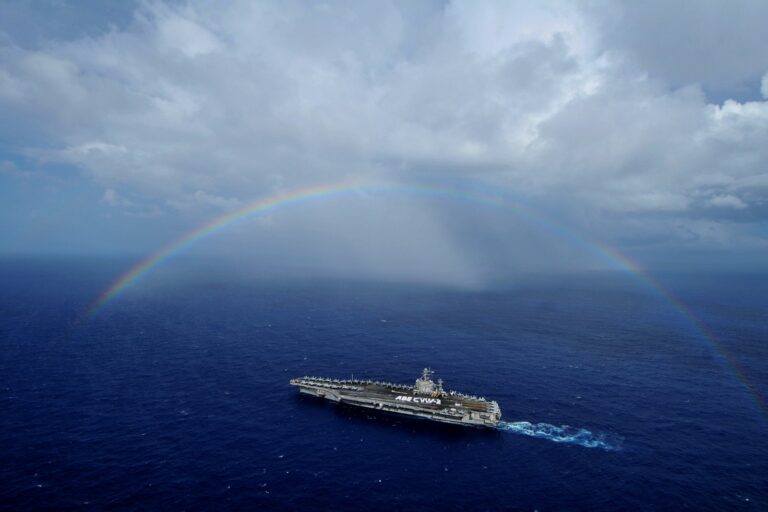
CENTCOM named the ships as the USS Frank E. Peterson and the USS Michael Murphy. Both are Arleigh Burke-class guided-missile destroyers. The command said they “transited the Strait of Hormuz and operated in the Arabian Gulf as part of a broader mission to ensure the strait is fully clear of sea mines previously laid by Iran’s Islamic Revolutionary Guards Corps.” Admiral Brad Cooper hailed their presence as a turning point in the US-Israeli war against Iran, which began on February 28.
Iran says it decides who passes
The Iranian spokesperson went further: “The initiative for the passage and movement of any vessel is in the hands of the Armed Forces of the Islamic Republic of Iran.” The IRGC promised “a strong response” to any military ships that pass. Maria Sultan, director general of the Pakistan-based South Asian Strategic Stability Institute, told Al Jazeera that if the US ships moved freely, Tehran must have allowed it. Axios, by contrast, reported that the move was not coordinated with Tehran.
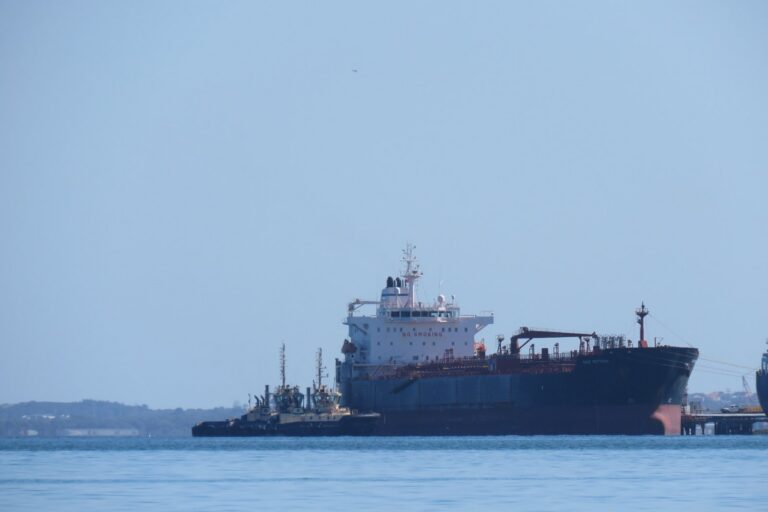
Iran had all but closed the strait, apart from pre-approved ships, after the first US-Israeli attacks in February. A fifth of the world’s oil and natural gas normally moves through it, along with large amounts of fertiliser. Closure snarled commercial and military traffic and sent fuel prices up.
A mission with open questions
CENTCOM said its forces were only “setting conditions for clearing mines,” and that additional forces, including underwater drones, would join in the coming days. It did not say how long the work would last or how many mines are in the water. The New York Times, citing American officials, reported on Friday that Iran had lost track of some of the mines it laid, because some were placed in a way that let them drift.
Destroyers are not mine hunters. Business Insider noted that the Navy keeps dedicated vessels for that job, such as its Independence-class littoral combat ships and Avenger-class mine hunters, and that CENTCOM declined to say where the littoral combat ships are or what part the destroyers played. Task and Purpose reported that two of the three littoral combat ships in the region were moved to Singapore in March. Retired Navy captain Bradley Martin, now at RAND, said destroyers could protect uncrewed systems while those do the detection and clearing. Their missiles would also cover the force if Iran fired anti-ship missiles.
The risk is real. Retired admiral Archer Macy told Business Insider that Iran could fire on US warships “to make a point.” In 1991, during Operation Desert Storm, the cruiser USS Princeton hit two mines in the Persian Gulf; three crew members were hurt and the ship left the war for repairs.
Talks and blockade
The crossing came as US and Iranian delegations negotiated in Islamabad, a session that ended without an agreement. A US blockade of Iranian ports took effect on Monday, covering all maritime traffic entering or leaving them, including on the Persian Gulf and Gulf of Oman. CENTCOM said ships heading to and from non-Iranian ports would not be impeded.
Sources
- US says two naval ships ‘transited’ Strait of Hormuz for mine-clearing
- US Navy destroyers that weren't built to hunt and clear mines led the way on a risky new mission in the Strait of Hormuz
- Two destroyers cross Strait of Hormuz ahead of mine clearance mission