
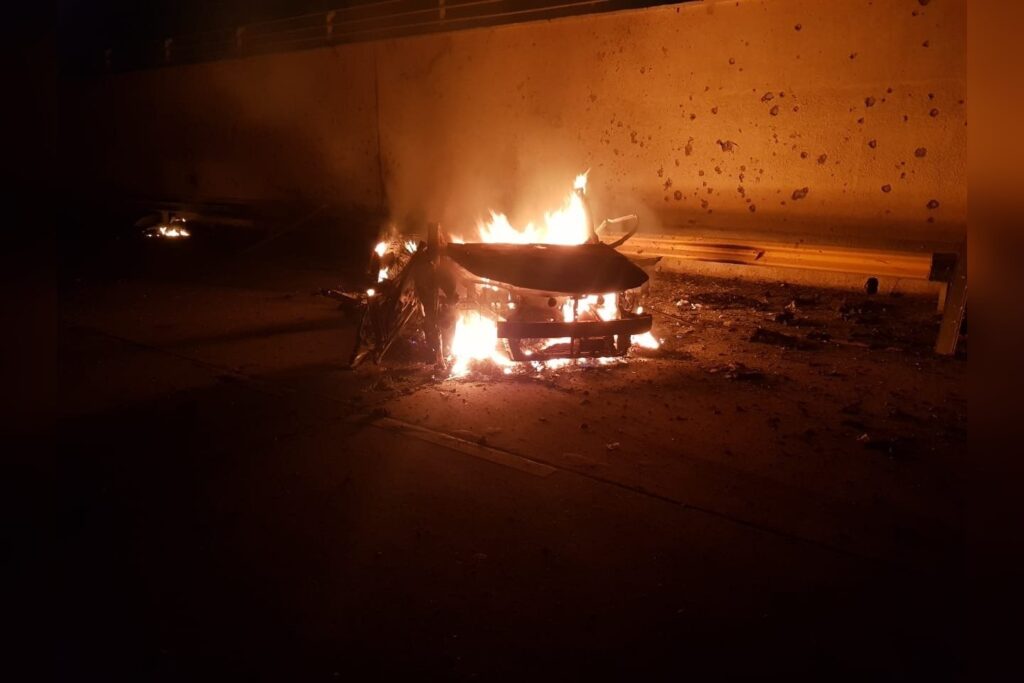
Oil jumped $3 on the news. That was the first market reading of the US strike at Baghdad airport that killed Iran’s Major-General Qassem Soleimani on January 3, 2020, according to Khaleej Times.
Soleimani, 62, had headed the Quds Force since 1998. His convoy was hit near the airport, and Abu Mahdi al-Muhandis, who had founded the Kataib Hezbollah militia and helped run Iraq’s Popular Mobilisation Forces, died with him. Militia commander Abu Muntathar Al Hussaini gave this account: “Soleimani and Abu Mahdi Al Muhandis were riding in one vehicle when it was struck by two successive guided missiles launched from an American helicopter while they were on their way from the arrivals hall.” US officials said a drone carried out the strike. Iran’s Revolutionary Guards blamed helicopters.
What led up to it
The Pentagon tied the killing to a run of attacks. Its account, relayed by The Defense Post, said Soleimani approved the assault on the US embassy in Baghdad earlier that week and ordered missile fire on Iraqi bases hosting coalition forces fighting ISIS, among them the K1 base near Kirkuk, where an American contractor died.
American strikes on Kataib Hezbollah forces came next. On December 30, protesters tried to storm the embassy compound in response. Marines were sent to Iraq, and the 82nd Airborne Division arrived in Kuwait on Thursday, a “precautionary action taken to respond to increased threat levels.”
The Pentagon’s case
The Defense Department said President Donald Trump ordered the strike because Soleimani “was actively developing plans to attack American diplomats and service members in Iraq and throughout the region.” In a separate line it said: “At the direction of the President, the US military has taken decisive defensive action to protect US personnel abroad by killing Qassem Soleimani.” The strike, it added, “was aimed at deterring future Iranian attack plans.”
Reaction
Iraq’s caretaker Prime Minister Adel Abdul Mahdi called it a “dangerous escalation” and asked for an emergency session of parliament. Iranian Foreign Minister Javad Zarif went further, calling the strike “extremely dangerous & a foolish escalation.” Supreme Leader Ayatollah Ali Khamenei promised harsh consequences and declared three days of national mourning.
Elizabeth Dent of the Middle East Institute said “There’s a reason why previous administrations did not escalate to the level of assassinating Soleimani.” Analysts quoted by Khaleej Times expected a forceful Iranian reply. Brigadier General Esmail Qaani was named to succeed Soleimani.
Sources
- Top Iran, Iraq commanders killed in US strike at Baghdad airport (Khaleej Times)
- Iran Quds Force commander Qassam Soleimani killed in US airstrike in Iraq (The Defense Post)




