
KYIV — The war is no longer fought only on Ukraine’s soil. That shift is exacting a price measured in bodies and black rain. Russian air defenses, once spread across a vast country that felt untouchable, are now being pulled inward.
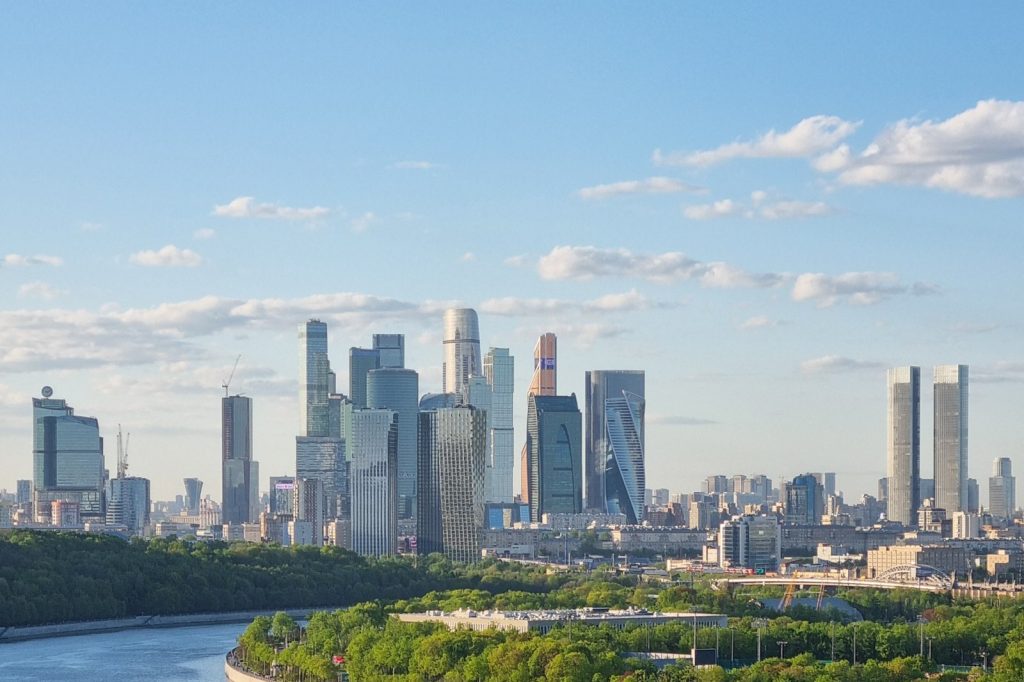
Ukrainian President Volodymyr Zelensky said Moscow has been forced to relocate the largest part of its air defense to protect central Moscow and a presidential residence. That leaves other targets exposed.
A refinery burns. A weapons plant smolders. Residents in Moscow scrambled for shelter after explosions, and reports emerged of so-called “black rain” falling from the sky.
The mechanics are simple. Ukraine now has the ability to strike nearly any target inside Russian territory.
Advanced drones and long-range missiles are hitting energy facilities, weapons plants, and military bases with increasing frequency. The country’s domestic defense industry has scaled up. Videos circulating on social media this week showed Flamingo missiles, manufactured by Fire Point, hitting their targets.
Repetitive strikes on refineries have created fuel shortages inside Russia. Russian President Vladimir Putin acknowledged there are “problems” and “certain shortages” from the strikes. He tried to downplay their significance.
That admission alone marks a shift. The Kremlin, which for months insisted the war was contained to Ukrainian territory, now admits its own ground is not safe.
But this new leverage comes at a steep human cost. Moscow launched fresh attacks against Kyiv overnight, killing at least 30 people. Russian ground forces keep pushing along the front line in Donetsk despite heavy casualties.
The trade is brutal. Both sides are trading long-range blows.
Ukraine’s tools have become far more sophisticated, but the cost is measured in lives lost in the capital. Zelensky has called these operations “long-range sanctions,” an ironic label for attacks hundreds of kilometers from the border. The irony is not lost on those in Kyiv who buried 30 people after one night of strikes.
What is at stake is the geography of the war itself. For months, the fighting was almost entirely on Ukrainian soil. Cities were leveled.
Civilians were killed. The front line crept forward.
Now, the calculus has changed. Fewer areas inside Russia are considered safe. The Kremlin must decide what to protect: its refineries, its weapons plants, its military bases, or its capital.
That decision has consequences. Moving air defense to Moscow leaves other targets exposed.
Those targets are the ones that sustain the Russian war machine. Fuel shortages from repeated refinery strikes slow logistics. Weapons plants hit at scale reduce production.
The war, which Russia expected to fight on its own terms, is now being fought on a longer board. The risk for Ukraine is that Russia will respond with more devastating strikes on its cities. The risk for Russia is that its own population, which has largely been insulated from the war’s direct effects, will no longer feel safe.
The panic in Moscow, the black rain, the fuel shortages — those are new. They change the political calculus inside Russia.
Putin acknowledged the problems. He tried to wave them off. But the fact that he acknowledged them at all is itself a measure of how the equation has changed.
The war is no longer something that happens somewhere else. It is happening in Russia now.
And both sides are paying for that shift in blood and steel.




