
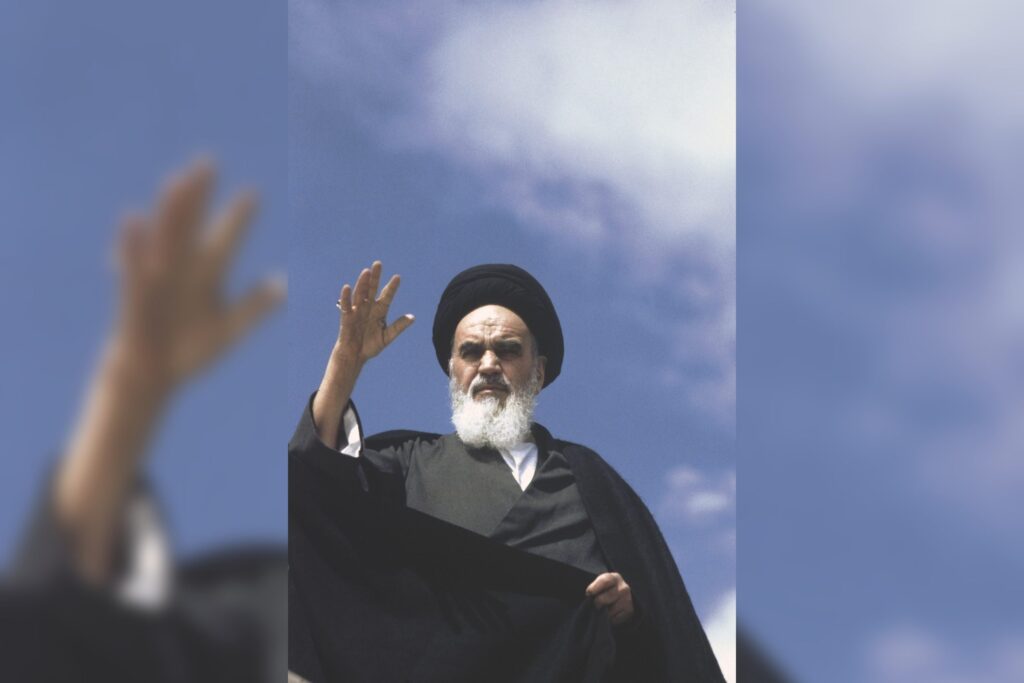
When Ayatollah Ruhollah Khomeini died in June 1989, the Islamic Republic faced a succession crisis. The revolution’s founder had designated a successor, but that man – Ayatollah Hossein Ali Montazeri – had fallen from favor after criticizing the regime’s mass executions of political prisoners. The Assembly of Experts needed a replacement. They turned to a mid-ranking cleric with little formal religious education, a man who had never written a major theological treatise. His name was Ali Khamenei.
To make him supreme leader, the constitution had to be changed: the post no longer required a grand ayatollah, the highest Shia clerical rank. Khamenei was promoted overnight, given the title, and installed as Iran’s second supreme leader. It was a constitutional and theological improvisation that many clerics privately questioned. But Khamenei proved a quick study in power. Over the next three decades, he would transform the office from a revolutionary pulpit into an absolute monarchy in all but name.
Khamenei was born in 1939 in Mashhad, Iran’s holiest city, the second son of a modest cleric. He joined Khomeini’s movement in the early 1960s, when the exiled ayatollah began denouncing the shah’s White Revolution. Khamenei was arrested several times, spent three years in internal exile, and emerged from prison with a reputation for ideological discipline. After the 1979 revolution, he helped found the Islamic Republican Party, served as deputy defense minister, and survived an assassination attempt in 1981 when a bomb hidden in a tape recorder exploded at a press conference, permanently damaging his right arm and vocal cords. He became president in 1981, serving through the bloodiest years of the Iran-Iraq war.
As president, Khamenei was a loyal executor of Khomeini’s will. He supported the war’s continuation after 1982, when Iraq offered a ceasefire, and he backed the regime’s brutal suppression of the Mojahedin-e Khalq and leftist groups. He also oversaw the creation of Iran’s nuclear program in the mid-1980s, a secret project that would later become a central crisis of his rule.
When he became supreme leader, Khamenei inherited a state exhausted by war and isolated internationally. Khomeini had left him a system of dual power: an elected president and parliament balanced by an appointed supreme leader with control over the military, judiciary, state media, and the Revolutionary Guards. Khamenei initially deferred to elected officials, most notably President Akbar Hashemi Rafsanjani, who pursued reconstruction and economic liberalization. But the relationship soured as Khamenei began asserting his authority.
The turning point came in 1997, when reformist Mohammad Khatami won the presidency in a landslide. Khatami promised civil society, rule of law, and detente with the West. Khamenei viewed this as a threat to the revolution’s ideological core. He allowed Khatami to govern but used his appointed institutions to block every major reform: the Guardian Council disqualified reformist candidates; the judiciary closed newspapers; hardline vigilantes attacked student protesters. By 2005, the reform movement was exhausted.
Khamenei then backed Mahmoud Ahmadinejad, a populist former mayor of Tehran who won the presidency in 2005. Ahmadinejad revived revolutionary rhetoric, restarted uranium enrichment, and denied the Holocaust. But he also challenged Khamenei’s economic authority, and the two fell out. When Ahmadinejad’s disputed 2009 reelection triggered the Green Movement – the largest protests since the revolution – Khamenei publicly endorsed the result, blamed foreign powers, and ordered a crackdown that killed dozens and imprisoned thousands. The supreme leader had shown his iron fist.
The 2009 crisis changed Khamenei’s relationship with the security establishment. He deepened his alliance with the Revolutionary Guards, placing former commanders in key economic and political positions. The Guards expanded their control over Iran’s economy, from oil and gas to construction and telecommunications. Khamenei also invested heavily in proxy forces across the Middle East: Hezbollah in Lebanon, Shia militias in Iraq, the Houthis in Yemen, and Assad’s regime in Syria. By 2015, Iran had built a network of armed clients stretching from Tehran to the Mediterranean.
That year, Khamenei faced his most consequential foreign policy decision. President Barack Obama had negotiated the Joint Comprehensive Plan of Action, which limited Iran’s nuclear program in exchange for sanctions relief. Khamenei publicly described the deal as a “mistake” but allowed it to proceed, with conditions. He never fully trusted it, and when President Donald Trump withdrew from the deal in 2018, Khamenei’s skepticism seemed vindicated. He ordered Iran to breach the deal’s limits, rebuilding its enriched uranium stockpile.
The Trump administration’s “maximum pressure” campaign crippled Iran’s economy. Oil exports collapsed, inflation soared, and widespread protests erupted in 2019 over gasoline price hikes. The regime responded with lethal force; Amnesty International estimated hundreds were killed. Then in January 2020, a U.S. drone strike killed General Qasem Soleimani, commander of the Quds Force and Khamenei’s most trusted military strategist. The supreme leader wept at Soleimani’s funeral and ordered a retaliatory missile strike on U.S. bases in Iraq. The two countries came close to war.
Khamenei’s final years were marked by declining health and growing succession anxiety. He underwent prostate surgery in 2014, and reports of his condition became a state secret. The regime began preparing for a transition, with his son Mojtaba Khamenei widely seen as a potential heir. Hardliners consolidated control: the 2021 presidential election was the least competitive in the republic’s history, with all major reformist candidates disqualified. Ebrahim Raisi, a former judiciary chief sanctioned by the U.S. for human rights abuses, won easily.
By the time of his death, Khamenei had ruled Iran for 35 years, longer than any leader since the 1979 revolution. He had outlived or outmaneuvered every rival: the reformists, the technocrats, the populists. He had turned the supreme leader’s office from a constitutional oversight role into an unaccountable executive. He had built a regional empire of proxies, a nuclear program on the threshold of weapons capability, and a security state that crushed dissent with brutal efficiency.
But he left Iran economically weakened, diplomatically isolated, and deeply divided. The protests that erupted in 2022 over the death of Mahsa Amini – a young woman arrested for improperly wearing her hijab – revealed a society with little loyalty to the system he built. The regime survived, but the cracks were visible.
Khamenei’s death does not end the Islamic Republic. The system he created was designed to outlast any individual. But it enters a new phase: succession, internal power struggles, and the question of whether the revolution can survive its own contradictions. The supreme leader is gone. The system he built remains.




