
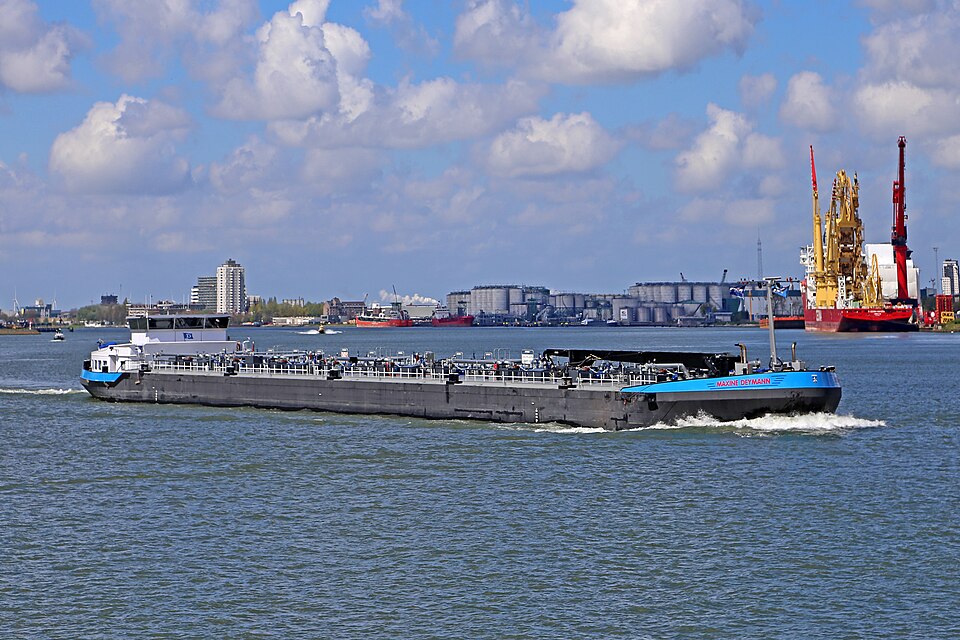
Ukrainian forces struck nine vessels from Russia’s shadow fleet in a single overnight operation, the country’s military reported, raising the 72-hour total to 19 tankers hit. The attacks, carried out with naval drones and long-range missiles, targeted ships in the Black Sea and near the Kerch Strait, a critical chokepoint for Russian oil exports. Ukraine’s General Staff said the strikes are intended to disrupt Moscow’s ability to finance its war effort.
Shadow Fleet and Sanctions Evasion
The shadow fleet consists of aging, often poorly maintained oil tankers that Russia uses to circumvent international sanctions on its crude oil exports, particularly the G7 price cap of $60 per barrel imposed in December 2022. These vessels frequently operate without proper insurance and fly flags of convenience from countries such as Panama, Liberia, and the Marshall Islands.
To avoid detection, they engage in deceptive shipping practices, including disabling Automatic Identification Systems (AIS) to conceal their movements. Oil revenues account for an estimated 30 to 40 percent of Russia’s federal budget, according to source material. The 19 tankers hit represent a significant portion of an estimated 600-vessel shadow fleet that collectively transported roughly 1.7 million barrels per day of Russian crude in 2023, as calculated by the Kyiv School of Economics. The term shadow fleet refers to a network of tankers that move sanctioned oil while evading detection through deceptive practices and weak oversight.
Russia began expanding this network after Western sanctions in 2014 following its annexation of Crimea, and the practice grew significantly larger after the full-scale invasion of Ukraine in February 2022. To bypass the G7 price cap, Moscow relies on older, less-regulated vessels—often decades old—registered under opaque flags that obscure ownership and insurance status.
These ships typically disable tracking systems, switch identities mid-voyage, and use ship-to-ship transfers to hide the origins of their cargo.
Escalating Campaign and Risks
The recent strikes follow a pattern of Ukrainian attacks on Russian energy infrastructure, including refineries and storage depots, since the start of the full-scale invasion on February 24, 2022. Western analysts note that while such operations may temporarily reduce Russian oil export capacity, they also carry risks: poorly maintained tankers can cause environmental disasters from potential oil spills, and the attacks may provoke further escalation of the conflict. The United States and the European Union have imposed multiple sanctions packages targeting the shadow fleet, including designations of specific vessels and entities involved in its operation.
The G7’s price cap, introduced in December 2022, was designed to limit Moscow’s oil revenue while keeping global markets stable. However, the shadow fleet enables Russia to circumvent these restrictions by employing vessels that operate beyond the reach of standard regulatory oversight.
The shadow fleet itself emerged from a long-standing pattern of sanctions evasion in global shipping, where flags of convenience and corporate opacity have long allowed violators to operate outside legal boundaries.
Strategic and Economic Context
Strikes on shadow fleet vessels reflect Ukraine’s broader strategy of targeting energy assets to erode Russia’s financial capacity to sustain military operations. Analysts estimate that oil and gas income accounts for most of the country’s federal budget, making the ability to export crude central to sustaining war efforts. By hitting tankers that transport sanctioned oil, Ukraine aims to reduce the revenue stream that funds its adversary’s military campaign.
Yet the approach carries significant consequence beyond immediate military impact. The aging, poorly maintained tankers of the shadow fleet pose a constant environmental hazard; an oil spill from a damaged vessel could cause widespread ecological damage in the Black Sea region.
Additionally, Western analysts caution that attacks on commercial vessels—even those used for sanctions evasion—risk expanding the conflict. The combination of economic disruption, environmental peril, and potential escalation underscores the complex calculus behind Ukraine’s campaign against Russia’s shadow fleet.




