
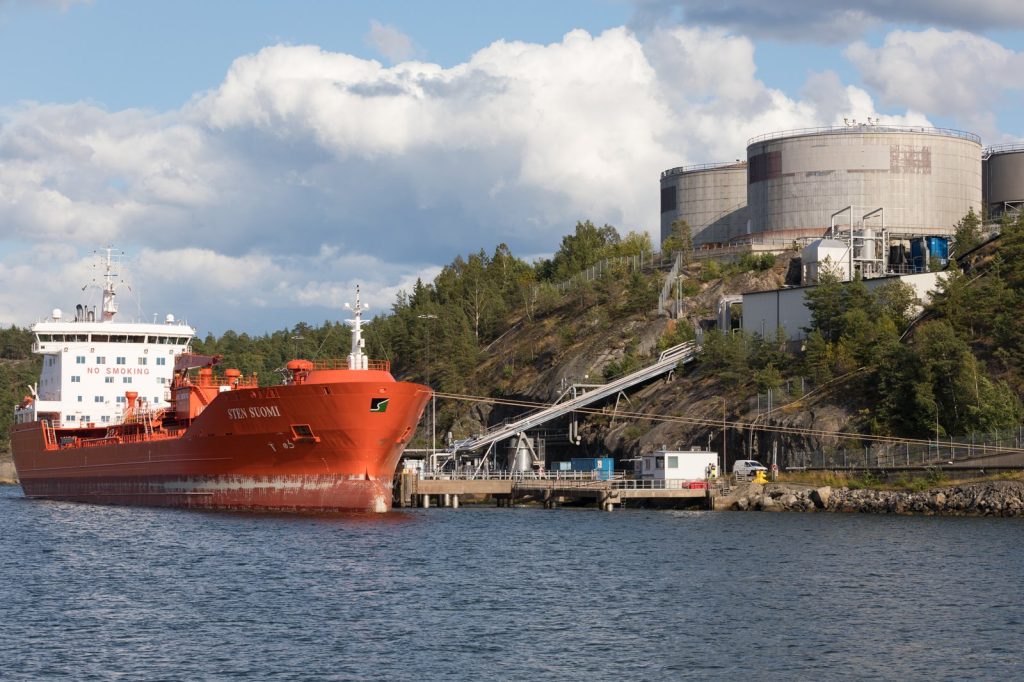
In the corridors of Brussels, a number keeps creeping upward: almost 600. That is how many tankers the European Union had placed under sanctions as of December 18, 2025, after the EU Council added 41 more ships from what is known as Russia’s shadow fleet. Listed vessels are barred from EU ports and cut off from a wide range of maritime services. Britain announced fresh measures the same day, adding 24 individuals and other entities, among them the Russian oil companies Tatneft and Russneft.
Against this backdrop, the question is whether any of it is working.
A fleet built to get round the price cap
The shadow fleet exists mainly to carry Russian oil past Western restrictions, above all the price cap, and so keep export revenue flowing to a country at war. Its ships are typically old and uninsured, with murky ownership and frequent changes of flag. Analysts at the Center for Strategic and International Studies, as quoted by Defence24, found that about 72% of the vessels were more than 15 years old and 60% had no insurance. Tankers often switch off their transponders, which makes them harder to track and, as Defence24 points out, a danger to shipping and an oil-spill risk.
Russia has paid for the capacity. Defence24 says it has spent approximately USD 10 billion since the spring of 2022, mostly buying on the second-hand market. The fleet’s size is disputed, with estimates running from 600 to 1,000 vessels. The CSIS study put its haul at about 3.7 million barrels a day, or 65% of Russia’s seaborne oil exports, worth between USD 87 billion and USD 100 billion a year. The oEnergetice report, drawing on Reuters, gives a similar picture: two-thirds of Russia’s oil exports move on these tankers, which operate outside Western oversight.
Sanctions on one side, adaptation on the other
By December 2025 the EU had adopted 19 sanctions packages against Russia. Moscow, according to the Czech agency ČTK, had adapted to most of them, and still sold millions of barrels to India and China, at discounts.
The tricks are well known: ship-to-ship transfers at sea, falsified documents, intermediaries in countries that do not apply sanctions, and false flags. The Malawi flag was a favourite. By June 2025, 24 vessels flying it had been identified as carrying Russian cargo, yet the Malawian registry in question turned out not to exist.
Enforcement has pushed the fleet to adapt again. The consultancy CREA counts false-flagged ships falling from a peak of 101 in October 2025 to 45 by June 2026, while Russia moved sanctioned vessels onto its own registry, which grew from 280 vessels in January 2025 to 382 by June 2026.
The KSE Institute found that in June 2026 Russia used 325 tankers to export oil, of which 176 were shadow fleet ships. And listing does not stop loading: from August 2024 to June 2026, 431 of 596 sanctioned tankers kept taking on oil at Russian ports. CREA estimates that in August 2026 sanctioned shadow tankers carried 52% of Russia’s seaborne oil exports, with another 42% moved by tankers owned or insured by entities from the G7 and its partners.
Sources
- EU imposes sanctions on 41 more ships from Russia's shadow fleet (oEnergetice.cz, ČTK)
- Russia's shadow fleet: A tool for circumventing Western sanctions (Defence24)




