
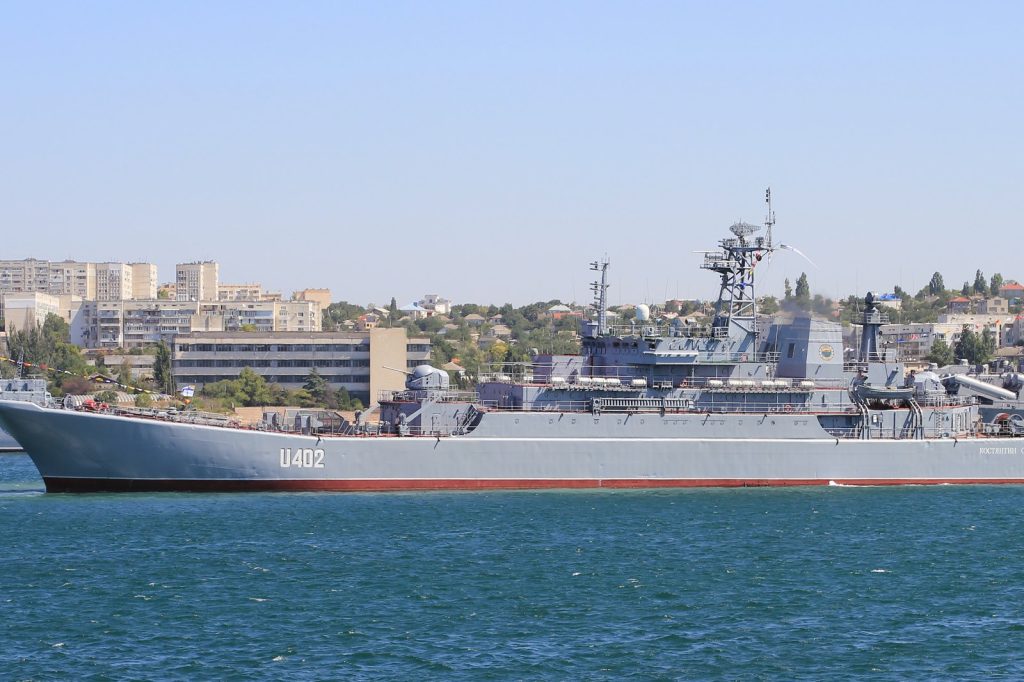
SEVASTOPOL, July 9 — Ukrainian forces struck 21 Russian naval vessels in a concentrated 72-hour campaign, according to Ukrainian military officials, marking one of the most ambitious attacks on the Black Sea Fleet since the full-scale invasion began. The strikes, which took place in late May 2024, targeted the fleet’s primary base in Sevastopol, Crimea. Ukrainian officials confirmed the operation relied on domestically-produced naval drones combined with Western-supplied long-range missiles, including Storm Shadow and SCALP-EG cruise missiles.
The Russian Ministry of Defense acknowledged damage to several ships but declined to provide a specific number of vessels affected.
Strategic Context
The Black Sea Fleet has long served as a cornerstone of Russian power projection in the region. Since the invasion began on February 24, 2022, Ukraine has steadily eroded that capability. The sinking of the flagship Moskva in April 2022 stands as the most dramatic single loss, but the latest operation signals a tactical evolution in Ukrainian strategy.
Military analysts point to the coordination required to hit 21 vessels across multiple classes in such a compressed timeframe. The targeted ships included landing ships, patrol boats, and support vessels, though neither side has fully disclosed the exact names and classes of every vessel struck.
The operation demonstrates Ukraine’s growing ability to synchronize drone and missile attacks against a numerically superior naval force.
Force Relocation
The sustained pressure has already forced the Black Sea Fleet to adapt its posture. Russian authorities have relocated some naval assets from Crimea to Novorossiysk, a port on the eastern coast of the Black Sea, in response to Ukrainian threats. The redeployment reflects a recognition that the Sevastopol base, long considered secure, now lies within effective striking range of Ukrainian systems.
The contest for control of the Black Sea carries implications beyond military logistics. The waterway serves as a critical corridor for grain exports and military resupply, making it a strategic prize for both sides.
Ukraine’s ability to threaten Russian naval assets from multiple domains — surface drones, sub-surface systems, and air-launched missiles — complicates Moscow’s efforts to project force or protect its maritime flank.
Pattern of Escalation
The May 2024 operation fits within a broader pattern of Ukrainian attacks on Russian naval assets that has unfolded over more than two years of conflict. Each successive strike has tested Russian air defense and naval protection networks, forcing the Black Sea Fleet to operate under constraints unimaginable before the war. Ukrainian officials have framed the strikes as part of a deliberate campaign to degrade Russian naval capability in the Black Sea theater.
The 21-vessel tally, if confirmed through independent verification, would represent the largest single blow to the fleet since the Moskva sinking. The coming months will test whether Ukraine can sustain this tempo of multi-domain operations and whether Russia can adapt its defensive posture to protect the assets that remain within range.
The Black Sea, once a Russian-dominated lake, has become a contested battlespace where neither side holds unchallenged control.




