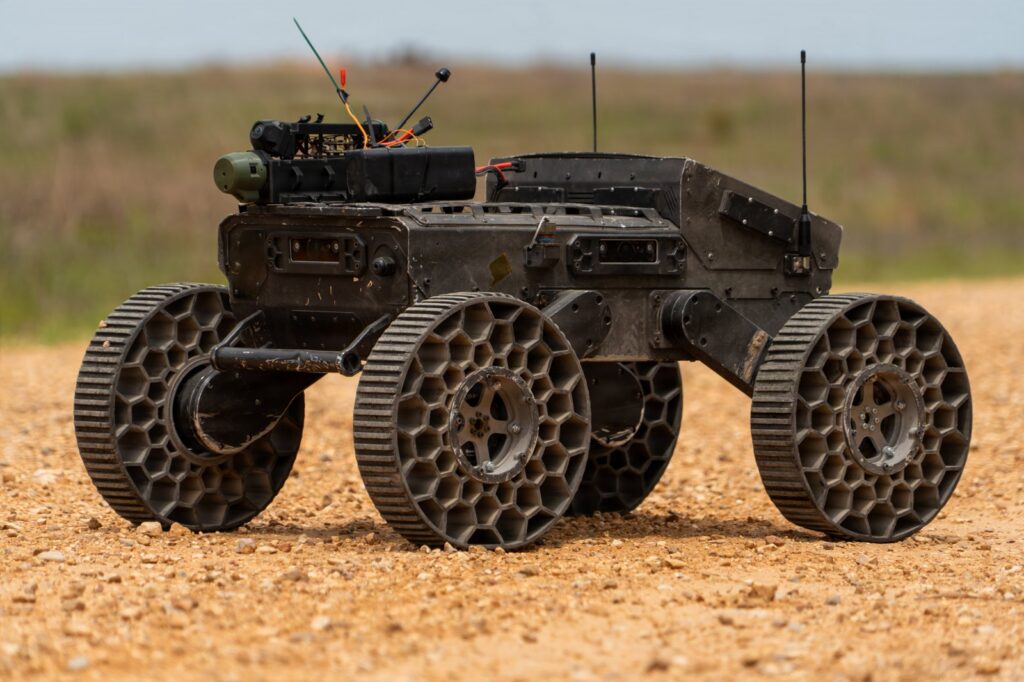
Ukraine has deployed thousands of new ground robots to the front lines, according to the defense ministry, which stated in March that more than 20,000 systems had been contracted since the start of the year—nearly double the 2025 total. These unmanned vehicles are tasked with attacking, gathering intelligence, transporting supplies, and evacuating the wounded, aiming to reduce human casualties in high-risk sectors.
Robots Face First Major Winter Test
As autumn mud gives way to winter snow and freezing temperatures, Ukraine’s rapidly expanded ground robot fleet faces its most severe operational challenge yet. Oleksandr Yabchanka, head of robotic systems for the Da Vinci Wolves Battalion and cofounder of Defence Robotics UA, noted that while summer performance on dry ground is one thing, autumn and winter conditions are “quite another.”
Physical Challenges Strain Systems
Cold temperatures drain batteries, reducing range and power needed for difficult terrain and heavy loads. Condensation, mud, and snow obscure cameras and hinder equipment. Mud and snow slow movement, making robots more vulnerable, while ice reduces traction. The loss of tree cover in winter also increases visibility, heightening the risk of detection.
Adaptations Underway as Robots Evolve
Ukrainian manufacturers are making frequent improvements based on front-line feedback, according to Business Insider. Enhancements include longer ranges, stronger tracks, and greater autonomy. Yabchanka stated that these systems are “constantly being improved,” with operational range and off-road mobility increasing steadily.
NATO trainers, however, have questioned the robots’ effectiveness in deep snow. Brigadier Atle Molde, a Norwegian commander, asked during the summer, “Should we use that in Northern Norway with two meters of snow?” He described such conditions as “not that easy.”
Reliability Critical for High-Stakes Missions
While many robots are designed to be expendable, reliability remains crucial for missions like evacuating wounded soldiers. Ukraine’s experience adapting drone technology to winter—using thermal bags, lubricants, and cold-resistant batteries—may offer lessons for ground robots. Manufacturers and military units are closely monitoring performance as the fleet undergoes its first full winter test.
As Yabchanka noted, the coming months will reveal how much these systems have evolved since last autumn. The record shows that Ukraine’s ground robots are now an integral part of combat operations, but their winter performance will determine their long-term role on the battlefield.
Sources
- Ukraine has put thousands of new war robots into the fight. Now, they're facing fall mud and winter snow.
- Ukraine Ground Robots Face Winter Test in Mud and Snow
- Ukraine's Ground Robot Fleet Faces Autumn Mud and Winter Cold Test
Photo: Spc. Sandy Vera Vazquez (Public domain)