
Strikes Deep Inside Russia
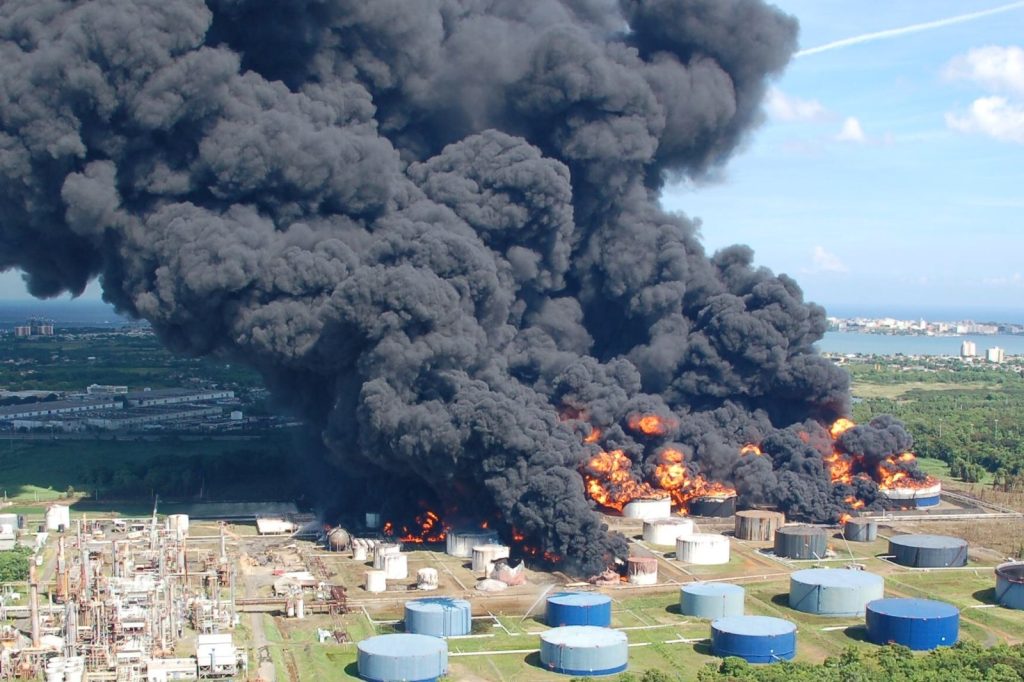
The pattern of deep strikes accelerated over the following months. By April 2024, Ukrainian drones had reached a drone manufacturing plant in Yelabuga, Tatarstan, and an oil refinery in Nizhnekamsk—both far beyond the border. The most ambitious operations came on March 23, 2025, when Ukrainian drones struck the Taneco refinery and the Sibur petrochemical plant. Those targets lie approximately 1,500 kilometers from Ukraine, making them the deepest attacks yet carried out against Russian soil. Ukrainian officials have attributed these missions to the SBU, the country’s Security Service, and the HUR, the Main Intelligence Directorate. While Russia has repeatedly claimed to have intercepted most incoming drones, Ukrainian sources report successful hits on military and energy infrastructure.
The escalation reflects a deliberate strategic shift. By hitting oil refineries and petrochemical plants, Ukraine aims to reduce the revenue Russia earns from oil exports—revenue that directly funds the war—and to disrupt fuel supplies reaching the front lines. According to the Kyiv School of Economics, Russian oil export revenues fell by 15 percent in 2024 compared to 2023, a decline partly attributed to Ukrainian drone strikes on refineries.
Economic and Military Consequences
These long-range operations have direct implications for the war’s duration and for global energy markets. Striking fuel-production facilities not only cuts into Russia’s ability to generate income from oil sales but also creates logistical bottlenecks that can slow the resupply of Russian forces in Ukraine. The widening battlefield now routinely includes Russian territory, with drones becoming the primary weapon for deep penetration strikes. A conflict that began with tanks crossing the Ukrainian border has evolved into an attritional campaign fought across thousands of kilometers.
Ukraine’s ability to carry out such missions stems from its development of domestically produced drones and, in some cases, modifications to existing munitions. The HUR and SBU have coordinated operations that require precise intelligence on Russian facility layouts and air defense coverage. Each successful strike demonstrates that Ukraine can project power deep into enemy territory, complicating Russian military planning and forcing Moscow to divert resources to protect far-rear areas it once considered safe.
The broader context of Ukraine’s struggle is rooted in centuries of foreign domination. Ukraine, the second-largest country in Europe after Russia, has a long history of being a crossroads of empires. After a brief period of independence following the Russian Revolution, it was absorbed into the Soviet Union as the Ukrainian Soviet Socialist Republic. Millions died in the Holodomor, a human-made famine in the early 1930s. World War II brought German occupation and terrible atrocities. Ukraine declared independence in 1991 as the Soviet Union dissolved, and a new constitution in 1996 established a democratic system. Mass protests known as the Orange Revolution in 2004–2005 reformed elections. In 2014, the Euromaidan protests led to a revolution, after which Russia annexed Crimea and backed separatist forces in eastern Ukraine. That eight-year conflict set the stage for the full-scale invasion that began in February 2022.
Today, Ukraine is fighting to defend its sovereignty. The strikes deep inside Russia mark a strategic shift: the battlefield is no longer confined to Ukraine’s borders. By targeting oil infrastructure and military assets, Kyiv aims to cut the revenue that funds Moscow’s war machine and disrupt supply lines to the front. The expanding reach of Ukrainian operations has direct consequences for the war’s trajectory and for the stability of global energy markets.




