
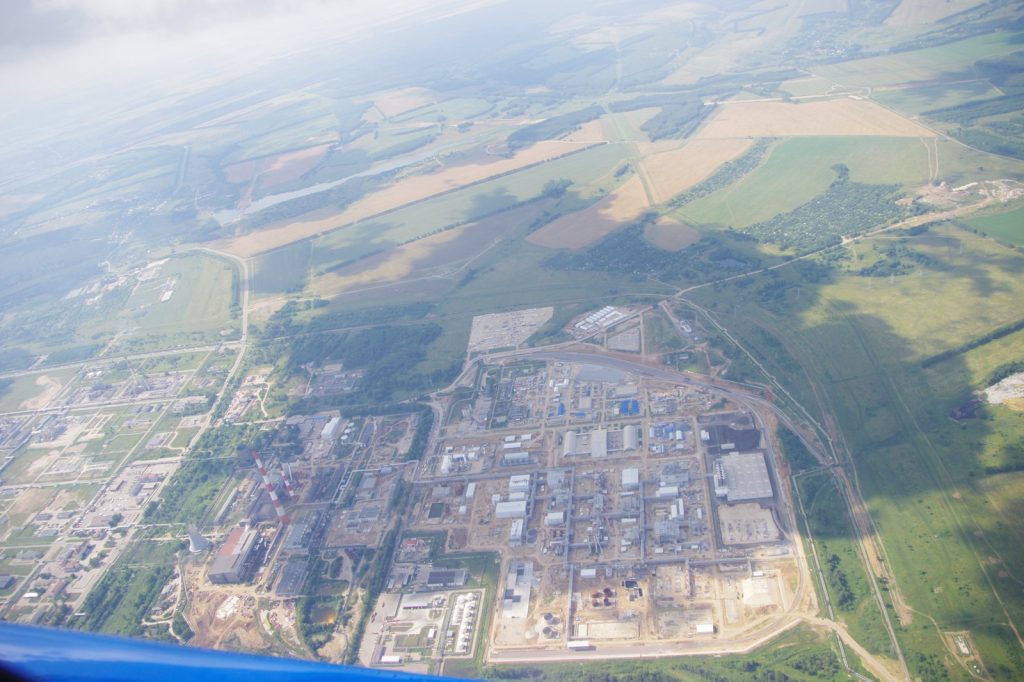
Ukrainian forces conducted successful drone strikes against two major Russian oil facilities, the country’s military confirmed on January 29, 2025. The primary target was the Lukoil-Nizhegorodnefteorgsintez petrochemical plant in Kstovo, Nizhny Novgorod Oblast, a site located roughly 1,500 kilometers from the Ukrainian border.
The second target was a fuel depot in the Oryol region. The Lukoil plant ranks among Russia’s largest oil refineries, processing approximately 17 million tons of crude oil annually. The attack ignited a fire at the facility, but officials reported no casualties in connection with the strike.
A Campaign Targeting Russia’s Fuel Supply
Ukrainian officials stated that the operation was carried out by the Main Intelligence Directorate, known by its Ukrainian acronym HUR, using domestically produced long-range drones. The strike is part of a broader Ukrainian campaign aimed at disrupting Russian energy infrastructure that supports Moscow’s war effort. This attack follows a pattern of Ukrainian deep strikes into Russian territory; previous attacks in 2024 targeted oil depots and refineries in Krasnodar Krai and Rostov Oblast. Ukraine has increasingly relied on drone technology to strike strategic targets far behind enemy lines.
According to the statement from Ukrainian military officials, the operation was designed to degrade Russia’s ability to fuel its military operations. The Lukoil-Nizhegorodnefteorgsintez plant’s substantial processing capacity makes it a critical node in Russia’s fuel supply chain.
Observers note that Ukraine’s domestically produced drones have become a central tool in this campaign, and the strikes on the Kstovo plant and the Oryol fuel depot demonstrate both the reach and the precision of these systems.
Strategic and Historical Backdrop
The war in Ukraine began on February 24, 2022, with Russia’s full-scale invasion. Since then, Ukraine has developed and deployed long-range drone systems to reduce Russia’s oil revenues and logistical capacity. The January 2025 strikes represent a significant escalation in range and target selection, hitting infrastructure nearly 1,500 kilometers inside Russian territory.
Ukraine is a country in Eastern Europe, sharing its eastern and northeastern borders with Russia. The region was a center of East Slavic culture under the state of Kievan Rus‘ starting in the 9th century.
For centuries after, various external powers contested and divided the land. The Russian Empire absorbed much of the territory by the 18th century. Following the Russian Revolution in 1917, the Ukrainian Soviet Socialist Republic was created as part of the Soviet Union in 1922. The country later suffered a human-made famine in the early 1930s and widespread death during World War II.
Ukraine declared independence in 1991 after the Soviet Union dissolved, transitioning toward a liberal democracy and a free market. Protests in 2014 known as the Euromaidan led to a revolution.
Russia responded by unilaterally annexing the Crimean Peninsula. The current conflict affects global energy markets and security.
What the Strikes Signify
The January 2025 strikes signal that Ukraine is prepared to sustain and potentially expand its deep-strike campaign against Russian energy infrastructure. The question now is whether Russia will adjust its air defense posture to protect critical industrial sites far from the front lines, and how these attacks will affect Moscow’s oil export revenues over time. Because Ukraine borders several European nations and the Black Sea, the war has wide geopolitical reach.
The use of long-range technology to target energy sites changes how the two nations conduct the war. The Lukoil-Nizhegorodnefteorgsintez plant’s position as one of Russia’s largest refineries means its disruption could have cascading effects on fuel supplies for military operations and domestic consumption.
The absence of casualties in the January strikes suggests a focus on infrastructure rather than personnel, a hallmark of Ukraine’s campaign to impose economic and logistical costs without unnecessary escalation. How this campaign evolves will depend on both sides’ ability to adapt their tactics and technology in a conflict that shows no signs of abating.




