
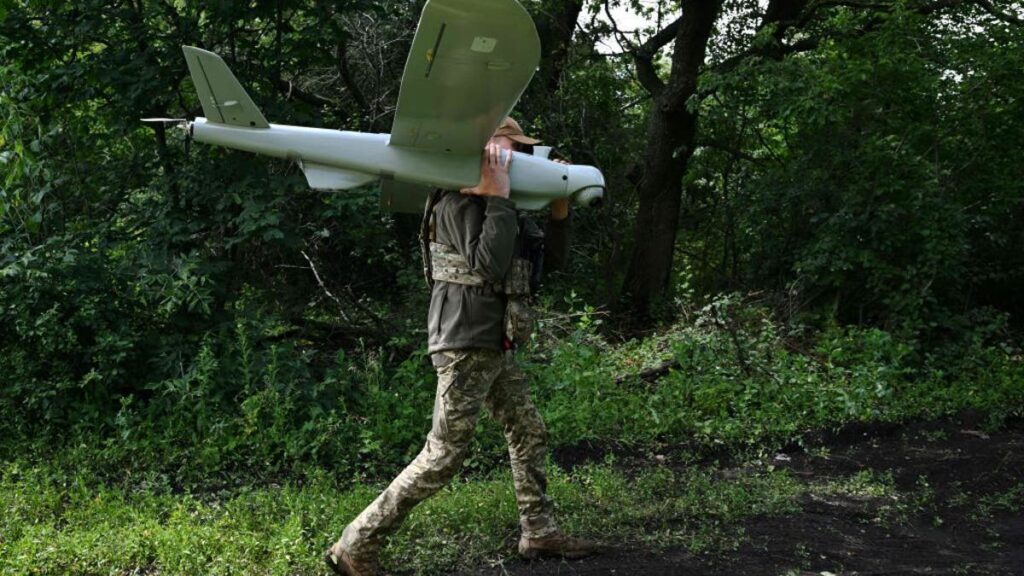
Ukraine’s drone output is set to top 8 million units in 2026, up from 4 million in 2025 and 2.2 million in 2024, according to a National Security Journal report. In 2022 the country had only a few thousand imported systems.
The industry behind those numbers is large. Annual capacity now stands at over 8 million FPV (first-person view) drones plus 4 million units of other types, among them reconnaissance drones, loitering munitions and heavy bombers. More than 500 companies build drones in Ukraine, and private firms make roughly 90 percent of all FPV output.
Effect on Russian fuel
Zelenskyy calls the long-range campaign “Ukraine’s long-range sanctions.” Targets include refineries, port infrastructure, military industry and Russian air defense sites. The journal credited it with fuel shortages, rationing at gas stations and rising gas prices in Russia.
By its count, Ukrainian attacks have cut about 25 percent of Russia’s oil refining capacity since March and hit 8 of the 10 biggest refineries. The large Gazprom refinery in Moscow was set on fire, and analysts believe restoring it will take more than six months. The IEA reported that as of late June, 55 of Russia’s 83 regions had fuel restrictions. Strikes in Crimea disrupted Russian attempts to resupply fuel there, creating long lines at pumps and bottlenecks in army logistics.
Defenses stretched thin
Russia’s size, long counted as a strength, now works against it, the journal argued. “Russian air defenses have to cover a 1,200-kilometer front line, as well as a vast territory where infrastructure is located,” military analyst Michael Kofman told the Wall Street Journal.
Valerii Romanenko, a former Ukrainian air defense officer, noted that a Pantsir system can engage no more than four targets at once. An early wave of drones, he said, helps locate the air defense units, so that later drones can find a way through. Russian systems such as the Pantsir-S1 were built against classic threats like cruise missiles, and the journal described Russia’s defenses as more of a patchwork than a layered system.
Russian defenses still shoot down upwards of 90 percent of the drones sent, the report said, but the sheer numbers overwhelm them. Pulling some air defenses back to protect Moscow and Crimea cuts both ways, since it leaves troops in the Donbas more exposed to drone attack.
Anatoliy Khrapchynskyi, a Ukrainian aviation expert and former air force officer, said Russia “has fallen into the trap of the very ‘math of war’ it once tried to impose.” His reasoning: by trying to overwhelm Ukrainian air defenses with S-300 strikes, Russia drained its own stockpiles of interceptor missiles.




