
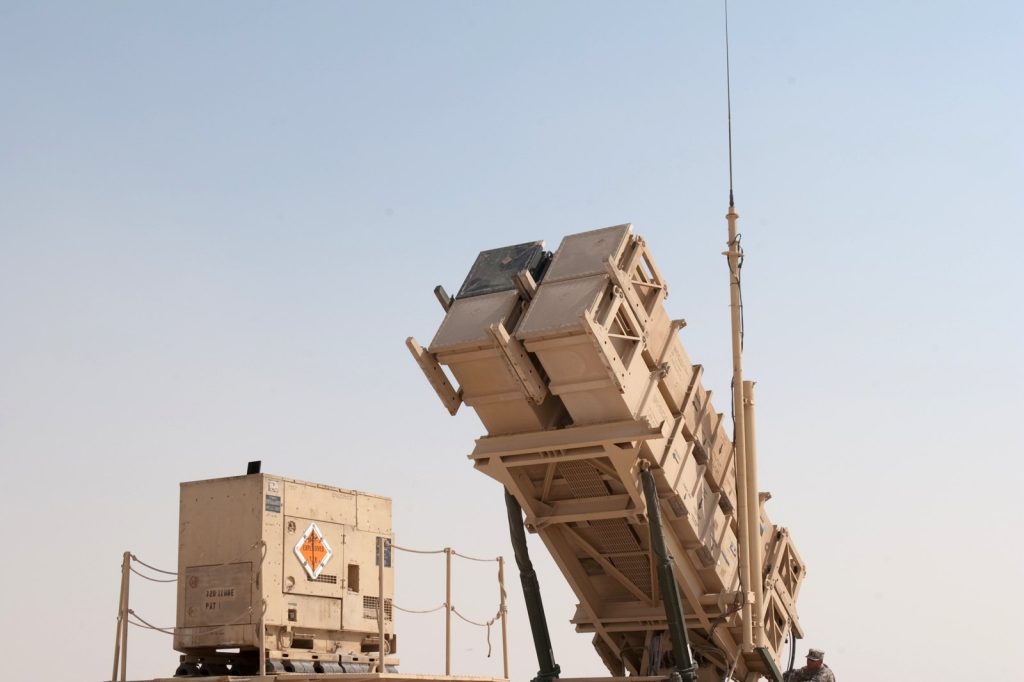
“A hard thing to give away.” That was how Donald Trump described the Patriot missile system on Friday, July 31, at Camp David in Maryland, where he said the United States “has not agreed” to let Ukraine produce it.
The statement was a step back from July 8, when Trump told Volodymyr Zelenskyy at the NATO summit in Ankara that Ukraine would get a licence to make Patriot missiles. He also acknowledged then that the companies involved had not been told.
Trump’s caution
On the Thursday before the Camp David remarks, Trump told the Financial Times he was “not sure” whether Kyiv would get permission to build what he called an “extraordinary weapon.” All of it came three days after his White House meeting with Zelenskyy, which Zelenskyy called a “good meeting” about the Patriot licences.
Trump warned that a country receiving the technology could “someday turn on you.” “You have to be very careful,” he said. His tone followed concern that U.S. stockpiles of advanced weapons, Patriots among them, are being stretched by the American military campaign in Iran.
Zelenskyy has called the Patriot “vital for stopping Russian ballistic missiles” and a “top priority” in talks with U.S. officials. On X he wrote that the teams would stay in touch. “Our teams are already working on specific solutions to move to co-production as quickly as possible and increase our capabilities to protect lives,” he said.
Industry objections
Lockheed Martin and Raytheon are reportedly uneasy about the idea, according to a report that The Atlantic first carried. Their concerns centre on intellectual property and unauthorised transfer of technology. A Republican official told the magazine that the deeper commercial worry is that Ukrainian manufacturers could eventually improve the Patriot and build it in greater numbers and at lower cost than U.S. lines do. The companies have not publicly confirmed they oppose the licence on those grounds.
Raytheon, part of RTX, makes Patriot interceptors including the GEM-T, while Lockheed produces the PAC-3 family. At a July 23 meeting with a Raytheon delegation, Zelenskyy said the company was ready to consider deeper cooperation, including co-production of interceptors. Raytheon Vice President Joseph DeAntona said it was interested in working with Ukraine on ground-based air defence systems.
What a licence might cover
The scope remains unclear. It could cover interceptors or selected components rather than whole batteries, which also include launchers, radar and command-and-control equipment. Washington and Kyiv would still have to decide which technologies can be transferred, what can be made locally, and how production would fit with existing U.S. suppliers.
The pressure to act is real. Reuters reported on August 7 that about 65% of the U.S. Patriot interceptor stock was used between February and July 2026, leaving fewer than 850 by the figures it cited. Ukrainian Air Force data showed Russia fired 376 missiles at Ukraine in July, more than twice the June total.
Ukraine’s own industry has grown quickly. Zelenskyy said on July 15 that the country produces 10 million drones a year and aims to reach 20 million with partners’ help. One of them, the Darts drone made by Stalevi Shershni, has been reported at a basic unit cost of about $1,000. Reuters reported in April that the U.S. military had deployed Ukraine’s Sky Map counter-drone platform at Prince Sultan Air Base in Saudi Arabia, with Ukrainian personnel training American forces to use it.
Trump has publicly backed the idea, but the terms of any final agreement had not been made public.
Sources
- Ukraine Awaits US Approval for Patriot Production
- Lockheed Martin and Raytheon Raise IP Concerns Over Transfer of Patriot Production Technology to Ukraine




