
At 10:24 on the morning of July 3, 1988, the USS Vincennes fired two missiles at an aircraft its crew believed was an Iranian fighter. It was an Iran Air Airbus A300, Flight 655, flying from Bandar Abbas to Dubai. The plane was destroyed. The captain of the Vincennes, William Rogers, had given the order.
That shootdown sits at the end of a long story about one narrow stretch of water, and Iranians still bring it up whenever the Strait of Hormuz makes the news.
A war at sea inside a land war
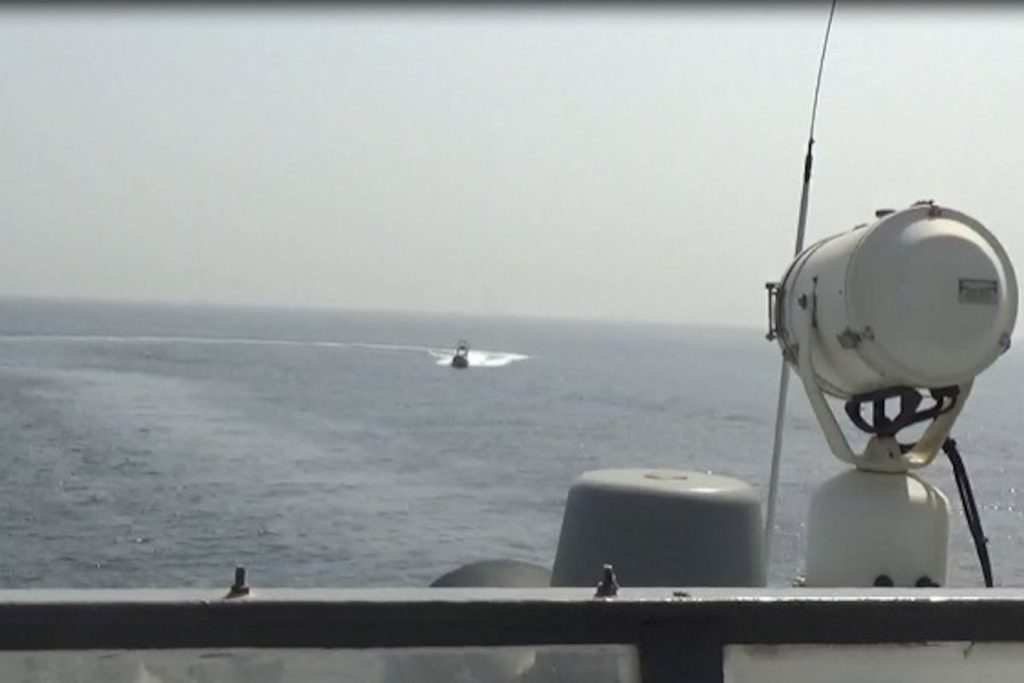
Iraq invaded Iran in 1980. For a while ships were left alone. By 1984 both sides were firing missiles at vessels heading for each other’s ports, the opening rounds of the Tanker War, as it came to be called. One estimate puts Iraq behind 283 attacks and Iran behind 168. News18 adds that Iran laid mines in the Gulf and sent fast-attack boats after Kuwaiti and Saudi tankers.
Even the fear of an attack kept some shipping companies away. Kuwait was especially exposed: too small to protect its own vessels, and dependent on the Gulf for most of its trade. In 1986 it formally asked for international protection.
The United States answered by putting Kuwaiti tankers under its flag and escorting them with warships. Resolution 598, a ceasefire call from the UN Security Council dated July 20, 1987, came next, and Washington, backed by Britain and France, launched Operation Earnest Will. It lasted just under a year, sometimes with thirty ships on patrol at once. Several vessels were damaged, some sank, and oil prices jumped. Yet the strait itself stayed open throughout.
The cost of one mistake
The crew of the Vincennes challenged Flight 655 ten times, seven over the military emergency channel and three over the civilian one. Nobody answered. Both sides investigated afterward. The US called it an unfortunate accident; Iran called it murder and took the case to the International Court of Justice. The Reagan administration expressed remorse, but no one in the chain of command was held accountable.
The Iran-Iraq war wound down in August 1988, and by September American operations there had stopped.
Threats that never became closure
The pattern since then is mostly threat. In 2011 and 2012 Iran warned it might close the strait over European and American sanctions on its oil and banks; then Vice President Mohammad Reza Rahimi was among those who spoke of a full shutdown. Western navies arrived, and Iran did not escalate. In 2019, after the US left the nuclear deal, Iran was blamed for tanker attacks and seized the British-flagged Stena Impero.
News18 noted that, as of its 2025 explainer, the strait had never been fully shut in modern times. Part of the reason is Iran’s own exposure: about 90 per cent of its oil exports go through it.
For people in the Philippines, Japan, South Korea and India, none of this is abstract. The US Energy Information Administration puts the flow at nearly 20 to 21 million barrels of oil a day, roughly a fifth of what the world uses, through a channel only 21 nautical miles wide at its tightest point.
Sources
- The Strait Of Hormuz: Has Iran Ever Closed The World's Most Critical Oil Route? (News18)
- The Fatal Mistake That Led to the USS Vincennes Shootdown (TheCollector)




