
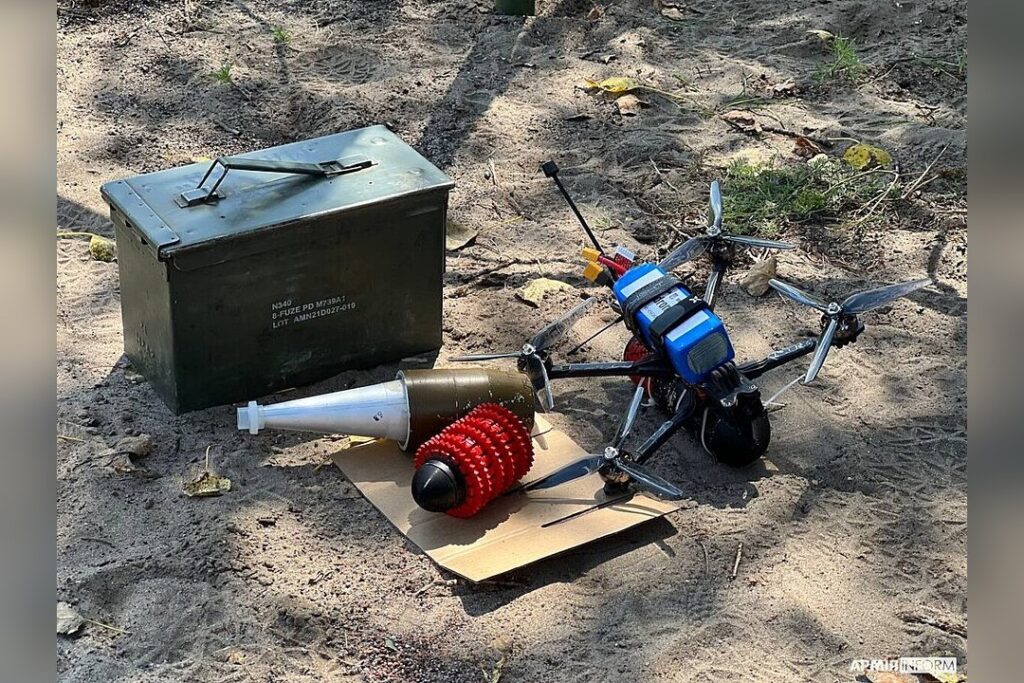
KYIV, July 13 — Ukraine’s ambition to strike deep inside Russian territory now rests on a homegrown drone industry. The mechanics here are worth dissecting, because the numbers tell a story that official briefings often gloss over. President Volodymyr Zelenskyy stated that Ukraine produced over 300,000 drones in 2024.
The stated plan for 2025 is to push that figure to 1 million. That is an increase from a country under full-scale invasion.
The catch is that production volume alone does not equal strategic reach. The real question is what those drones can actually do. The UJ-22 Airborne, developed by the private firm Ukrjet, has a range of up to 800 kilometers.
The state-owned defense conglomerate Ukroboronprom is also in the game, alongside private-sector pioneers like Aerorozvidka. The mix of state and private actors is unusual for a wartime economy, but it reflects the urgency.
Ukraine has also converted the Soviet-era Tu-141 Strizh drone for strike missions. That is a blunt instrument compared to a purpose-built loitering munition, but it gets the job done when the target is fixed and the calculus is about payload over precision. The Ministry of Digital Transformation, led by Mykhailo Fedorov, runs the ‘Army of Drones’ project.
That program has raised funds for thousands of drones, using a crowdfunding model that bypasses traditional defense procurement timelines. Follow the money: this is not a standard military-industrial pipeline. It is a tech-sector approach grafted onto a war effort, and it moves faster.
Western allies, including the United States and the United Kingdom, have provided components and technology. But there is a sharp line drawn here.
Restrictions prevent the use of their weapons for strikes inside Russia. That means Ukraine’s deep-strike capability must rely on systems it builds itself, using components that can be sourced without triggering those restrictions. On closer reading, this creates a peculiar dynamic.
Ukraine gets Western parts, but not Western permission to use them for the missions that matter most. So the domestic drone industry is not just a matter of industrial policy.
It is the only way to hit targets across the border without violating the terms of Western military aid. The program is critical for Ukraine to offset Russia’s artillery advantage, which has been a constant factor since the early days of the full-scale invasion. Drones offer a cheaper, faster alternative to counter-battery fire and deep interdiction.
The question now is whether production can keep pace with attrition, and whether the supply chain for components holds up as global demand for drones surges. What to watch next: the 2025 production target of 1 million units. If Ukraine hits that number, the strategic calculus changes.
If it falls short, the gap will be measured in territory lost.




