
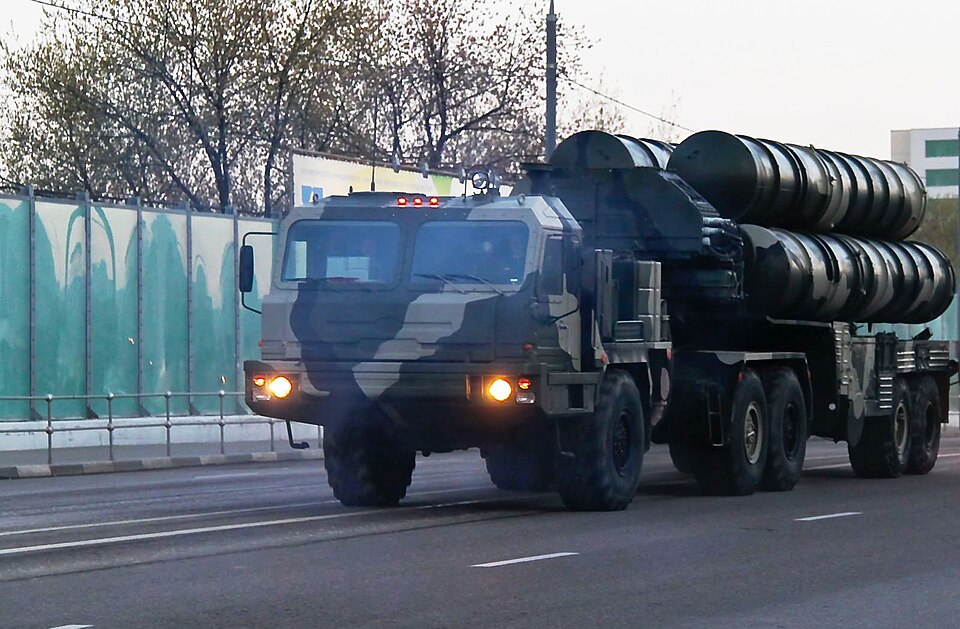
MOSCOW, July 13 — Against the backdrop of a protracted conflict that has reshaped the modern battlefield, the vaunted Russian layered air defense network is facing an unexpected and persistent challenge: the humble drone. For years, the Kremlin has invested heavily in a multi-tiered system designed to protect the homeland. The S-400 Triumf, a long-range system with a reach of 400 kilometers, and the Pantsir-S1, a short-range mobile defender, form the backbone of this shield.
These assets are deployed to guard strategic regions, including Moscow Oblast and the Stavropol Krai. Yet, the technological narrative has shifted.
Ukrainian drones have repeatedly penetrated these defenses, most notably in a series of incidents on March 19, 2025. What is at stake here is not merely the integrity of a single defensive line, but the wider picture of how modern warfare is being waged and costed. The S-400 was engineered to track and destroy high-performance aircraft and supersonic missiles.
It has, however, struggled with a very different kind of threat: low-flying, slow-moving drones. These are not the sophisticated jets the system was built to counter; they are smaller, quieter, and harder to distinguish against ground clutter.
The Numbers Game
In the corridors of military analysis, a significant discrepancy has emerged. Russian officials claim to intercept over 90% of incoming drones. Independent analysts, however, estimate a lower success rate, around 70%, basing their assessment on visual evidence from the battlefield.
This gap matters. A 70% interception rate, while still formidable, leaves a substantial number of drones getting through to their targets.
The challenge is compounded by Ukrainian tactics. The use of drone swarms—multiple low-cost unmanned aircraft attacking simultaneously—overwhelms the targeting and engagement capabilities of these systems. Electronic warfare, too, plays a role.
Russia has deployed jamming systems like the Krasukha-4 to disrupt drone communications and navigation, but the cat-and-mouse game continues, with each side adapting to the other’s countermeasures.
An Economic Imbalance
Perhaps the most stark reality of this technological standoff is the economics of interception. Each missile fired from an S-400 system can cost up to $1 million. The drone it is targeting may cost as little as $20,000.
This creates a profound economic imbalance. For every expensive missile expended, an adversary can afford to launch dozens of drones, testing the limits of both the defense system and the budget that sustains it.
The Pantsir-S1, while cheaper to operate than its larger S-400 counterpart, faces its own limitations against these small, agile targets. The system’s radar and gun/missile combination was designed for a different era of threats, and the adaptation to the drone age has been an ongoing, difficult process. Looking ahead, the question is not whether Russia’s air defense network can be improved—it will be—but whether the fundamental cost structure of this conflict can be changed.
The drone has proven itself a disruptive force, one that challenges the very premise of expensive, high-end defensive systems. For now, the skies over the key regions remain contested, and the technological duel continues to evolve, with each engagement writing a new chapter in the future of aerial warfare.




