
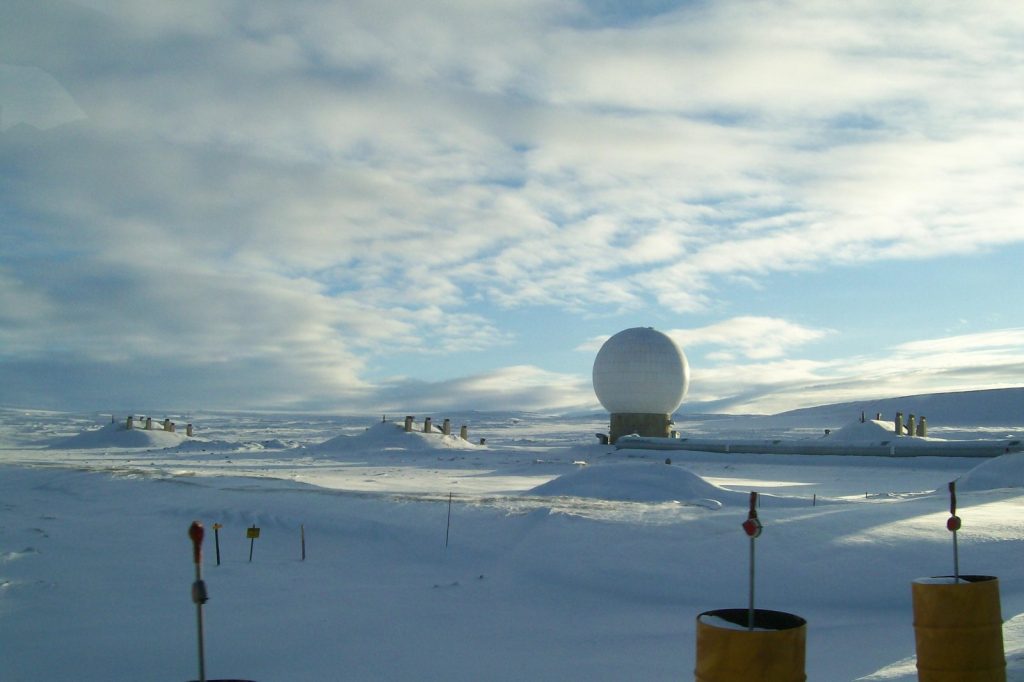
Strategically, the legal spine of the American military presence in Greenland is not a recent invention but a Cold War artifact that still does the work. The 1951 Defense Agreement between the United States and Denmark remains the “principal legal basis for American military activities in Greenland”, and its architecture explains both the reach of Washington’s rights and the ceiling Copenhagen keeps over them.
The origin story is stranger than the treaty text suggests. When Germany occupied Denmark in April 1940, Greenland was cut off from Copenhagen, and in 1941 the Danish minister in Washington, Henrik Kauffmann, signed a defense deal with Secretary of State Cordell Hull. Kauffmann “acted without authorization from the Danish government in occupied Copenhagen”; the home government rejected the deal and ordered him recalled, but Washington kept recognizing him, and a free Danish parliament retroactively blessed the wartime arrangement in 1945. Once NATO arrived in 1949, the two allies replaced the improvisation: the new treaty was signed at Copenhagen on April 27, 1951, in force that June 8.
What the treaty grants is operational, not territorial. Defense areas are designated by mutual agreement under Article II, and where the United States runs one, its authority covers construction and installations, the housing and welfare of personnel, internal security, and the regulation of “landings, takeoffs, anchorages, moorings, and the movements of ships, aircraft, watercraft, and vehicles”. Both national flags fly over the areas, a Danish commander may attach personnel to the American staff, and the American commander must consult him on “important local questions affecting Danish interests”. Sovereignty never moves: Articles II and V expressly preserve it, and activities proceed with “due respect for Denmark’s responsibilities concerning shipping and aviation”.
The 2004 Igaliku Agreement updated the machinery without breaking it, confirming Thule Air Base as the island’s only defense area at that time, applying the NATO Status of Forces Agreement, and giving Greenland’s Home Rule government a recognized seat in consultations, with all three flags now flying over the base.
What this signals today is a mission concentrated at Pituffik, whose radar and satellite-tracking work makes it “the northernmost element of North America’s missile warning network”, the middle node of a phased-array arc anchored at Beale in California and Fylingdales in Yorkshire, with the North Warning System’s 54 radars behind it. Today roughly 150 American personnel remain, against a Cold War peak of more than 10,000 spread across 17 facilities, while the money kept flowing before any new deal: a 12-year base-operations contract worth $3.95 billion from December 2022, an August 2024 power-plant overhaul worth $323 million, construction executed since 2016 worth roughly $384 million, and a $32 million runway line in the fiscal 2026 construction law. The calculus is unchanged: Washington builds, Copenhagen consents, and the mutual-agreement clause keeps the veto where sovereignty sits.
Sources
- The Greenland file: the agreement, the base and the build
- Greenland Defense Agreement (1951): U.S. Military Rights Explained




