
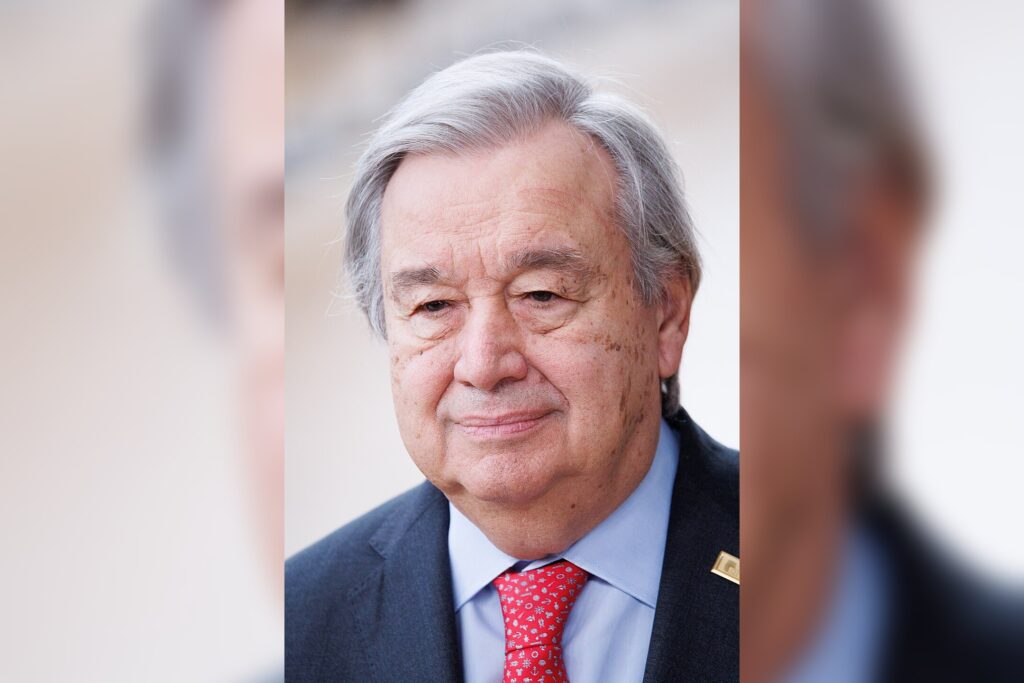
“Today’s economic, demographic and geopolitical realities are not those of 1945,” UN Secretary-General António Guterres told the room in New Delhi. “Our institutional structures must reflect it.”
He was speaking on Sunday to the leaders of the BRICS bloc, whose members include Brazil, Russia, India, China and South Africa, plus several other countries that have since signed on. The group was founded to give major developing economies a stronger voice in a system long dominated by Western powers. India is hosting this year’s summit, and the guest list runs beyond heads of state to the leaders of the World Health Organization and the World Trade Organization.
Guterres argued that a more balanced order requires an overhaul of the institutions built after the Second World War, the UN Security Council among them. The leaders in front of him, he said, embodied the change. “Countries represented at this Summit speak to that changing reality,” he said, adding that “we are increasingly moving towards a multipolar world.”
He treated that as something to embrace. But there was a condition. “Multipolarity helps bring balance and equity to global systems and institutions,” he said, provided the Security Council and the Bretton Woods system are reformed “to reflect the world of today.”
Four priorities
Guterres set out four priorities for what he called “inclusive global growth”: financing, technology, climate justice and peace.
On money, developing countries “need massive international support” to meet the Sustainable Development Goals, he said, and multilateral development banks should become “bigger, better and bolder.”
On artificial intelligence he was blunt. “Its power sits with a few companies, in a few countries,” he said. “Unchecked, the AI divide will widen every other divide, in income, in opportunity, in security, and in sovereignty.”
His sharpest words were for the climate. “Scorching heat, devastating glacier melt, raging wildfires, devastating floods are all a preview,” he said, warning that “a supersized El Niño will only make matters worse” as the world nears the 1.5-degree limit above pre-industrial levels. He urged wealthy nations to keep existing pledges, meaning $300 billion a year, tripled adaptation finance and more money for loss and damage. On the handling of critical minerals, his verdict was two words: “Enough plundering.”
Peace and the Charter
On security he named Gaza, the wider Middle East, Ukraine and Sudan, and called on states to uphold the UN Charter, including “sovereign equality,” territorial integrity and “peaceful settlement of disputes.”
He ended by presenting reform as a shared project, not a concession. “As we move irreversibly to a multipolar world, all countries must work to strengthen and safeguard a multilateral system that delivers for all with the United Nations at its centre,” he said.




